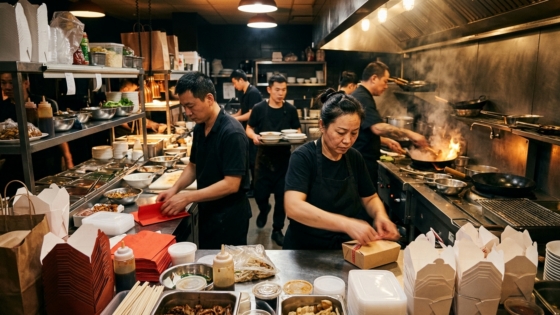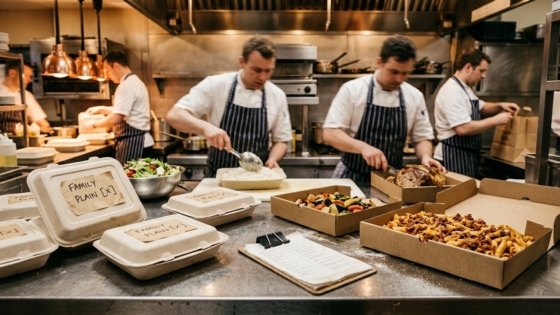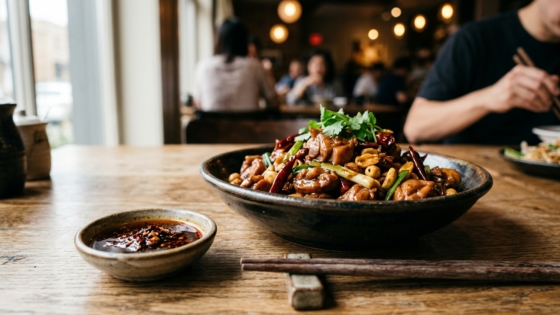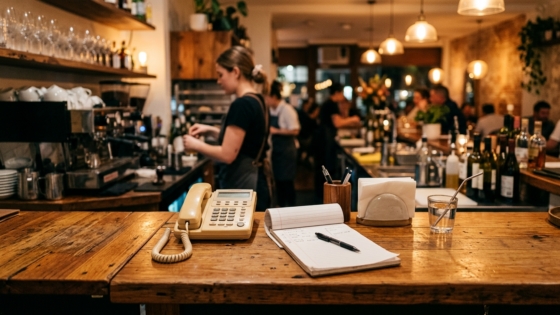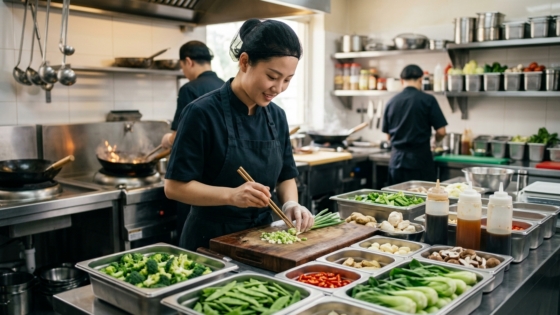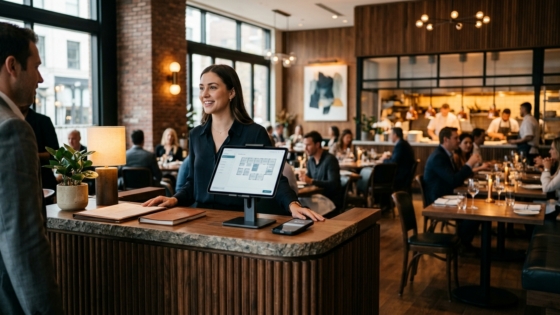
You printed a bilingual menu. You listed every dish. You even added photos. So why do callers still say “I’ll just come in” instead of placing an order over the phone?
The problem usually isn’t your food — it’s how your menu communicates. English menus designed for in-person dining frequently break down when customers are ordering by phone, because the visual cues, the ability to point and ask, and the ambient context of a restaurant dining room all disappear. What’s left is a caller trying to decode dish names that mean nothing to them, a staff member trying to explain in real time, and an order that’s one misheard word away from going wrong.
After working with dozens of Chinese restaurants across the New York area, the patterns that cause the most confusion are remarkably consistent. Here are the four you’ll want to fix first.
Key Takeaways
- Literal dish name translations are the single biggest source of confusion for English-speaking callers — they convey ingredients but strip out meaning and appetite appeal.
- Missing item descriptions on menus force staff into long, unreliable verbal explanations on every call.
- No modification language leaves both callers and staff without a shared vocabulary for customization, driving up re-fires.
- Pinyin names without context are meaningful to regulars but opaque to first-time phone customers — the exact customers you most want to convert.
The Root Problem: Menus Designed for Eyes, Not Ears
When a customer sits in your restaurant, they can point. They can read at their own pace. They can see photos. They can ask a nearby server to just “bring me what looks good.” None of that is available on a phone call.
Research on food menu design consistently shows that unclear dish descriptions and poorly structured menus undermine customer confidence and reduce selection likelihood, causing customers to abandon their orders. In a dining room, that might mean they pick something at random. On a phone call, it means they hang up.
The practical implication: your English menu needs to do more communicative work than your Chinese-language menu, not less. Most menus get this backwards.
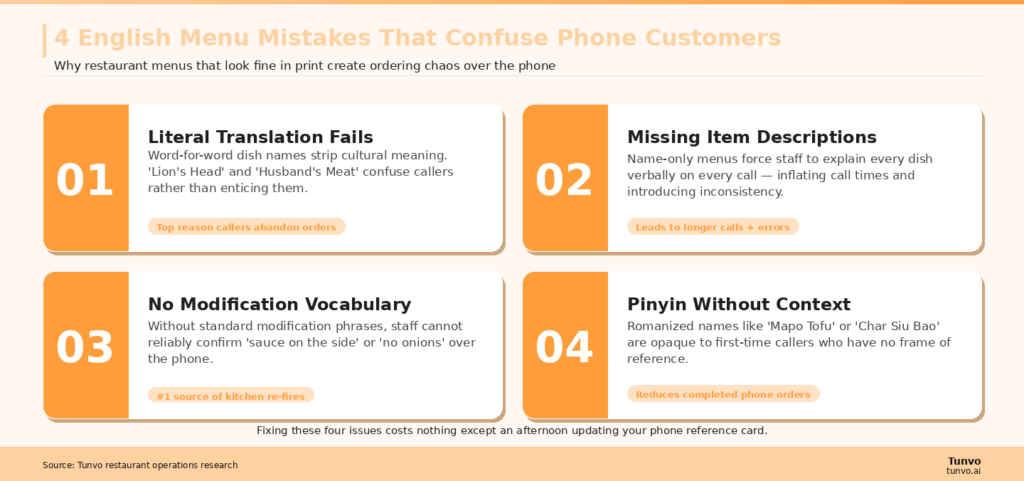
Mistake 1: Literal Translations That Lose All Meaning
Chinese dish names are often poetic, referential, or metaphorical. “Lion’s Head” (獅子頭) refers to large meatballs. “Ants Climbing a Tree” (螞蟻上樹) is a noodle dish with minced pork. “Husband and Wife Beef” (夫妻肺片) is sliced beef and offal in chili oil. These names carry cultural meaning for those who know the cuisine — but to an English-speaking caller who doesn’t, they’re confusing, occasionally alarming, and unhelpful as ordering guidance.
According to culinary translator and food writer research documented by Atlas Obscura, translating Chinese food names into English is uniquely challenging because Chinese dish names often group nouns without sentence structure, making direct translation grammatically awkward at best and meaningless at worst. The solution isn’t perfect translation — it’s providing enough context that a caller can understand what they’d be eating.
A practical fix: keep the English name (or a simplified version of it), then add a plain-language descriptor in parentheses. “Lion’s Head (braised pork meatball in broth)” takes four seconds to say and eliminates confusion entirely.
What to Do Instead
Rather than chasing perfect translation, prioritize descriptor clarity. For each dish, your menu should answer three questions a caller might have: what protein or main ingredient is it, how is it cooked, and does it come with rice or noodles? A dish listed as “Mapo Tofu (soft tofu + ground pork in spicy bean sauce, served with rice)” is something a caller can confidently order without needing an explanation from your staff.
Mistake 2: No Descriptions Below Dish Names
Many restaurant menus — especially those updated frequently or printed cheaply — list only the dish name and price. In a dining room with a server present, that might be workable. On a phone call, it creates a bottleneck: every order requires the caller to ask what something is, and every staff member has to reconstruct a verbal description from memory.
Menu design research consistently identifies missing descriptions as a leading cause of customer confusion, with knock-on effects for server workload and order accuracy. When descriptions are absent, staff explanations become inconsistent — one person describes a dish one way, another describes it differently, and the customer who orders based on the first description gets something matching the second.
Descriptions don’t need to be long. Two sentences covering main ingredients, preparation style, and spice level give callers enough to make a confident decision. For a phone ordering environment specifically, that confidence is the difference between a completed order and a dropped call.
The Allergen Gap
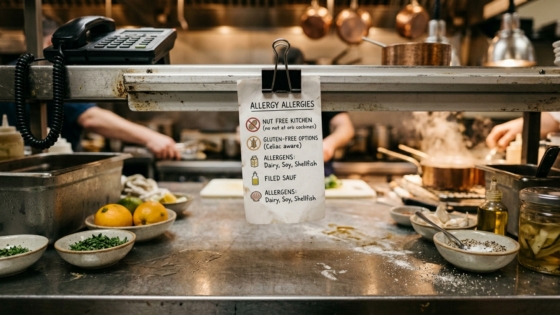
Missing descriptions also create an allergen communication problem. A caller with a shellfish allergy or a nut sensitivity cannot safely order from a menu that doesn’t disclose key ingredients. Industry data shows that nearly 50% of food allergy-related fatalities occur in eating establishments — clear ingredient disclosure on your menu is both a customer service issue and a liability issue.
Mistake 3: No Language for Modifications
Phone callers modify orders constantly. “Can I get that without onions?” “Is it possible to get extra sauce?” “Can I have the dressing on the side?” These are standard requests in American dining culture, and English-speaking customers assume they can make them at any restaurant.
The problem is that many Chinese restaurant menus — and the staff training that accompanies them — don’t include standardized language for handling modifications. When a caller asks for a modification, the staff member may not understand exactly what’s being requested, may not know whether the kitchen can accommodate it, or may confirm something that the kitchen then ignores because there’s no system for flagging it.
Repeating orders back to customers prevents the majority of modification errors, but that only helps if the staff member understood the modification correctly in the first place. Creating a standard shortlist of acceptable modifications — and training staff on the English phrases customers use to request them — addresses the problem upstream.
Building a Modification Vocabulary
Common modification requests your staff should be trained to recognize and confirm: “on the side” (sauce or dressing served separately), “no [ingredient]” (omit something), “extra [ingredient]” (add more of something), “mild/medium/spicy” (heat level), “well done” (more cooking time), and “substitute” (replace one item with another). Each of these can be covered in a ten-minute training session that pays dividends on every subsequent call.
Mistake 4: Pinyin Names Without English Context
Pinyin romanization — using phonetic English spellings of Mandarin names — has become more common on menus as authentic Chinese cuisine has grown in popularity. Dishes like “Dan Dan Noodles,” “Char Siu Bao,” and “Xiao Long Bao” are increasingly recognizable to food-forward urban diners. But on a phone call with a first-time customer, Pinyin names without accompanying descriptions are a dead end.
The caller has no frame of reference. They can’t look up the dish while on the phone. And asking a staff member to spell or pronounce an unfamiliar Pinyin term over a noisy phone line almost always results in miscommunication. Pinyin names work well as identifiers for repeat customers — they fail as primary communication tools for new ones.
The practical fix is the same as for literal translations: keep the Pinyin name for brand consistency, but add a plain English descriptor. “Xiao Long Bao (steamed soup dumplings, pork filling)” tells the caller everything they need.
How AI Voice Ordering Changes This Dynamic
The longer-term solution many restaurants are moving toward is removing the staff-as-interpreter layer entirely from phone ordering. When an AI voice agent handles inbound orders, it can be programmed with standardized descriptions for every item, consistent modification handling, and automatic order confirmation — eliminating the real-time communication gaps that cause menu confusion to compound into actual errors.
Tunvo’s AI voice agent integrates directly with your existing menu data through MenuSifu, so every item description, allergen flag, and modification option your kitchen can actually accommodate is embedded in how the agent handles calls — not reconstructed from memory by whoever answers the phone. Customers report 95%+ order accuracy and staff report significantly reduced call handling time because the friction points described above are handled systematically rather than person-to-person.
That said, even if you’re not ready to automate phone ordering, fixing the four menu issues above will meaningfully reduce errors and improve call completion rates. Book a free demo to see how Tunvo handles menu integration.
A Quick Menu Audit Checklist
| Menu Element | What to Check | Priority |
|---|---|---|
| Dish names | Do they convey what a new customer would receive? | High |
| Descriptions | Does every item have at least one line: protein + prep + accompaniment? | High |
| Allergen flags | Are shellfish, nuts, gluten, and dairy clearly noted? | High |
| Modification options | Are staff trained on the 6 standard modification phrases? | Medium |
| Spice levels | Is heat level indicated for relevant dishes? | Medium |
Frequently Asked Questions
Does fixing the menu actually reduce phone order errors?
Yes, significantly. The most common causes of wrong orders in restaurants trace back to miscommunication at the point of ordering — not mistakes in the kitchen. When customers have clear information and staff have standardized language, the number of re-fires and complaints drops substantially. Even modest improvements to menu clarity can cut ordering call times and reduce errors.
Should I rename all my dishes to English-only?
Not necessarily. Bilingual menus build authenticity and serve your Chinese-speaking customers well. The goal isn’t replacement — it’s supplementation. Keep the Chinese name, keep the Pinyin romanization if you use it, and add a plain English descriptor. Regulars use the name they know; new callers use the descriptor to understand what they’re ordering.
How long does it take to rewrite menu descriptions?
For a typical menu of 40–60 items, a focused rewrite takes one to two hours. The ROI is immediate: shorter call times, fewer wrong orders, and higher confidence from first-time phone customers. It’s one of the highest-leverage improvements a restaurant can make with minimal investment.
Can technology solve this problem without rewriting the menu?
Partially. AI voice ordering systems can be programmed with standardized descriptions that supplement whatever is on your printed menu. But a well-written menu also helps dine-in customers and reduces server workload, so it’s worth doing regardless of whether you automate phone ordering. About Tunvo — built by Sobot, Asia-Pacific’s leading customer service platform backed by SoftBank — and how the system handles menu data integration.