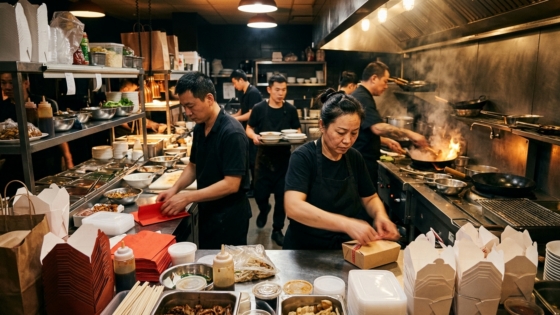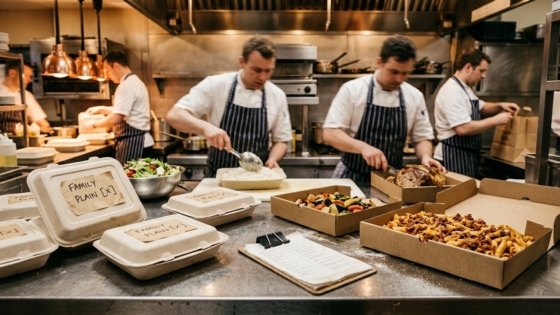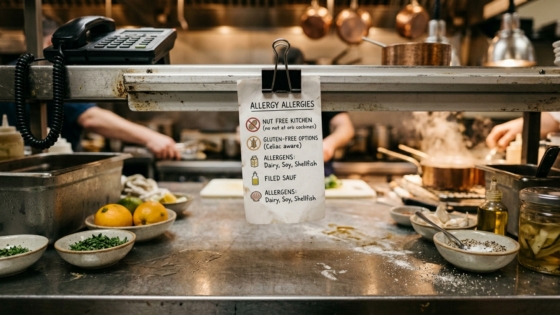
A customer calls your Chinese takeout on a Friday evening. Before ordering, they ask: “Does your General Tso’s chicken contain peanuts? My daughter has a severe nut allergy.” Your staff member, juggling three other calls and a ticket printer spitting orders, hesitates — and either guesses or puts the caller on hold for three minutes while they track down a manager.
This scenario plays out in restaurants across the country every single day. And the stakes are not low. According to the Food Allergy Research & Education organization (FARE), one in three people with food allergies reports having an allergic reaction in a restaurant setting. Getting an allergy question wrong over the phone is not just a customer service failure — it can be a medical emergency.
The question restaurants are now asking is whether an AI voice agent can handle these calls safely, consistently, and without creating liability risk. The short answer: yes — if the system is built with the right architecture. Here is what restaurant operators need to understand.
Key Takeaways
- Food allergies affect roughly 6.7% of U.S. adults, meaning a significant portion of your callers will have allergy-related questions at some point.
- Human staff inconsistency is the biggest allergy risk — more than half of restaurant staff have never received formal food allergy training, per CDC research.
- Menu-aware AI agents answer from a fixed, up-to-date ingredient database, eliminating the guessing and memory errors that cause human mistakes.
- Escalation is the non-negotiable safety feature — any well-designed system transfers complex allergy calls to a human with full context, not a dead end.
- Allergy data captured by AI flows automatically to kitchen staff, closing the communication gap that causes most in-kitchen allergy accidents.
The Scale of the Problem: Food Allergies Are Not a Niche Issue
Restaurant operators sometimes treat allergy questions as edge cases — the rare customer who needs special handling. The data does not support that framing. The CDC’s National Health Interview Survey, released in early 2026, found that 6.7% of U.S. adults carry a diagnosed food allergy — and that figure only counts formally diagnosed cases. Broader estimates from NIH-funded research suggest the true prevalence of IgE-mediated food allergy among U.S. adults may be closer to 10.8%.
For a restaurant taking 80 phone calls per day, that translates to five to nine callers who may have a clinically significant allergy. Across a week of service, that number compounds quickly. And unlike a diner who can read a physical menu and ask follow-up questions face-to-face with a server, phone callers rely entirely on the person answering — human or AI — to give them accurate, complete information.
The risk is not hypothetical. FARE’s research shows that 38% of food-allergic adults in the United States report at least one allergy-related emergency room visit in their lifetime. Many of those reactions occur in food service settings. A single phone call with incorrect ingredient information can be the start of that chain.
Why Human Staff Struggle With Phone Allergy Questions
Blaming individual employees misses the structural problem. Research published by the CDC’s Environmental Health Specialists Network found that more than half of restaurant staff interviewed had never received any food allergy training. Among those who had been trained, the content frequently omitted critical information — such as what to do if a customer has a reaction, or how to prevent cross-contamination in a shared kitchen.
Even well-trained staff face compounding challenges during a phone allergy inquiry:
- They may know the main ingredients of a dish but not the sauce components or garnishes.
- Ingredient formulations from suppliers change, and not all staff are updated in real time.
- During peak hours, the cognitive load of managing the floor, the phone, and a kitchen makes careful allergy verification nearly impossible.
- There is social pressure to not keep a caller on hold — which can lead to confident-sounding answers that are actually incomplete.
The Massachusetts Department of Public Health, which became the first state to mandate allergen awareness training in 2009, specifically requires that when a staff member is unsure of the presence of allergens, they must direct the customer to someone who does know — and must never guess. The problem is that in real-world restaurant operations, this escalation protocol breaks down under pressure.
What a Menu-Aware AI Voice Agent Does Differently
The key phrase is “menu-aware.” A generic AI system trained only on conversational language is not equipped to answer restaurant allergy questions. What changes the calculus is an AI voice agent that is directly integrated with a complete, regularly updated ingredient database — where every menu item’s components, preparation method, and cross-contamination risks are mapped and maintained.
When a customer calls and mentions a peanut allergy before ordering, a properly configured AI agent does several things a human might not consistently do:
First, it proactively cross-references the requested dish against the ingredient database before confirming the order. It does not rely on memory — it queries a data source. Second, if the dish is safe, it confirms the specific reason: “Our General Tso’s chicken does not contain peanuts or peanut-derived ingredients. I’ll add a note to your order for the kitchen.” Third, if there is any uncertainty — cross-contamination risk, a shared fryer, or a recently changed supplier formulation — the system does not guess. It escalates to a human staff member and passes along the full context of the conversation, so the customer does not have to repeat themselves.
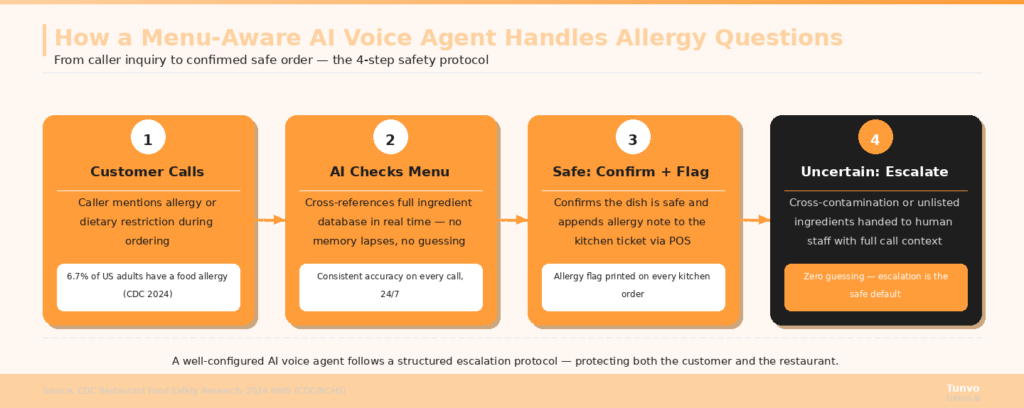
A menu-aware AI voice agent follows a structured escalation protocol rather than guessing — protecting both the customer and the restaurant from risk.
This structure eliminates the two failure modes that cause most allergy incidents over the phone: confident incorrect answers, and communication breakdowns between the person who took the call and the kitchen that prepared the dish.
The Kitchen Communication Gap: Where Most Allergy Accidents Actually Happen
Restaurant industry research consistently points to front-of-house to back-of-house communication as the point where allergy protocols collapse most often. A customer discloses an allergy on the phone. The staff member notes it verbally. That note gets lost in the transition to a paper ticket, or is never communicated to the specific cook who assembles the dish.
AI voice agents that integrate with a POS system solve this at the source. When the allergy is captured during the call, it is automatically flagged on the kitchen ticket — in the same format, every single time, regardless of who answered the phone or how busy the shift was. This mirrors the systems that effective in-restaurant allergy protocols already use: the CDC research specifically highlighted that allergy information should be printed directly on kitchen order tickets, a practice that most restaurants with strong allergy protocols already follow for dine-in service but rarely extend to phone orders.
The POS integration also means that if a customer is a repeat caller — someone who always orders with a shellfish restriction, for example — the system can recognize that pattern and proactively confirm their allergy preference before they even ask. That kind of consistency is structurally impossible for human staff to replicate at scale.
Where AI Should Always Escalate to a Human
No responsible implementation of AI phone ordering treats allergen handling as fully automated. There are specific scenarios where the correct answer is always a human:
| Scenario | Why Escalation Is Required |
|---|---|
| Anaphylaxis history (e.g., “I carry an EpiPen”) | Stakes are life-threatening; a manager must take personal responsibility for the order |
| Cross-contamination questions about shared equipment | AI cannot verify kitchen layout or shared fryer use in real time; this requires direct kitchen confirmation |
| Allergy to an unlisted modifier or sauce | House-made components may not be fully documented in the ingredient database |
| Recent supplier ingredient change not yet updated in POS | Database lag can create a window where AI answers are stale; humans can check real inventory |
| Customer expresses strong anxiety or uncertainty | Emotional safety matters; a human connection provides reassurance an AI cannot replicate |
The design philosophy that distinguishes a safe allergy-aware AI from a liability risk is exactly this: the system should know what it does not know, and escalation should be frictionless — not a fallback of last resort but a deliberate first option for anything outside its confirmed knowledge.
What Restaurants Should Look For When Evaluating AI Voice Systems
Not every AI phone product on the market is built with food allergy safety as a design consideration. When evaluating options for your restaurant, ask these specific questions:
Does the system integrate with your POS in a way that automatically appends allergy notes to kitchen tickets? Is the ingredient database something you actively maintain and update when menu items change? Can the system detect allergy-related language and proactively shift into an allergy-handling mode, rather than waiting for the customer to explicitly say “I have an allergy”? And critically — when the system encounters something it is not certain about, does it transfer to a live human with the conversation context preserved?
Tunvo’s AI voice agent for restaurants is designed around exactly this architecture. Ingredient information is mapped to your menu through the POS integration, allergy flags route directly to kitchen tickets, and the escalation protocol transfers complex calls to your staff with full context — so your team can focus on the high-stakes exceptions rather than every routine question. Book a free demo to see how it handles allergy calls in a live environment with your actual menu.
Common Questions
Can an AI voice agent be held liable if it gives incorrect allergy information?
Liability in food allergy cases attaches to the restaurant, not the technology vendor. The practical implication is that the restaurant operator is responsible for keeping the ingredient database current and for configuring appropriate escalation for high-risk allergy scenarios. An AI system that escalates when uncertain, and that documents the escalation in the call log, actually provides a stronger documented protocol than informal human handling — which is often undocumented entirely.
What happens if a customer’s allergy involves a hidden ingredient in a sauce?
This is precisely the scenario where a good AI system escalates. If the ingredient database entry for a dish does not include full sauce component documentation, a well-designed system will flag that uncertainty and transfer the call rather than make a confident statement it cannot back up. The database is only as accurate as the information your team puts into it — maintaining it is an operational responsibility, not a technical one.
Do customers feel comfortable discussing their allergies with an AI?
Research on AI voice adoption suggests customers are primarily concerned with accuracy and speed, not the source. For routine allergy questions — “Does this dish contain shellfish?” — most callers respond well to an immediate, accurate, confident answer. Where customers consistently prefer a human is for complex situations involving multiple allergens, severe reaction history, or questions about preparation methods. Designing your escalation triggers around these categories addresses the gap effectively.
Should I disclose to callers that they are speaking to an AI?
Several states have disclosure requirements for AI phone agents, and federal guidance on AI disclosure in commercial contexts continues to evolve. The safer operational approach is to disclose early in the call and to train the AI to immediately offer a human transfer when any high-risk allergy scenario is detected. Transparency here protects the restaurant, not just the customer.
How often should the ingredient database be updated?
Every time a menu item changes, a supplier formulation changes, or a new item is added. Many restaurants implement a weekly review cycle tied to their supplier delivery schedule. The critical risk window is the period between a supplier change and a database update — during that window, any affected dish should be flagged for human handling until the AI’s information is confirmed current. Start a 15-day free trial to see how Tunvo’s menu management workflow handles this in practice.