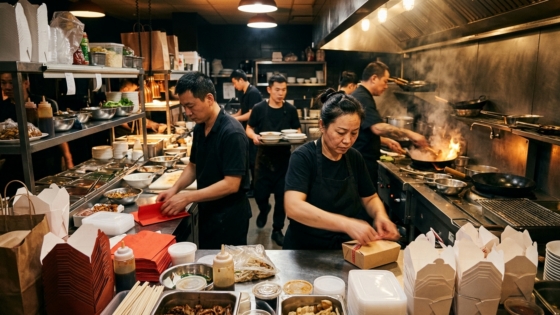
If you run a Chinese restaurant in New York — in Chinatown, Flushing, Sunset Park, or any of the city’s other Chinese dining corridors — you already know this problem in your bones. Finding reliable, bilingual staff who understand the food, the service culture, and the guest base has always been hard. In 2026, it’s harder than it’s been in decades. This isn’t a management failure or a hiring strategy problem in isolation. It’s a structural labor market challenge with specific, identifiable causes — and it requires specific responses that go beyond posting on Indeed. This article is written for operators who are living this crisis and want an honest picture of what’s driving it and what’s actually helping.
Key Takeaways
- NYC restaurants lost an estimated 4,800+ workers following immigration enforcement changes in 2025, with Chinese and other Asian community restaurants among the most directly affected.
- The number of Chinese restaurants in the U.S. has been declining for years, with labor availability, rising costs, and succession challenges compounding each other.
- Operators who reduce their staffing floor through targeted automation — particularly for phone orders — are demonstrably more resilient to labor shortages without degrading guest experience.
Why the Chinatown Staffing Problem Is Different from the General Labor Shortage
The Bilingual Requirement Creates a Narrower Talent Pool
Unlike a generic restaurant hire, Chinatown and Chinese-American restaurant operations have specific requirements that most of the broader labor market cannot meet. Mandarin, Cantonese, and Fujianese speakers who are also comfortable working in the specific pace and culture of Chinese restaurant service — family-style ordering, complex takeout workflows, a phone-dominant ordering model — represent a narrow subset of available workers. When the general restaurant labor market tightens, this pool contracts even more sharply, because the alternative options for bilingual workers in New York are numerous and often less physically demanding.
Immigration Enforcement Has Directly Reduced Worker Availability
A Documented NY investigation in October 2025 estimated that approximately 4,800 restaurant workers left New York City since March 2025 following increased immigration enforcement activity. Chinese and other Asian immigrant communities — which have historically provided a significant share of New York’s restaurant labor — are among those most directly affected. Workers who had been part of stable employment relationships for years left or went to ground, leaving operators who had built their operations around that labor model suddenly unable to fill positions through their traditional networks.
In Flushing, this has been particularly acute: community organizations report that some longtime restaurant employees have relocated entirely to lower-enforcement jurisdictions, and that new immigrant workers — who historically entered restaurant work as a first job in the U.S. — are less available as the incoming pipeline has narrowed.
The Generational Succession Gap
The second dynamic is generational. The children and grandchildren of Chinese restaurant founders — the generation that would have historically staffed family restaurants as a matter of course — have pursued other careers in numbers that represent a genuine structural change. As The Gotham Reporter documented in 2024, the number of Chinese restaurants in New York City has been declining for years. One major contributing factor is that the owners are aging and there is no next generation ready to take over — neither as operators nor as staff. This isn’t unique to Chinese restaurants, but the cultural specificity of the work makes it harder to backfill with workers from outside the community.
What the Numbers Show
| Factor | Impact on Chinatown Restaurants |
|---|---|
| NYC restaurant workers departed (2025) | ~4,800 workers; Chinese community restaurants disproportionately affected |
| Industry turnover rate (US restaurants) | 79.6% annually — one of the highest of any sector |
| Chinese restaurant count (NYC) | Declining multi-year trend; labor shortage cited as primary cause |
| Replacement cost per worker | ~$5,864 (Cornell University hospitality research) |
| Bilingual worker availability | Structurally constrained; alternative employment options abundant in NYC |
What Operators Are Actually Doing — and What’s Working
Expanding the Hiring Network Beyond Traditional Channels
The Chinese restaurant labor market has historically operated through community networks — word of mouth, community organization bulletin boards, Fujianese associations, Buddhist temple networks. These channels still work, but they’re slower than the need requires when positions turn over quickly. Operators who are finding more success are layering digital channels on top: WeChat community groups for local Chinese communities, Xiaohongshu job posts targeting recent arrivals, and Craigslist ads in both English and Chinese. The key is reaching workers who are new to the city and actively looking for first jobs in a familiar environment — and that population still exists, even if it’s smaller than before 2026.
Adjusting the Staffing Model to Require Fewer People
The most structural response available to Chinese restaurant operators is reducing the number of staff positions required to run the operation without reducing the revenue it generates. This is easier said than done, but it’s where operators are making real progress — and it centers on removing the positions that don’t require human judgment or bilingual interaction.
Phone ordering is the clearest example. A 50-seat Chinese takeout restaurant that takes 40–60 phone orders per shift has historically needed at least one person dedicated to phone coverage during peak hours — and that person needs to be bilingual. When an AI voice agent handles that workflow — understanding menu items in both English and Chinese, taking orders, routing them to the POS or printer — the operator removes one hiring dependency entirely. The remaining staff focus on cooking and in-person service, which are the positions that actually require human presence and skill. Tunvo’s AI voice agent supports both Chinese and English callers, meaning the bilingual requirement for phone coverage is absorbed by the technology rather than the hiring pool.

Retention as the Priority Over Recruitment
When the supply of new workers contracts, the economics of retention shift dramatically. An operator who keeps a reliable employee for three years instead of one year avoids two full replacement cycles — approximately $12,000 in replacement costs, plus the productivity gap and service quality risk during each transition. The highest-impact retention tools for Chinese restaurant environments tend to be: consistent and fair schedules (especially for staff with family obligations), tip systems that feel transparent and equitable, and reducing the drudge-work load through automation so that the work itself is less grinding.
Concrete retention levers that operators in the community have reported working: weekly cash tip distribution rather than pay-period lag, schedule publishing two weeks in advance (vs. one week, which creates personal planning difficulty for hourly workers), and investing in English classes or other skills-building programs as a retention benefit for immigrant workers who have career development goals.
Cross-Hiring Across Community Lines
Several Flushing operators have expanded their hiring to include Korean and Latin American workers for back-of-house positions that don’t require Chinese language skills — prep cook, dishwasher, food runner — while reserving bilingual hiring for front-of-house and phone roles. This cross-community approach is not without friction (kitchen communication standards need to adjust), but it dramatically expands the available labor pool for positions where language isn’t the primary requirement. Marketplace reported in 2024 on New York restaurateurs advocating for working visa expansions specifically to make this kind of cross-community hiring more viable and reliable.
The Technology Layer: What It Can and Can’t Replace
What Automation Solves in This Context
For Chinese restaurants in particular, AI voice technology addresses the specific pain point of bilingual phone coverage — historically one of the hardest positions to fill reliably. A worker who handles phone orders needs to understand Mandarin or Cantonese menu names, be able to manage complex customization requests, and maintain patience across 40–60 calls per shift. That’s a specific skill set that is increasingly scarce. An AI system trained on the menu and capable of conversational Chinese-English switching handles this workflow 24/7 without a hiring decision.
Beyond phones: automated scheduling tools, POS-integrated order management, and tip calculation software reduce the administrative overhead that falls on whoever is available — often the owner — when the team is short. Operators who have reduced their dependency on human labor for these mechanical tasks report that they can run their operation with one to two fewer positions on floor during a typical service without the guest experience degradation that used to follow.
What Technology Does Not Solve
The human elements of Chinese restaurant hospitality — the warmth of a server who knows a guest’s usual order, the skill of a wok cook who’s been with the restaurant for a decade, the ability to manage a complicated family table in Cantonese — are not replaceable and shouldn’t be positioned as such. The honest value proposition of automation in this context is that it absorbs the mechanical workflow so that the remaining human positions are occupied by people doing genuine hospitality, not answering phones. That distinction matters for staff morale, for guest experience, and for the sustainability of the operation. See how Tunvo was built by a team with deep experience in the restaurant AI space and why the technology is designed to complement — not replace — the human team.
Common Questions
Is the staffing situation in Chinatown restaurants improving or getting worse?
The picture in 2026 is mixed. Immigration enforcement has created acute short-term disruption to the available labor pool. The longer-term trends — generational succession challenges, competing employment options for bilingual workers, and the physical demands of restaurant work — continue. Some operators report stabilization as community networks have adapted; others are still running short-staffed several months into the change. The operators best positioned for stability are those who have diversified their hiring channels and reduced their staffing floor through automation for mechanical tasks.
What’s the most effective job posting channel for Chinese restaurant workers in NYC?
For bilingual positions, WeChat community groups (particularly those organized by neighborhood or dialect community), Chinese-language classified boards, and Xiaohongshu have become more effective than English-language platforms for reaching the target candidate population. For non-bilingual back-of-house positions, Indeed and Craigslist with Chinese-language descriptions remain effective. Some operators have found success partnering with organizations that serve recent immigrant workers — church communities, mutual aid networks — for informal referral pipelines. Reducing your hiring need for phone coverage through AI can also meaningfully shrink your total recruitment workload.
How are other Chinese restaurant owners adapting their operations to run with fewer staff?
The most common adaptations reported by operators in Flushing and Chinatown include: AI or automated phone ordering to remove the bilingual phone position, streamlined menus that require fewer cooking staff to execute, lunch-only or dinner-only formats during peak staff shortage periods, and increased reliance on third-party delivery platforms (which shift the phone order burden off the restaurant, at the cost of commission fees). The operations that seem most resilient combine two or three of these adaptations rather than relying on a single strategy. Book a free demo to see how AI phone ordering integrates with your existing setup and how quickly it can remove one staffing dependency from your operation.
Can AI phone ordering really handle Chinese menu items and customer requests?
Modern AI voice systems trained specifically for restaurant menus can handle the full range of Chinese menu vocabulary in both English and Chinese — including item names, modifiers, portion options, and common special requests. The accuracy for in-scope menu interactions (ordering, modification, pricing) is substantially higher than for open-ended conversation. The practical threshold is this: if your phone orders follow a predictable pattern (which most do — 80%+ of calls are straightforward order placement), an AI system handles them reliably. Complex reservation negotiations or unusual requests can be flagged for human follow-up. According to Tunvo, its AI voice agent delivers 95%+ order accuracy across tested restaurant environments. Learn how Tunvo handles bilingual restaurant phone orders and what the setup process looks like for a Chinese restaurant operation.