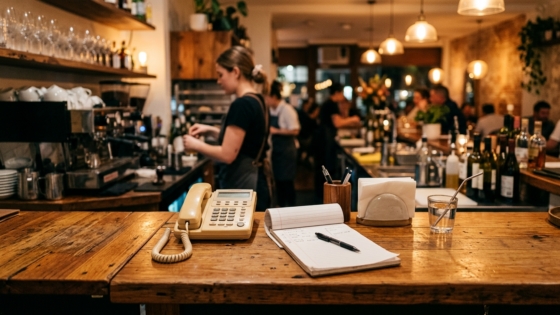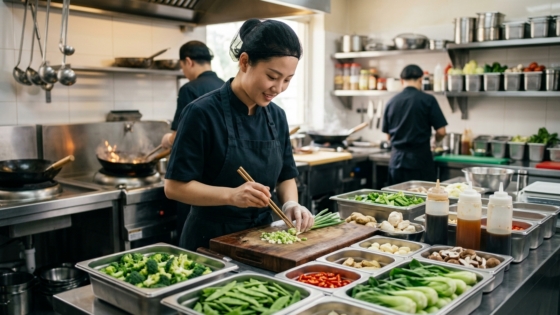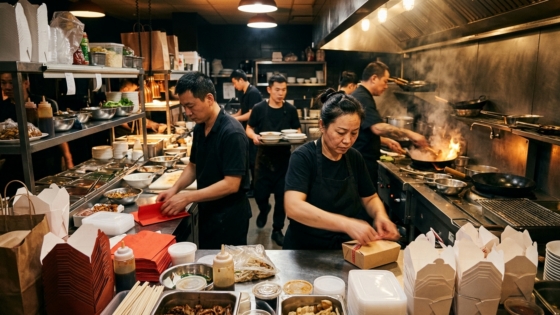
Between 6 and 8 PM on a Friday, a typical Chinese takeout operation receives more phone calls than at any other time in the week. The kitchen is at full capacity. The wok stations are running continuously. The counter staff are handling walk-ins. And the phone — the phone rings, and rings, and rings.
Some calls get answered. Some go to a two-minute hold that turns into a hang-up. Some ring through to voicemail, which 80% of callers won’t even bother leaving a message on. They hang up. They call the place down the street. Or they simply order somewhere else online.
The Friday night rush is simultaneously the most profitable period of the week and the period with the highest rate of missed revenue. This guide is for Chinese takeout operators who want to understand where the losses happen and how to close them — without adding headcount.
Key Takeaways
- Friday 6-8 PM is the single most revenue-critical phone window of the week for most Chinese takeouts — and the shift where call-answering performance is worst.
- Restaurants lose an estimated $27,000+ per year per location from unanswered calls during peak hours, based on industry modeling of call volume and average order value.
- 80% of callers who don’t get an answer simply hang up — they don’t leave voicemails, and most don’t call back.
- The problem is structural, not a staffing failure: peak call volume and peak kitchen demand happen at the exact same time, by design.
- AI voice agents designed for restaurant ordering eliminate the peak-hour phone bottleneck by handling unlimited simultaneous calls with consistent quality.
The Peak-Hour Paradox: Your Busiest Moment Is Your Most Vulnerable One
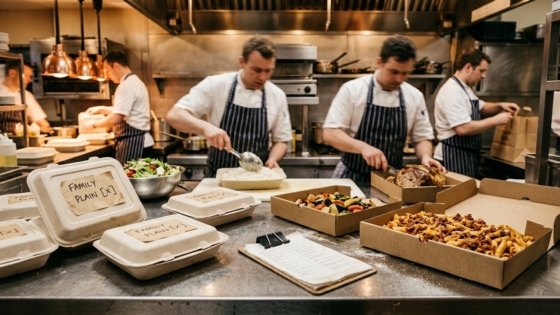
Chinese takeout operations face a structural contradiction that no amount of staffing fully resolves. The hours when customers most want to call and order — Friday and Saturday evenings, particularly between 6 and 8 PM — are the exact hours when the kitchen is running at maximum output and every staff member’s attention is consumed by the operation in front of them.
According to data from restaurant delivery analytics, Friday evenings consistently generate the highest order volumes of the week, with dinner service between 6 and 8 PM representing the peak. Weekends follow closely, with additional spikes tied to weather events and local gatherings.
For a takeout-focused operation, the phone is still the primary order channel for a large share of customers. Many Chinese takeout regulars — particularly older customers and large family orders — call by preference. They want to speak with someone, confirm a modification, ask about a special, or place an order they know from memory. That call is worth $40, $60, sometimes $120 for a family dinner. And during the 6-8 PM window, that call has a meaningful chance of going unanswered.
What the Revenue Math Actually Looks Like
The revenue loss from missed calls is easy to underestimate because it is invisible — there is no record of a call you didn’t answer. But the modeling from industry research is instructive. HungerRush’s analysis of restaurant call data estimates that a restaurant missing 150 calls per month — with 60% of those representing potential orders — loses roughly $27,000 in annual revenue per location at an average order value of $25.
For Chinese takeout operations with higher average order values (family orders, combination platters, catering), the number is likely higher. A table of four ordering General Tso’s chicken, lo mein, fried rice, and appetizers easily runs $55 to $75. Miss ten of those calls per week and the annual loss is substantial.
The harder number to calculate — but equally important — is repeat customer loss. When a customer calls and doesn’t get an answer, the immediate loss is one order. When they call the second time and don’t get an answer, they start building a new habit with a different restaurant. That compounded loss over months is far larger than any single missed ticket.
Why Adding Staff Does Not Solve the Friday Problem
The first instinct for many operators is to hire a dedicated phone person for Friday and Saturday evenings. The logic is understandable. The economics, however, make it difficult to justify at scale.
A dedicated phone staff member during the Friday rush earns $17 to $20 per hour for a three-to-four hour peak window. That covers roughly one shift of high call volume, but it introduces its own set of problems. That person can handle one call at a time. When four calls come in simultaneously — which happens regularly during the 7:00-7:30 PM spike — three of those calls still don’t get answered. The person also gets sick, has high turnover, and requires training time every time they are replaced. And they cannot handle the volume of a genuine Friday night surge without creating a queue that callers abandon.
The structural problem is that call volume during peak hours is not linear — it spikes. The solution to a spike is not a single additional point of capacity. It is unlimited simultaneous capacity. That is architecturally impossible for human staff and architecturally trivial for an AI system.
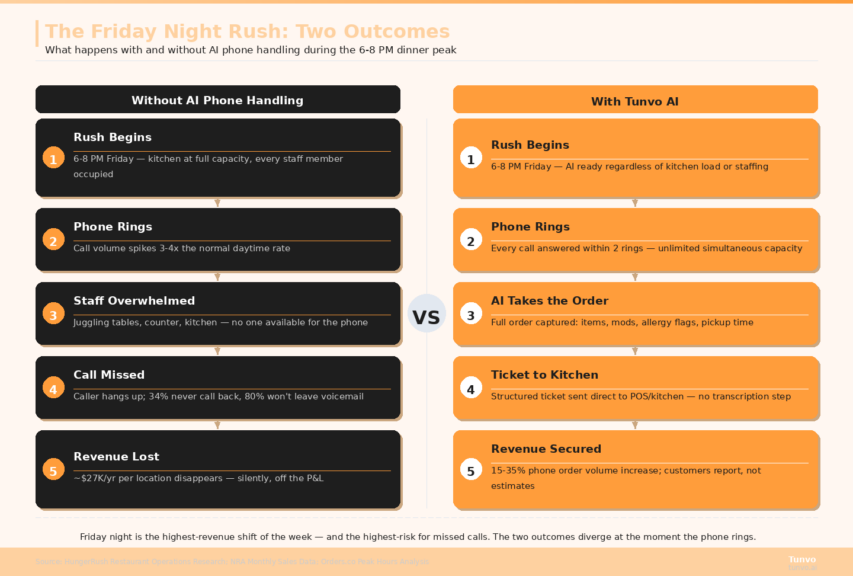
Friday night is the highest-revenue shift of the week — and the highest-risk for missed calls. The two outcomes diverge at the moment the phone rings.
What the Friday Rush Actually Looks Like From the Phone Side
Here is a typical Friday night phone call pattern for a mid-volume Chinese takeout: calls start building around 5:15 PM. By 6:00 PM, the volume is elevated but manageable. Between 6:30 and 7:30 PM, it peaks — this is the window where simultaneous calls are common and hold times balloon. By 8:15 PM, the rush begins to taper. By 9:00 PM, the kitchen is wrapping up the last orders.
The 90-minute window between 6:30 and 8:00 PM is where the most damage occurs. This is also the window when kitchen noise is highest, making it hardest for staff to hear callers accurately. Orders taken under those conditions have a higher rate of modification errors — missing the “no onion” request, getting the protein wrong, forgetting the extra sauce. Those errors become problems at pickup that require remakes and create friction with customers at exactly the moment they are already waiting in a busy restaurant.
Operational Adjustments Chinese Takeouts Can Make Now
Regardless of whether you adopt an AI voice solution, several operational adjustments reduce Friday peak-hour damage:
| Adjustment | What It Addresses | Limitation |
|---|---|---|
| Push online ordering in pre-rush communications | Shifts some volume to digital before it hits the phone line | Many regulars will not switch; family orders often still need phone customization |
| Set pickup time windows and communicate them proactively | Reduces simultaneous pickup crowd that creates counter congestion | Requires staff discipline to enforce during the rush |
| Rotate a dedicated phone handler through 6-8 PM | Ensures at least one person focused on calls | One-at-a-time capacity; quality degrades under simultaneous call pressure |
| Pre-prep Friday’s top 10 items to reduce kitchen-to-counter time | Frees kitchen staff to assist with front-of-house during call peaks | Works for high-volume SKUs; doesn’t help with custom orders |
These adjustments help at the margins but do not solve the structural capacity problem. The phone rings faster than staff can answer it during peak hours, and that relationship does not change with any staffing or prep adjustment short of adding substantial headcount.
How AI Voice Handles the Friday Rush Differently
An AI voice agent designed for restaurant phone ordering addresses the Friday rush problem at its root by handling unlimited simultaneous calls with consistent quality throughout the entire 6-8 PM window and beyond.
When a caller reaches Tunvo’s AI voice agent, they are greeted within one to two rings with a natural-sounding conversational interface that understands Chinese restaurant menus — including the specific terminology, combo configurations, and modifications common to this cuisine. The system takes the full order, captures any dietary restrictions or allergy notes, attaches those notes to specific line items, confirms the order by reading it back, and routes the completed ticket directly to the kitchen via POS integration. The caller goes from dialing to confirmed order in three to five minutes without anyone on the floor being pulled away from in-house service.
Because the system handles multiple calls simultaneously, a surge at 7:15 PM — when four calls come in at the same time — is handled the same way as a single call at 5:30 PM. There is no queue, no hold music, no caller abandonment. Every call that comes in during the Friday rush is answered, and every order that results from those calls is accurately captured and routed.
Tunvo’s customers report a 15-35% increase in phone order volume after implementation — not because there are more callers, but because the calls that were previously being missed are now being completed. Book a free demo to see what the Friday night difference looks like with your actual call volume.
What Happens After the Rush: Capturing Late-Night and After-Hours Orders
The Friday conversation tends to focus on the 6-8 PM peak, but Chinese takeouts with extended hours face a secondary problem: the 8:30-10:00 PM window, when kitchen staff are winding down but a second wave of callers — people returning from events, late-night workers, families that decided to order late — are still dialing.
According to delivery analytics data, weekend late-night orders spike noticeably, often driven by social gatherings and post-event demand. For a Chinese takeout with a 10:00 PM closing time, the 8:30-10:00 PM window represents real revenue that is easily captured if the phone system stays fully attentive — and equally easily lost if staff attention shifts toward closing prep.
An AI voice system maintains the same answer quality at 9:45 PM as it does at 6:30 PM. For operations that take calls until closing, this consistency protects a revenue window that human staff physically cannot prioritize while also managing end-of-shift tasks. Start a 15-day free trial to experience how the after-rush window changes with AI handling.
Common Questions
How do Chinese restaurant callers respond to AI phone agents?
Customer acceptance of AI phone ordering depends primarily on whether the system is fast, accurate, and sounds natural. Callers who might not identify themselves as “tech-forward” respond positively to an immediate, professional answer compared to a long hold or an unanswered call. The comparison is not AI versus a great human interaction — it is AI versus a missed call or an overwhelmed staff member in a noisy kitchen. In that framing, the AI system wins on most of the dimensions that matter to callers: speed, accuracy, and the order being right when they arrive at pickup.
What if a caller speaks limited English or has a strong accent?
Modern AI voice systems are trained on diverse speech patterns and accents, and perform significantly better on non-standard pronunciation than earlier generation systems. For Chinese takeout operations with customers who may prefer Mandarin or Cantonese, Tunvo’s system includes multilingual capabilities. Callers who are more comfortable in Chinese can order in their preferred language, and the resulting ticket is correctly formatted for the kitchen in English. This capability is particularly meaningful for Chinese restaurant operators, where a segment of the most loyal customer base may be more fluent in a dialect than in English.
Does the AI system understand the specific modifications common to Chinese food orders?
Yes — because the system is trained on your specific menu, not a generic restaurant database. Items like “beef with broccoli, extra sauce, white rice instead of fried” or “General Tso’s extra crispy, no vegetables, spicy” are captured as structured modifications attached to the correct line items. The training process maps your actual menu items and the most common variations, so callers can speak naturally about their order and be understood correctly.
How long does setup take for a Chinese takeout?
According to Tunvo, setup takes approximately 30 minutes for the initial configuration with a standard menu. The integration with MenuSifu POS means orders flow directly to your kitchen system without a manual entry step. There is no hardware to install — the system connects to your existing phone line and begins handling calls from the first day of deployment.