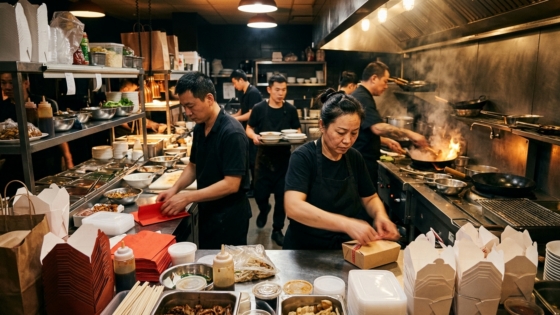
Ask any long-tenured restaurant employee what they love about the job and they’ll mention the energy of a full house, the chemistry of a good team, the pride of a shift that ran perfectly. Ask them what they hate, and the answers come faster: answering the same phone order questions for the hundredth time, manually logging reservations while tables fill up, reconciling tip pools at the end of a 10-hour shift when they’re exhausted. The irony is that the tasks driving your best people toward the exit are often the most automatable — not the human elements that make hospitality special, but the mechanical, repetitive, cognitively draining work that machines now handle better than people anyway. This article breaks down which tasks to automate first and why it directly improves morale and retention.
Key Takeaways
- Only 31% of U.S. employees were engaged at work in 2024 — a 10-year low per Gallup — and disengagement in high-repetition roles like restaurant work is disproportionately tied to meaningless busywork.
- Automating repetitive tasks doesn’t threaten good hospitality workers — it frees them to do the high-value, human-centered work that actually drives guest satisfaction and tips.
- The ROI on task automation compounds: lower burnout means lower turnover, which means lower recruitment and training costs — and a more experienced team that guests can tell the difference with.
The Connection Between Repetitive Tasks and Restaurant Turnover
Busywork Is a Burnout Accelerant
A 2025 study by Talker Research found that workers spend nearly half their workday on low-value, repetitive tasks — and describe this as a primary driver of their burnout. In restaurant contexts, the busywork is often even more acute: phone order scripting the same 10 questions per call, reading back the same menu modifiers across 30 calls per shift, manually entering orders from paper into a POS system that doesn’t integrate with the phone. These tasks don’t require judgment, empathy, or the interpersonal skill that good restaurant staff have invested years developing. They require the patience of a machine — and over time, doing machine work makes human workers feel like machines.
Gallup’s 2024 U.S. workplace engagement data found that only 31% of employees are actively engaged at work — the lowest figure in a decade. Among disengaged workers, a consistent factor is the sense that their work lacks meaning or uses their skills poorly. For restaurant employees with genuine hospitality instincts, being chained to phone duty during a busy service is exactly this kind of demoralizing misallocation.
The Turnover Math That Operators Rarely Calculate
Cornell University hospitality research puts the average replacement cost per restaurant employee at approximately $5,864. For a 20-person restaurant team with the industry’s average 79.6% annual turnover rate, that’s roughly $70,000 per year in replacement costs alone — before accounting for the service quality degradation, the guest experience impact, and the increased pressure on the team members who stay while positions remain vacant. If reducing busywork through automation retains even two to three employees per year who would otherwise burn out and leave, the ROI on the automation investment is measurable within months.
The Five Restaurant Tasks Most Worth Automating
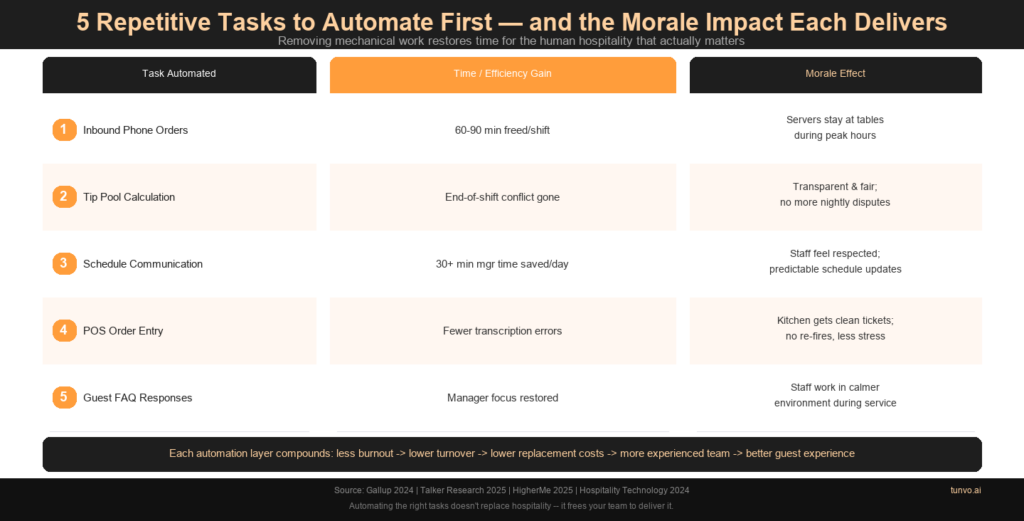
1. Inbound Phone Orders and Answering FAQs
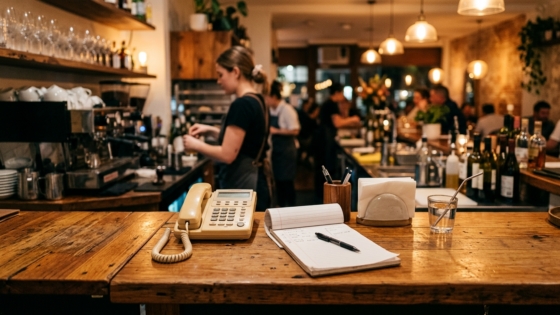
Answering the phone during service is among the most disruptive and demoralizing tasks restaurant staff face. Mid-service, it pulls a server or host from the floor at the exact moment they’re most needed. The content of most restaurant phone calls is highly predictable: hours and location, menu questions, order placement, reservation requests. These are pattern-matched tasks — not judgment calls requiring hospitality expertise.
AI voice agents now handle the full inbound restaurant call workflow, including taking orders directly into POS systems, answering menu questions from trained knowledge bases, and managing reservation requests — without human intervention. For a busy Chinese restaurant taking 30+ calls per shift, removing phone duty from floor staff is one of the fastest morale improvements available. Staff report to tables, not phones. Tunvo’s AI voice agent answers every call and routes orders directly to your POS, so your team focuses on the guests in front of them.
2. Tip Pool Calculation and Distribution
End-of-shift tip reconciliation is a consistent source of stress, disputes, and manager time drain. Manual tip pooling — calculating percentages by hours worked, by role, by section volume — takes 20–30 minutes per shift to do accurately, and is a documented source of team conflict when errors occur. Automated tip distribution through your POS or payroll platform eliminates the manual calculation, creates a transparent audit trail, and removes the manager from a judgment role that breeds resentment regardless of outcome.
3. Schedule Communication and Shift Swap Management
How much time do your managers spend texting staff about schedule changes, fielding shift swap requests via personal phone, and manually updating spreadsheet schedules? Scheduling apps (7Shifts, HotSchedules, When I Work) automate the communication layer entirely: staff receive schedule notifications, post swap requests that other staff can claim, and managers approve via a dashboard rather than managing an ongoing group text thread. The morale impact is surprisingly significant — employees consistently cite schedule unpredictability and poor communication as top drivers of job dissatisfaction. Automating this workflow removes friction and demonstrates that the operation is professionally run.
4. Order Entry and POS Integration
In restaurants with separate phone order intake and POS systems, manual re-entry of phone orders is a constant, error-prone task. A server takes a phone order on paper, then has to manually key it in — introducing transcription errors and occupying time that could be spent on the floor. POS integration that connects inbound orders directly to the kitchen ticket system eliminates the re-entry step. For higher-volume operations, this is a measurable time savings and a significant source of order accuracy improvement — both of which are strong morale factors for kitchen staff who receive incorrect orders downstream.
5. Guest Inquiry Response (Repeat FAQs)
Beyond phone calls, restaurants receive repetitive inquiries through Google, Yelp, Instagram DMs, and email: parking information, dietary accommodations, hours of operation, group booking policies. Manually responding to each query occupies significant management time and creates inconsistent responses. Automated FAQ systems — ranging from Google Business Profile Q&A to chatbot integrations on your website — handle the full lifecycle of these inquiries without human input. Staff whose managers are no longer constantly interrupting service to answer “where’s the parking?” queries operate in a noticeably calmer environment.
The Automation-Morale Link: Why It Works
Self-Determination Theory and Restaurant Work
Organizational psychology research on employee motivation consistently identifies three core needs: autonomy (control over one’s work), competence (using real skills), and relatedness (meaningful interaction with others). Repetitive, scripted tasks undermine all three: they remove autonomy (you must say the same thing every time), they don’t develop competence (a script requires no skill growth), and they reduce relatedness (phone order taking is a transactional, not relational, interaction). According to Hospitality Technology’s 2024 analysis, AI tools that remove repetitive tasks from hospitality workers consistently improve reported job satisfaction scores — precisely because they restore time for the human-facing work that employees actually find meaningful.
What Automation Does NOT Replace
The concern that automation threatens hospitality workers is understandable but misaligned with what high-performing restaurants actually automate. No technology replicates the warmth of a server who remembers a guest’s anniversary, the judgment of a manager who de-escalates a difficult table, or the skill of a kitchen team that executes 200 covers without a single refire. These are the capabilities that distinguish a restaurant guests love from one they merely visit. Automation targets the mechanical layer — not the human one. And when the mechanical layer is handled, the human layer improves: staff are less rushed, less cognitively depleted, and more capable of the genuine hospitality that drives loyalty and reviews.
Implementation: Where to Start
| Task to Automate | Time Saved/Shift | Morale Impact | Recommended Tool Type |
|---|---|---|---|
| Inbound phone orders | 60–90 min | High — removes peak-hour interruption | AI voice agent with POS integration |
| Tip pool calculation | 20–30 min | High — removes conflict source | POS tip management module |
| Schedule communication | 30–45 min (mgr) | Medium — reduces schedule anxiety | Scheduling app with shift swap |
| POS order entry (phone) | 15–25 min | Medium — reduces kitchen errors | POS + voice agent integration |
| Guest FAQ responses | 10–20 min (mgr) | Low-medium — reduces mgr distraction | Google Business Profile / chatbot |
The Sequencing Principle: Highest Disruption First
When deciding where to begin, prioritize the automation that removes the most disruptive task from your team’s peak hours. For most table-service restaurants doing any volume of phone orders, that’s inbound call handling. A server who doesn’t have to drop a table to answer the phone is instantly more effective in the room — and the guest in front of them has a visibly better experience. Start there, measure the impact on table coverage and order accuracy, and build a business case for the next automation layer from real data. View Tunvo’s pricing plans to see how AI phone handling compares to the labor cost of a dedicated phone handler.
Common Questions
Will automating phone calls make the restaurant feel less personal?
Not if implemented well. The guests who value a personal touch want to speak with someone who gives them their full attention — not a server who is distracted by a ringing phone mid-table. An AI system that answers calls promptly, handles orders accurately, and routes complex requests to a human creates a better guest experience than the current alternative of ringing phones and voicemail. For guests who specifically want human interaction, a well-designed system always offers an escalation path.
How do staff typically react to task automation?
Initial skepticism is common, especially in operations where staff worry about job security. The most effective framing is direct: “We’re automating the phone so you spend more time with tables, not less time at work.” When the first week shows that nobody is fielding phone calls during dinner rush and tips go up because service improves, the skepticism typically resolves quickly. Including team input in selecting automation tools also increases buy-in — staff who feel consulted, rather than managed at, are more receptive to change. Learn about Tunvo’s team and how we work with restaurant operators to implement AI that works with your team, not around them.
What’s the fastest morale win automation can deliver?
In most restaurant environments, removing phone duty from floor staff during peak hours produces the fastest visible morale impact. Staff immediately notice the absence of the interruption. Managers notice that service flows more consistently. And the data — fewer order errors, faster table turns, higher tip averages — creates a positive feedback loop that reinforces the change. For a restaurant doing 20+ phone orders per shift, this single change typically shows measurable results within the first two weeks of operation. Book a free demo to see Tunvo’s AI phone agent in action and understand how quickly it integrates with your existing setup.