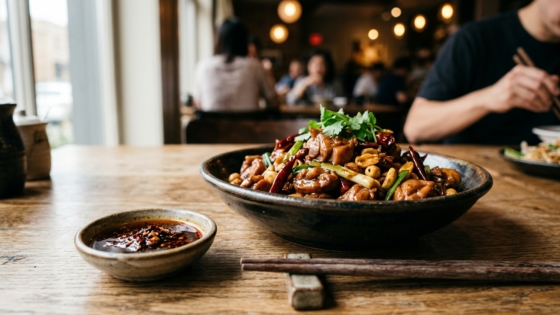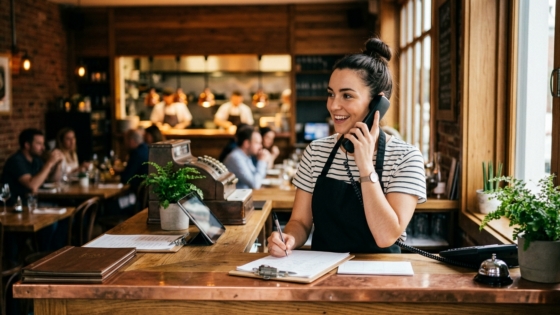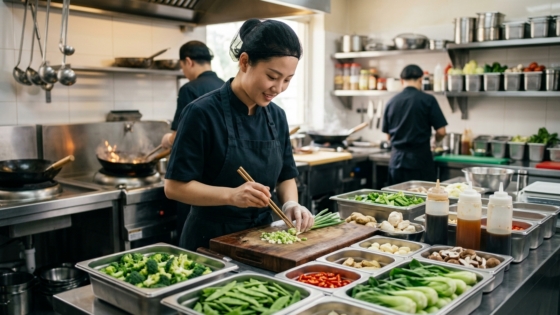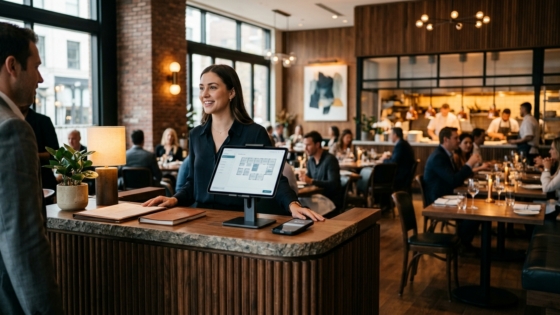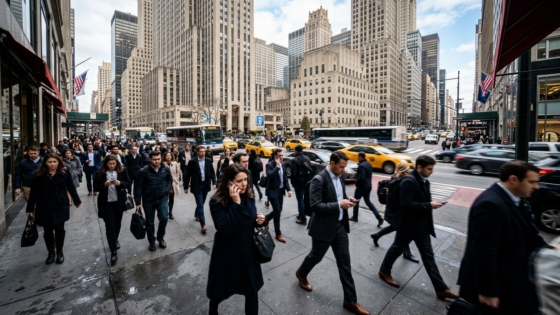
Anyone who has worked the phones at a New York restaurant knows the type: the caller who opens with “yeah hi gimme the sesame chicken combo with fried rice and an egg roll and oh can I get wonton soup instead of egg drop and I’m paying by card” — all in about six seconds, with no punctuation. The assumption most restaurant operators make is that this caller would hate talking to an AI. The reality, backed by what operators are actually seeing in deployment, is almost the opposite. New York’s fast-moving, efficiency-obsessed ordering culture turns out to be one of the best-fit environments for voice AI — for specific, counterintuitive reasons this article breaks down.
Key Takeaways
- NYC phone ordering culture is impatient with friction, not with speed — the caller who hates “Can you hold please?” will often prefer an AI that answers immediately and processes the order without small talk.
- Modern AI voice ordering systems handle rapid, dense speech reliably — speech-to-text technology has improved dramatically, and the restaurant-trained models that matter for ordering accuracy are built for natural, conversational speed.
- The biggest NYC customer complaint about restaurant phone ordering is wait time and put-on-hold moments — problems that AI ordering eliminates structurally, not incrementally.
Understanding NYC Ordering Culture
The “No Hold” Expectation
New York City diners have some of the highest service-speed expectations in any American market. A 2026 analysis by ScanQueue found that customers begin to abandon waiting interactions after approximately 8 minutes — but in phone ordering contexts, the tolerance is far shorter. Being put on hold during lunch rush, hearing “can I put you on hold for a sec?” mid-order, or getting bounced to voicemail are experiences that drive New York callers directly to the next option on their mental list — whether that’s a different restaurant, an app, or simply ordering somewhere else.
This is the specific friction point where AI voice ordering shines in the NYC context. An AI system answers on the first ring, every time, with no hold, no “one moment please,” and no “we’re really busy right now.” For a caller who has exactly four minutes between a meeting and a lunch pickup, that immediate, frictionless answer is not just convenient — it’s decisive. The competitive advantage is real: every call your AI answers is a call your competitor’s voicemail didn’t.
Fast Speech Isn’t the Problem It Looks Like
The intuitive concern about AI and fast-talkers is that speech recognition will fail on rapid input. This concern was legitimate five years ago. In 2025–2026, it is largely obsolete for the use case that matters: restaurant ordering from a trained menu. Modern speech-to-text systems operating in restaurant contexts don’t need to parse completely open-ended speech — they’re working against a bounded vocabulary of menu items, modifiers, and common request patterns. Within that vocabulary, processing speed is not the limiting factor for accuracy. Benchmark data from CodeSOTA’s March 2026 Speech AI Leaderboard shows leading restaurant-grade speech models achieving word error rates below 3% on natural conversational speech — significantly better than the baseline accuracy of handwritten phone order transcription under noise.
What matters is not whether the AI can keep up with a fast talker — it can — but whether the restaurant’s AI system has been trained on the specific menu items it will be asked about. A caller who says “sesame chicken” will be understood correctly if “sesame chicken” is in the training set. The speed at which they say it is not the variable that determines accuracy.
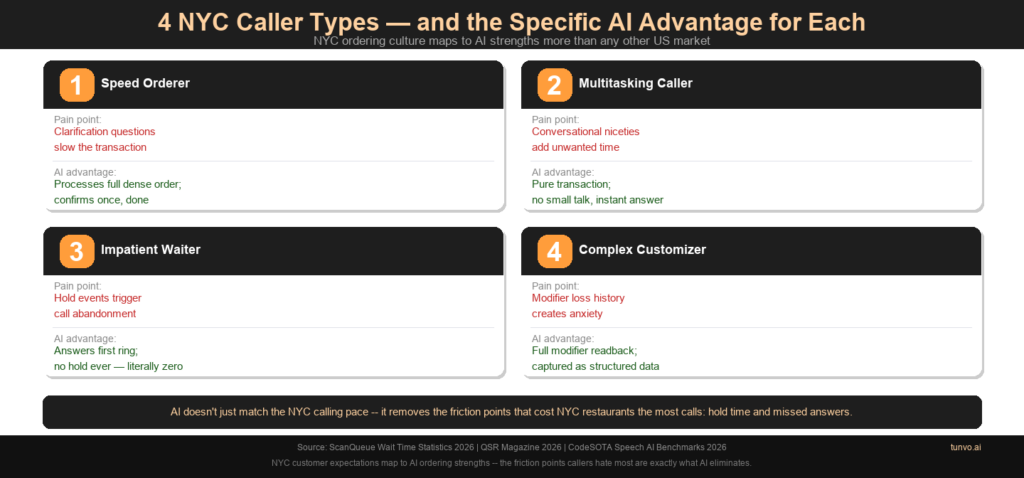
The Four NYC Caller Behaviors — and How AI Handles Each
1. The Speed Orderer: “Gimme the usual, extra rice, card on file”
Regular customers who have ordered from the same restaurant 50 times know exactly what they want and want to state it as fast as possible. For these callers, a human phone operator’s tendency to repeat questions (“Was that beef or chicken?”), ask for clarification on modifiers they already heard, or pause to write creates friction that feels like being slowed down for no reason.
An AI system trained on the restaurant’s menu processes the order as stated, confirms it back in a single readback, and completes the transaction without unnecessary interruptions. For the speed orderer, this is a materially better experience than talking to a human who needs more time to process and write the same order.
2. The Multitasking Caller: On the Phone While Doing Three Other Things
A significant share of NYC lunchtime phone orders are placed by callers who are simultaneously walking, managing email, or on another call. They don’t want or need a conversational experience — they want a fast transaction that doesn’t require their full attention. AI ordering accommodates this exactly: a clear, efficient system that asks only what it needs and confirms the order cleanly.
3. The Impatient Waiter: Zero Tolerance for “Just a Moment”
This is the caller who hangs up the moment they’re put on hold and calls back expecting an immediate answer. Industry data consistently shows that the primary driver of restaurant call abandonment is not speed of ordering — it’s time-to-answer and hold events. According to QSR Magazine’s March 2026 analysis, restaurants lose approximately $20 billion annually from unanswered or abandoned phone calls — with the peak abandonment window being the first 30 seconds of a call that goes to hold or voicemail. AI ordering eliminates both triggers. The phone is answered immediately. There is no hold event.
4. The Customizer: Complex Order, No Patience for Mistakes
NYC callers who have dietary restrictions or strong preferences about their order often have a history of those preferences being ignored or incorrectly executed. They’ve learned to repeat themselves, spell out modifiers, and expect errors. For this caller, an AI system that captures the full modifier set and confirms it in a readback — “your order: General Tso’s with no MSG, light sauce on the side, extra broccoli, no peanuts” — is a revelation. They don’t have to repeat themselves. They don’t have to mentally prepare for a wrong order. The system got it, and proved it.
What Operators in NYC Are Reporting
Call Answer Rate Improvement Is the Lead Metric
The data from restaurant operators who have deployed AI phone ordering in high-volume urban environments is consistent on the leading metric: call answer rate goes up dramatically — from industry averages of 60–70% during peak service to near 100% — and the upstream effect on revenue is measurable. For a restaurant doing 40+ phone orders per lunch shift, the difference between a 65% and a 99% answer rate is roughly 14 orders per shift. At a $32 average order value, that’s $448 in recovered revenue per shift — $163,520 per year, before accounting for the labor cost reduction on the phone-coverage position.
Customer Complaints About the AI Are Rare When the System Is Right
Operators who report negative customer feedback about AI ordering almost universally trace it to one of two configuration failures: the AI didn’t know a menu item the caller asked for, or the escalation path was unclear when the caller had a non-standard request. Both are solvable at configuration time. Operators who have invested in thorough menu training and clear escalation messaging — “press zero anytime to speak with someone” — report complaint rates about the AI system in the low single digits per hundred calls. For an NYC audience that already interacts with automated systems constantly (MTA, phone trees, bank IVRs), a well-designed AI ordering system doesn’t generate the friction that operators fear. Tunvo’s AI voice agent is trained specifically for restaurant ordering and designed to handle the density and speed of real-world phone ordering in high-volume markets.
Common Questions
What if a customer talks over the AI or interrupts mid-prompt?
Modern restaurant AI ordering systems are designed for barge-in — the ability to process speech input even when the caller talks while the system is still prompting. This is critical for fast-talking NYC callers who will not wait for a system to finish its sentence before starting their order. A system that handles barge-in gracefully — acknowledging the interruption and processing the input — feels responsive and efficient. A system that requires the caller to wait for a full prompt to complete before speaking feels like a 1990s phone tree, and will generate immediate friction. Book a demo with Tunvo to experience barge-in handling and evaluate whether it matches your customer’s calling behavior.
Do older customers or non-tech-savvy callers struggle with AI phone ordering?
The adjustment curve is real but shorter than expected. The key is that AI restaurant ordering is a phone call — not an app, not a website, not a kiosk. Customers who would never use a food delivery app will still call a restaurant to place an order the same way they always have. If the AI answers that call and completes the transaction without requiring new behavior — no button-pressing, no account creation, no app download — the experience is accessible to callers of all technical comfort levels. The most common point of friction for less tech-experienced callers is uncertainty about whether they’re talking to a real person; clear, upfront identification of the AI system resolves this. Learn how Tunvo balances transparency and efficiency in its voice agent design.
How does AI handle a caller who wants to modify a previous order or check order status?
Order status and modification requests fall into the category of post-ordering service — a distinct workflow from new order intake. Restaurants using AI ordering should be clear with callers about what the AI handles (new orders, FAQs, reservations) and what requires human staff (existing order modifications, complaints, delivery status). A well-designed system routes status inquiries to a human with a clear handoff: “For questions about an existing order, press zero and a team member will help you.” The failure mode to avoid is an AI that attempts to answer order-status questions without access to real-time POS data — a configuration gap that generates frustrated callers and damages trust in the system.