What is Natural Language Understanding
Natural Language Understanding (NLU) is the core capability that enables AI voice systems to accurately interpret customers’ natural, spoken language and capture their real intent.
Unlike basic speech recognition, NLU is not about mechanically matching preset sentence patterns — it is about enabling machines to truly “understand what people mean,” not just what they say.
In real-world restaurant phone interactions across North America, customers often speak in informal and unpredictable ways, such as:
- Speaking with different regional accents (e.g., Cantonese-accented English, Spanish-accented English, or Southern U.S. accents)
- Talking in fragmented or incomplete sentences (e.g., “Let me get that black pepper beef… for two people… to go.”)
- Packing multiple requests into a single sentence (e.g., “I’d like to book a table for two at 6 p.m. tonight, and by the way, can you reserve your signature roast duck for us in advance?”)
Why It Matters for Restaurants
🤖 Weak NLU slows things down — and frustrates customers
🤖 Strong NLU captures key information in one go
🤖 High accuracy is critical for real-world deployment
🤖 NLU directly determines whether customers accept AI
AI with Strong NLU 🆚 Manual Call Handling
| AI with Strong NLU | Manual Call Handling | |
|---|---|---|
| Multi-expression Understanding | Can interpret conversational, fragmented, and multi-intent speech | Possible, but efficiency varies by staff |
| Accent Adaptation | Can be trained to handle diverse accents (e.g., Chinese- or Latino-accented English) | Fully dependent on individual employee listening skills |
| Stability | Consistent performance regardless of time or stress levels | Understanding can decline due to fatigue, mood, or busyness |
| Scalability | One system can be deployed across multiple locations with consistent capability | Hard to replicate top-performing staff at scale |
How to Implement High-performance NLU Effectively
✅ Train a scenario-specific restaurant corpus
Collect real restaurant call recordings in North America — especially from Chinese restaurants — focusing on common expressions like:
- “Less salt, less spicy”
- “No onions or garlic, please”
- “Can we put a birthday cake in the private room?”
Use these real-world phrases to train and fine-tune the NLU model for better domain adaptation.
✅ Optimize for multi-accent recognition
✅ Set shortcut recognition rules for common intents
✅ Establish an error feedback and iteration mechanism
✅ Keep manual transfer as a safety fallback
For rare, highly complex requests — such as:
“I need a customized nut-free kids’ meal, and I also want to delay pickup by one hour.”
Set up a clear trigger for transferring to a human agent to ensure customer experience is not compromised.
Key Conclusion
NLU determines whether an AI voice system can truly understand customers like a human.
More importantly, it can be even more reliable than human staff, because it doesn’t get tired, stressed, or overwhelmed during peak hours. Strong NLU is therefore the core competitive advantage that enables AI voice systems to succeed in real restaurant operations.
FAQs
❶ What’s the difference between NLU and speech recognition (ASR)?
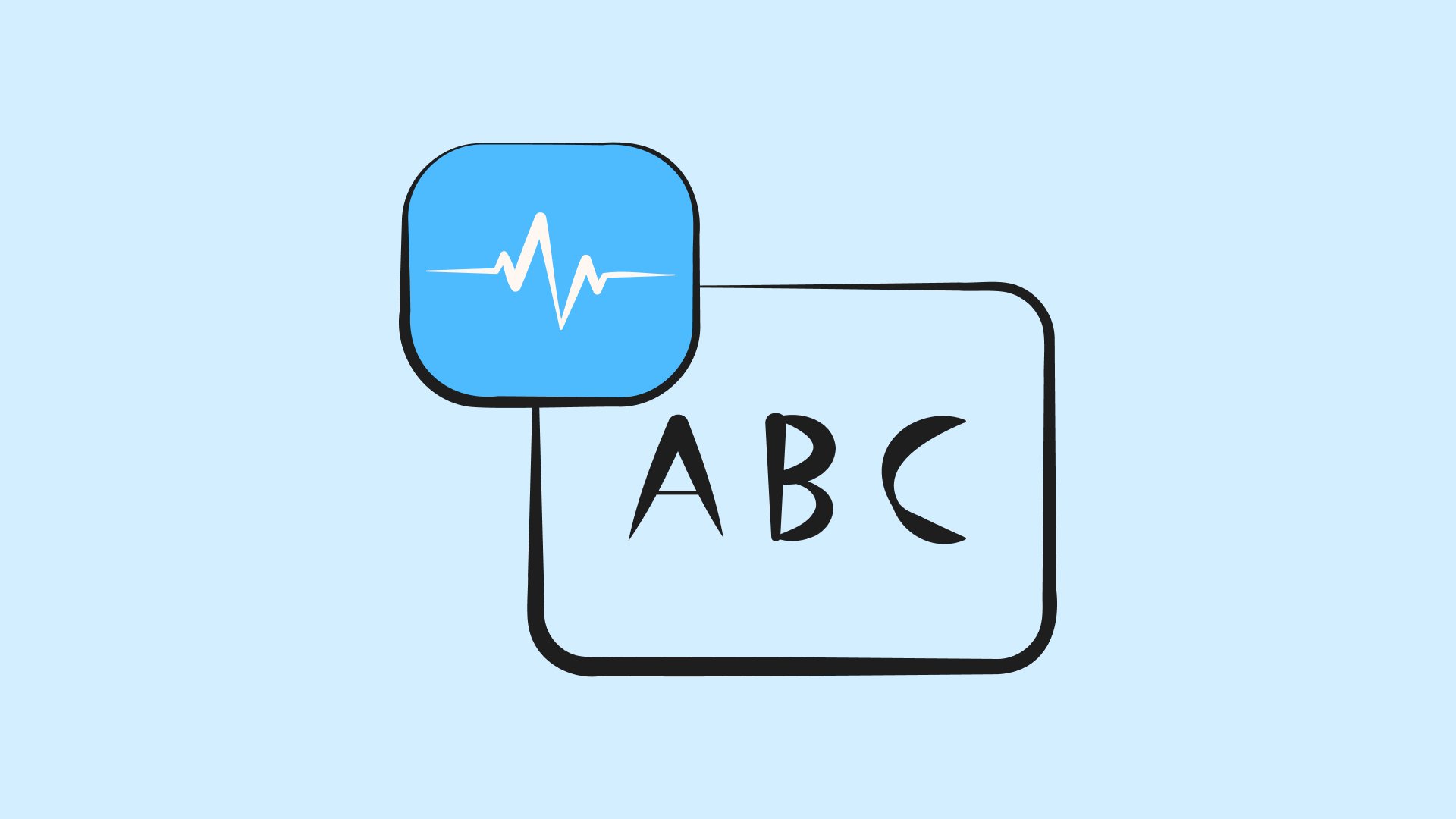
Automatic Speech Recognition (ASR) converts spoken words into text, while Natural Language Understanding (NLU) interprets the meaning behind that text. In short, ASR answers “what was said,” while NLU answers “what the customer actually wants.” In AI phone ordering for restaurants, ASR might transcribe “black pepper beef,” but NLU determines that this is an ordering intent and extracts key details such as party size, pickup method, and special requests.
❷ Why is NLU especially critical for restaurants?
Restaurant phone calls are highly unpredictable — customers may speak with accents, use fragmented sentences, or combine multiple requests (ordering + reservations + questions) in one sentence.
Weak NLU slows down conversations, hurts the customer experience, and can reduce order conversion.
Strong NLU is what makes an AI restaurant phone system truly usable in real-world operations.
❸ Can AI with strong NLU replace human staff for phone answering?
For standard scenarios — such as restaurant reservations, phone ordering, order changes, and business-hour inquiries — mature NLU systems can typically achieve over 90% intent recognition accuracy, allowing AI to handle most calls reliably and reduce staffing pressure.
However, highly complex or sensitive requests should still be routed to human staff.
❹ How does AI handle different accents in customer calls?
High-performing NLU models are trained with multi-accent datasets, including Cantonese-accented English and Spanish-accented English, to better serve North America’s diverse customer base.
Unlike human staff (who rely on personal experience), AI can continuously improve, making an AI restaurant answering service more consistent and scalable.
❺ How can restaurants implement high-performance NLU effectively?
Best practices include:
- Training with real restaurant call recordings;
- Optimizing for multi-accent recognition;
- Setting priority rules for core intents (reservations, ordering, modifications, hours);
- Establishing a feedback loop to continuously improve the AI phone system for restaurants.
❻ What happens if the AI doesn’t understand a customer?
A reliable restaurant AI phone system should have two safeguards:
- Targeted clarification when critical information is missing;
- Seamless handoff to a human agent for complex or high-risk cases to protect customer experience and order accuracy.