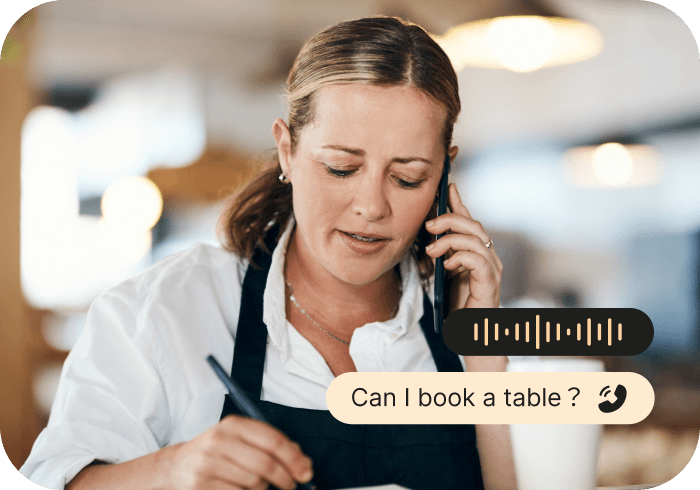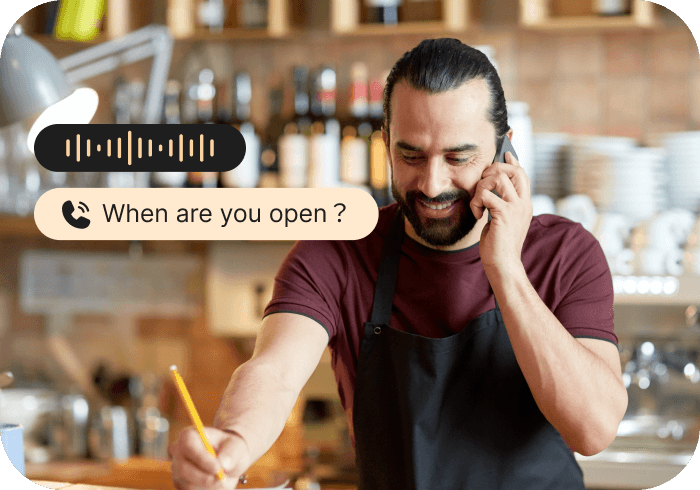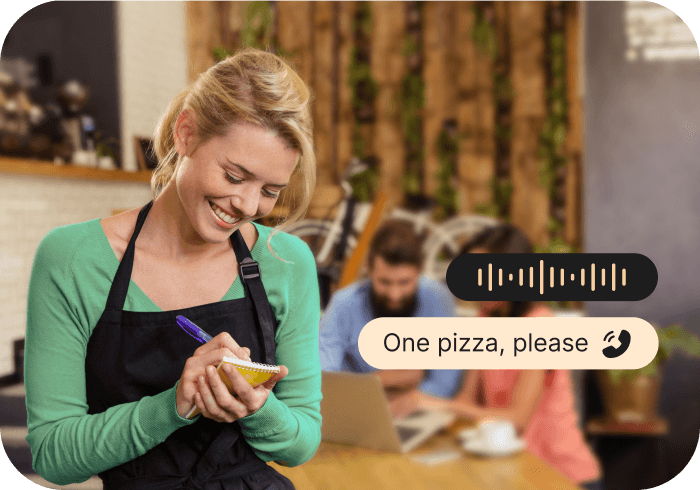
“I’d like to reserve a table for tonight, by the window, and what are your signature dishes?”
For traditional restaurant voice bots, a question like this often causes chaos—they might respond to the reservation request but ignore the menu question, or repeatedly ask, “Sorry, can you repeat that?” frustrating customers. This highlights the key limitation of traditional bots: they can handle simple, single-turn commands but can’t manage natural, multi-turn conversations like a human agent.
These advanced AI systems are transforming restaurant voice bots from “mechanical answering machines” into service assistants that truly understand and communicate with customers. With powerful natural language understanding (NLU), context memory, and multi-turn conversation skills, LLM-powered bots make the leap from “can talk” to “can converse naturally.”
Why Traditional Bots Struggle with Natural Interaction
In restaurant phone service, traditional bots face three main challenges:
1. Poor context understanding
2. Multi-turn conversation gaps
3. Rigid dialogue flow
Bots follow scripts and can’t flexibly adjust questions based on what the customer says, making interactions feel “robotic.”
These issues stem from reliance on fixed rules or basic machine learning, which can’t grasp language logic or connect customer needs across turns.
Traditional Voice Bots 🆚 LLM-Powered Voice Assistants
| Traditional Voice Bots | LLM-Powered Voice AI Agents | |
|---|---|---|
| Context Understanding | Handle only the current request; little to no memory | Can retain and reference conversation history to understand context |
| Multi-turn Conversations | Mostly single-turn; struggle with topic shifts | Support natural multi-turn dialogue with smooth topic transitions |
| Dialogue Guidance | Follow rigid scripts with fixed questions | Dynamically adapt questions based on user input |
| User Experience | Mechanical and repetitive, often frustrating | More natural and human-like interaction |
| Handling Complex Requests | Difficult to process multi-intent or ambiguous requests | Can interpret and manage complex, composite requests |
How LLMs Upgrade the Restaurant Voice AI Experience
LLMs are the “experience engine” for restaurant voice bots because they bring three game-changing capabilities:
1. Superior Context Understanding – Remembering and Connecting Information
LLMs can store long conversation histories and link separate pieces of customer information.
😋 Example
A customer says, “No spice,” then adds, “Table for three at 7 PM.” The LLM-powered bot can respond: “Great, I’ve reserved a table for three at 7 PM, with dishes prepared mild. Any other requests?”—without asking repetitive questions. Previously, traditional bots often forced customers to repeat themselves, leading to complaints.
2. Flexible Multi-Turn Conversations – Handling Complex Requests Smoothly
Customers rarely stick to a single request—they might combine reservations, menu questions, and special instructions. LLM bots can follow these “topic jumps” seamlessly.
😋 Example
At a hotpot chain, a customer says, “I want a 2-person table for tomorrow noon, and do you have non-spicy broth?” The bot first confirms the reservation, then smoothly addresses the menu query, and can even handle additional questions about business hours without breaking flow. The conversation feels just like talking to a real human.
3. Intelligent Dialogue Management – Guiding Conversations Naturally
Good conversation isn’t just about understanding—it’s also about pacing and guidance. LLMs can:
- Prompt customers to clarify vague requests naturally.
- Sequence questions by priority: core needs first, secondary details later.
- Resume conversations seamlessly if interrupted.
😋 Example
A small bistro’s LLM bot handles incomplete reservation info by saying: “Do you want the table for today or tomorrow? Evening slots 6–8 PM are peak—booking early can secure a window seat.” If the call is interrupted, the bot can pick up where it left off: “Earlier you mentioned a reservation—let’s confirm time and number of guests.” This adds a human-like touch to the interaction.
Key Tips for Deploying LLM-Powered Restaurant Voice AI
To maximize LLM capabilities, restaurants should focus on three design principles:
1. Scenario-based dialogue templates
2. Restaurant-specific data
3. Flexible fallback strategies
Key Design Considerations for Deploying LLM-Powered Voice AI Agent in Restaurants
| Description | Example | |
|---|---|---|
| Scenario-Based Conversation Design | Build tailored dialogue flows for common use cases like reservations, ordering, and inquiries | Reservation flow: party size → time → seating preference → contact details |
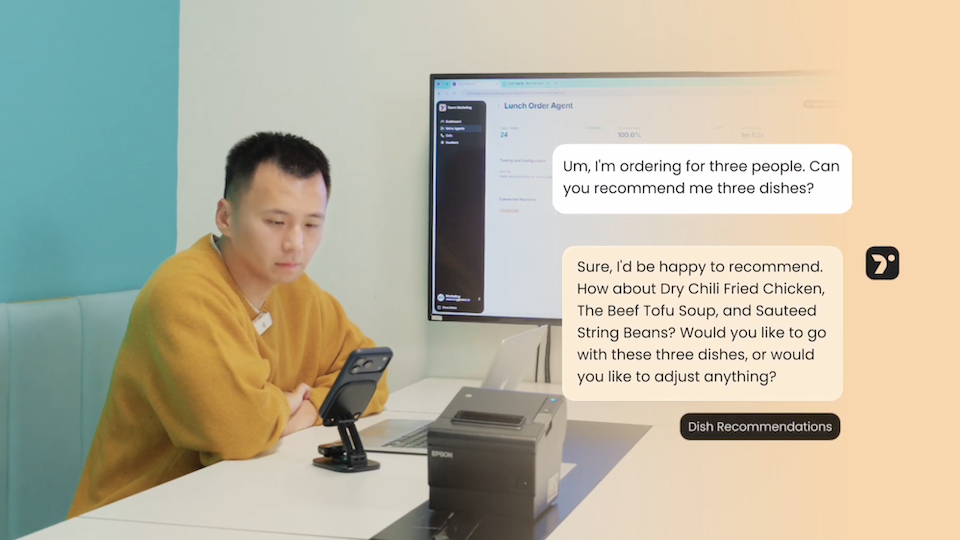
| Restaurant-Specific Knowledge Base | Integrate menu, specials, and operating hours to improve accuracy | When asked about “non-spicy options,” the assistant can recommend suitable dishes |
| Smart Fallback Strategy | Smoothly escalate to human staff while preserving collected information | If a caller hangs up mid-order, the system can resume the conversation upon callback |
Conclusion: LLMs Set a New Standard for Voice Bot Experience
In today’s competitive restaurant market, customer experience is a key differentiator. Traditional bots improve efficiency but can’t handle natural conversation. LLM-powered bots, with context understanding, multi-turn dialogue, and intelligent conversation management, elevate phone interactions to a new standard—helping restaurants delight customers, protect their reputation, and boost repeat business.
Restaurants adopting LLM voice bots now gain an early edge, turning every phone call into an opportunity for seamless service and satisfied customers.
FAQs
❶ What’s the main difference between LLM-powered voice robots and traditional ones?
LLM-powered robots don’t just handle single commands—they understand context, support multi-turn conversations, and manage dialogue flow intelligently for natural interactions. Traditional robots rely on fixed rules and scripts, which struggle with complex or follow-up requests.
❷ How does an LLM robot handle customers adding new requests mid-conversation?
Thanks to multi-turn dialogue capability, it can seamlessly manage additional requests—like combining reservations, menu questions, or special instructions—without interrupting the flow or asking redundant questions.
❸ How can restaurants make sure the LLM robot doesn’t make mistakes or misinterpret requests?
This is achieved through three strategies: scenario-based dialogue templates, training the model on restaurant-specific data (menu items, dialects, services), and flexible human handoff. For complex cases, the robot can smoothly escalate to human staff while retaining all collected info.
❹ What are the specific ways LLM robots improve customer experience?
Three key advantages:
- Context understanding—remember and link previous customer requests.
- Multi-turn conversation—handle complex, multi-topic interactions smoothly.
- Intelligent guidance—ask questions in a logical order with natural, personalized language for a smooth experience.
❺ Are LLM voice robots suitable for all types of restaurants?
They can be applied widely, especially in restaurants with high call volume, complex requests, or a need to improve service experience and repeat business. Implementation should be customized to the restaurant’s workflow, menu, and customer profile.
❻ Will staff be replaced after deploying LLM robots?
No. Robots handle routine or repetitive tasks, freeing staff to focus on higher-value needs, such as special orders, complaint resolution, or large group bookings.
❼ What operational metrics typically change after introducing an LLM robot?
Key impacts include higher phone order conversion rates, lower complaint rates, improved customer satisfaction, faster call handling, and ultimately increased repeat business and better reputation.