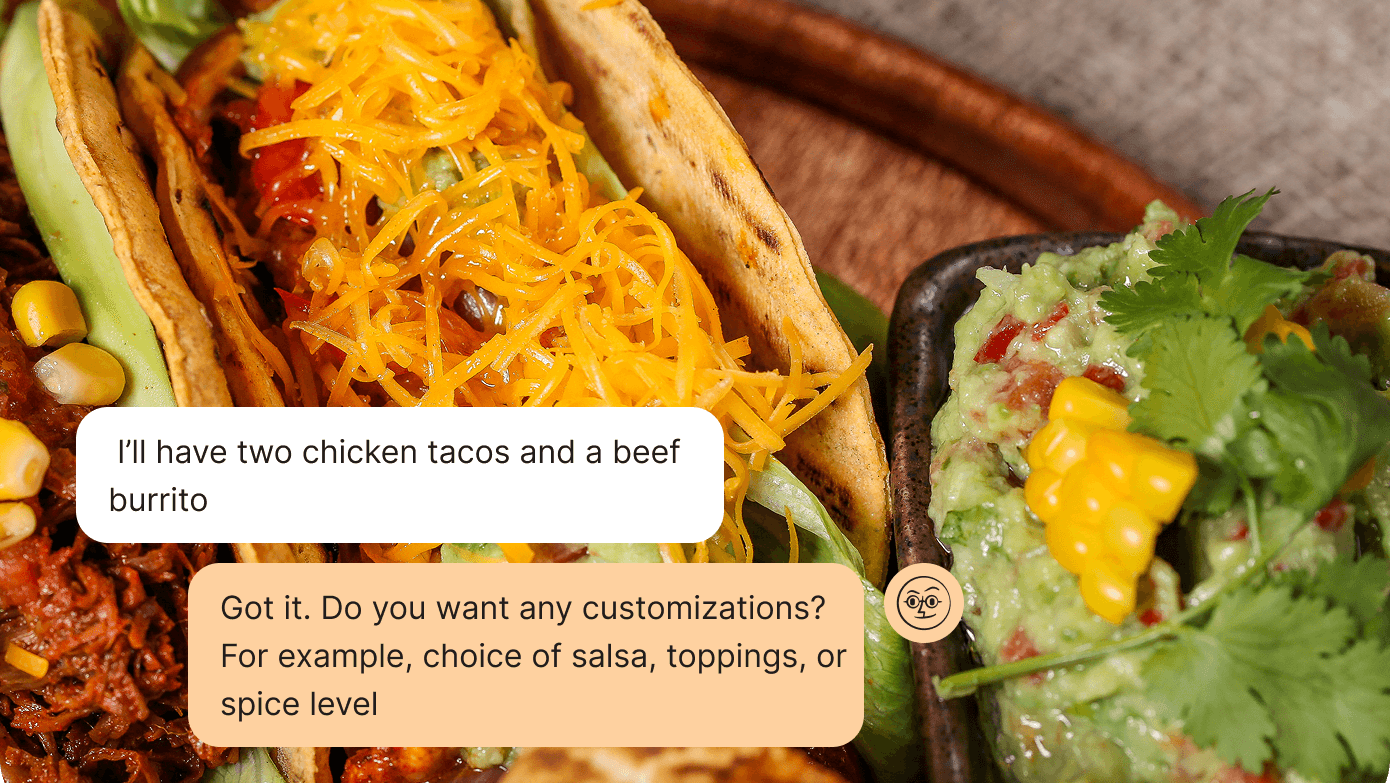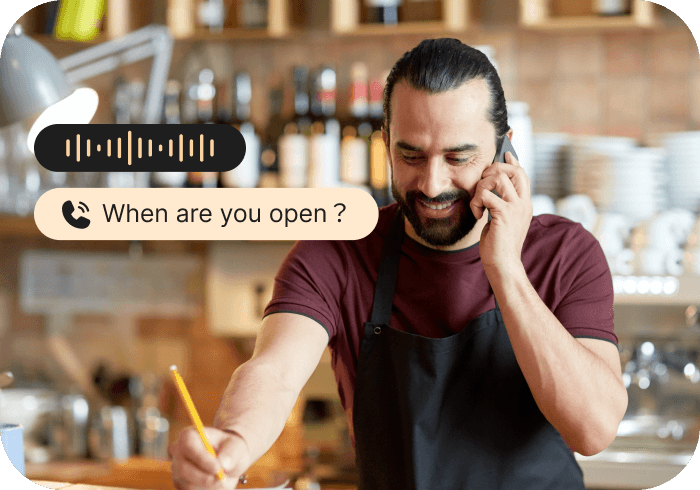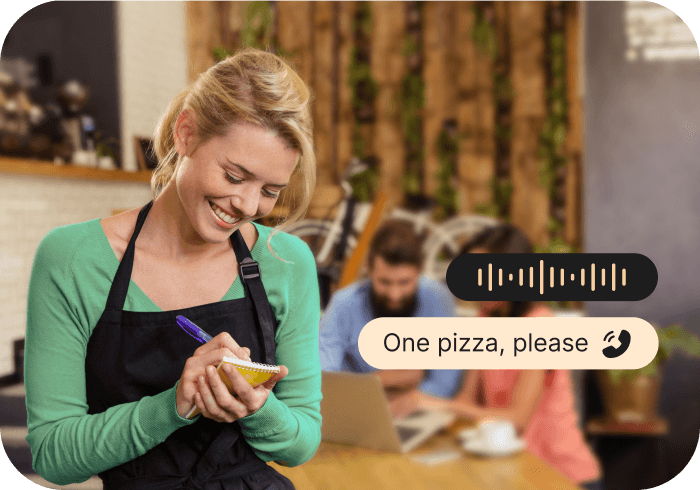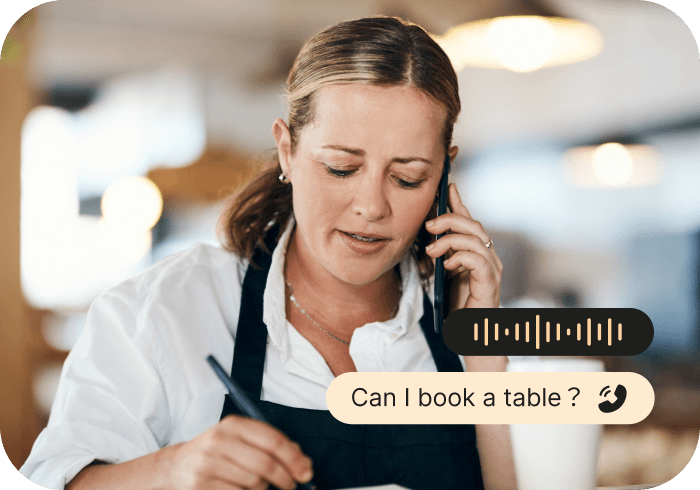
For many restaurants, the ring of the phone is one of the sweetest sounds in the house.
In the fiercely competitive U.S. restaurant market, this simple phone line is far more than a channel for orders — it is the starting point of service, a bridge to customer relationships, and a direct driver of revenue. A single call can make or break a sale, or mark the beginning of a loyal customer relationship.
Top-performing restaurants understand this deeply. From traditional, people-centered communication to today’s AI-powered efficiency, they have built a proven system around phone service that balances warmth with performance.
Part 1: Classic Principles of Great Restaurant Phone Service
Before AI, excellent phone service was fundamentally a “human art.” The following time-tested principles remain the foundation for any successful technology adoption today.
① Treat the phone as the “first storefront” and build emotional connection
For many independent and family-owned restaurants, a ringing phone is not a distraction — it is an opportunity.
Great operators believe that service over the phone should be just as thoughtful as in-person service. Some even require staff to stand while answering calls or to smile while speaking, knowing that body language affects tone of voice.
Every call is viewed as a chance to build a personal relationship with the guest — not just to process a transaction.
② Combine standardized processes with personalized service
Successful restaurants balance efficiency with warmth.
They establish clear standard procedures, such as:
- A consistent greeting
- Asking for the guest’s name
- Repeating the order for accuracy
- Confirming pickup or reservation time
Within this structure, staff are encouraged to personalize the interaction — remembering regulars’ preferences, noting allergies, or acknowledging special occasions.
A simple line like:
can build far more loyalty than any marketing campaign.
③ Turn phone calls into data assets and repeat business
Top restaurants never treat a phone order as the end of the interaction — it is one of their most powerful marketing touchpoints.
Well-trained staff naturally recommend:
- Signature dishes
- Daily specials
- Pairing suggestions
and gently encourage return visits at the end of the call, for example:
Many restaurants also keep simple customer records (digital notes or even index cards) to capture preferences and improve future service.
③ Technology must first solve the core pain point: never miss a call
Even in the most traditional mindset, one rule is universal:
From call waiting to voicemail to professional answering services, keeping the lines open has always been a top priority for restaurants.
This very practical need is exactly what created fertile ground for today’s AI voice assistants — they address this fundamental pain point in a smarter and more cost-effective way.
Part 2: The AI Revolution in Practice: Real Cases and Results
When classic service principles meet AI, the result is a scalable efficiency revolution.
AI voice assistants are not replacing people — they are consistently executing best practices 24/7. Below are real-world results from restaurants of different sizes:
| Brand | AI Solution | Core Use Case | Key Results |
| Dine Brands | SoundHound AI | Handles takeout & delivery calls for Applebee’s and IHOP | Missed orders during peak hours reduced by 50%+ |
| Wing Zone | ConverseNow AI | Manages drive-thru and phone orders | Drive-thru revenue per store +30%, AOV +7% |
| Via 313 Pizza | Kea AI | Handles all inbound order calls | Achieved 100% call answer rate |
| Harborview Chinese Restaurant | Hostie AI | Automates reservations and inbound calls | 84% of calls handled without human transfer; phone reservations +42% |
| Wayfare Tavern | Hostie AI | Managed call surge during new restaurant opening | 11,000 calls handled in 3 months; reservations +150% |
| Lee’s Famous Recipe Chicken | SoundHound AI | Handles delivery and pickup calls | Near 100% answer rate; order capture rate increased to 80% |
These results point to a clear reality:
Part 3: Four Keys to Successful AI Voice Deployment
Buying technology alone does not guarantee success. Based on real implementations, four best practices stand out.
① Strategy: AI as an efficiency booster, not a replacement
The most successful restaurants position AI as a powerful assistant to staff.
AI handles:
- Repetitive, high-volume tasks
- Peak-hour call surges
Humans focus on:
- Complex decisions
- Emotional engagement
- Personalized service
- In-store guest experience
This human-AI collaboration improves both service quality and operational efficiency.
② Operations: Stability and team adoption come first
Any new technology must pass a simple test: Does it actually make employees’ jobs easier?
System reliability and accessible support are critical. An AI solution that staff can easily restart and troubleshoot is far more valuable than a complex system that is hard to maintain.
③ Experience design: balance efficiency with humanity
Customer experience must remain central, including:
- Transparent communication: letting guests know they are speaking with an AI assistant.
- Clear path to a human: e.g., “Say ‘agent’ to speak with a team member.”
- Brand alignment: customizing AI tone and style to match the restaurant’s personality.
The goal is not to “hide” AI — it is to make interactions smooth, trustworthy, and respectful.
④ Data loop: from call handling to business intelligence
The highest value of AI lies in data.
By integrating AI with systems like:
- OpenTable
- Restaurant POS
Orders can be captured automatically and accurately.
Further analysis of call data — such as popular items, peak times, and changing customer preferences — helps restaurants optimize menus, manage inventory, and run targeted promotions, creating a full growth loop from call to repeat business.
Conclusion: Where Human Warmth Meets Intelligent Efficiency
The evolution of restaurant phone service in the U.S. reflects a clear shift:
- From experience-driven to data-driven
- From labor-intensive to human-AI collaboration
Traditional service principles define the soul of hospitality — genuine care for customer relationships. AI gives that soul a stronger, tireless body that operates beyond human limits.
The future winners in dining will be those who seamlessly blend human warmth with AI efficiency — turning every ringing phone into an opportunity for loyalty and growth.
About Tunvo AI
Tunvo is an AI voice agent for restaurants.
It answers every call, takes orders straight into your POS, and helps restaurants boost revenue by capturing every inbound opportunity. So your teams can focus on delivering exceptional guest experiences.
FAQs
❶ Does AI make restaurants feel less “human”?
No — not when it’s positioned correctly.
AI is meant to handle repetitive, high-volume tasks, especially during peak hours, while humans focus on emotional engagement and personalized service. In fact, by reducing staff pressure, AI can actually make service warmer and more attentive.
The key is human-AI collaboration, not automation alone.
❷ Why is call answer rate so important for restaurants?
Because every missed call likely means lost revenue.
Most customers won’t keep calling — they simply move to another restaurant. Results from real implementations show:
- Via 313 Pizza: 100% answer rate
- Dine Brands: 50%+ reduction in missed orders
- Lee’s Famous Recipe Chicken: order capture rate up to 80%
Improving answer rate is one of the most direct ways to increase sales.
❸ Can AI handle complex orders or special requests?
Yes — but with clear boundaries.
Modern AI can handle:
- Multi-item orders
- Order changes
- Takeout vs. delivery
- Basic reservations
- Common questions (hours, location, menu)
For more complex situations — large group orders, complaints, or detailed allergy concerns — the system should smoothly transfer to a human agent.
Great design ensures customers always feel in control.
❹ Will restaurant staff actually accept AI?
Adoption depends on three things:
- Does it reduce workload? If AI handles peak call volume, staff usually welcome it.
- Is it reliable and easy to use? Simple controls and stability matter more than flashy features.
- Does it respect human roles? When AI is positioned as a helper, not a replacement, staff are far more supportive.
❺ Is AI worth it for small restaurants?
Actually, small restaurants often benefit the most.
Example: Harborview Chinese Restaurant
- 84% of calls handled without human transfer
- Phone reservations increased by 42%
For small teams, AI acts like:
- A 24/7 front desk
- A tireless order taker
- A safeguard against missed calls
Especially during busy hours, the impact is significant.