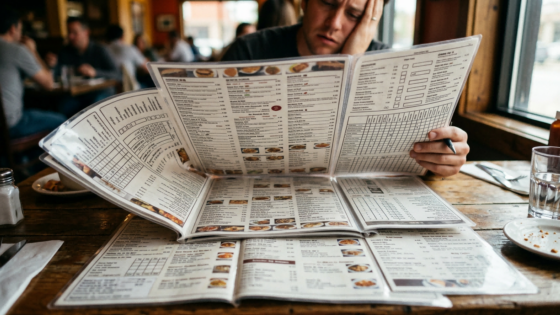
There’s a well-worn belief in the restaurant industry: more choices mean more customers. If you have something for everyone, everyone will come. It’s a reasonable instinct — and it’s one that quietly destroys margins, slows down kitchens, and drives away diners who just wanted to make a simple decision.
In my work with restaurant owners across New York, a bloated menu is one of the most common issues I see. Restaurants that started with 30 items gradually added seasonal specials, family recipes, and customer requests until the menu became a small book. The owners don’t always realize it, but every new page is costing them money.
Key Takeaways
- Too many options trigger decision fatigue in customers, often pushing them toward their safest — not most profitable — choice.
- A large menu increases food waste, inventory complexity, and kitchen errors.
- Research suggests each menu section should cap at 7 items before customer satisfaction drops.
- Trimming your menu is one of the fastest, lowest-cost ways to improve profitability.
The Psychology of Too Many Choices
In the 1990s, psychologist Barry Schwartz introduced what he called the “paradox of choice” — the idea that having more options doesn’t make people happier; it often makes them more anxious and less satisfied with whatever they ultimately pick. His research, along with related work by Sheena Iyengar at Columbia University, showed that customers presented with fewer options made decisions more confidently and reported higher satisfaction.
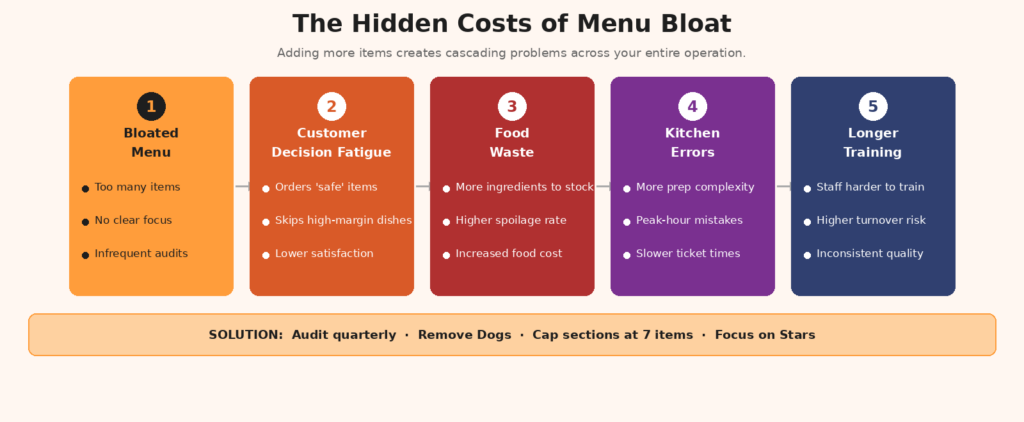
The restaurant parallel is direct. Academic research published in ScienceDirect describes how choice overload causes customers to struggle to choose a meal due to menu complexity — a state researchers call “decision fatigue.” A customer in this state doesn’t browse with an open mind; they shut down and default to whatever feels safest. Usually that means the same dish they ordered last time, or the cheapest recognizable option.
The Rule of 7
Menu designers and hospitality researchers have landed on a practical threshold: decision fatigue begins to set in once a menu section exceeds 7 items. Past that point, customers start feeling that choosing is work rather than pleasure. They may skip courses entirely — skipping dessert, for example, to avoid having to make yet another decision after an already taxing entrée selection.
This doesn’t mean your entire menu should have 7 items. It means each section — appetizers, soups, noodles, mains — should aim for 5 to 7 options. That’s enough variety to satisfy different preferences without triggering paralysis.
The Jam Study That Changed How We Think About Choice
The most cited piece of research on this topic comes from a grocery store experiment by Professor Sheena Iyengar. Shoppers who were offered 24 flavors of jam were far less likely to buy than those offered just 6 flavors. As The Decision Lab notes, this study revealed that more options can paradoxically reduce both action and satisfaction — a finding that has been replicated across retail, dining, and digital environments.
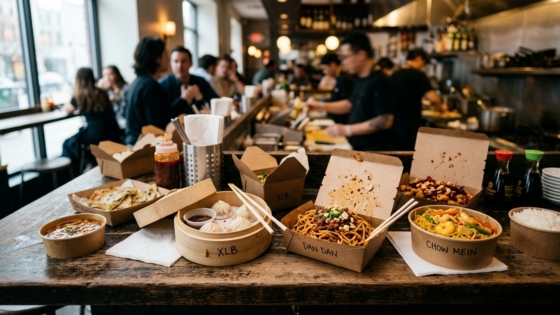
For a restaurant, the equivalent is a diner who stares at a 120-item Chinese menu, asks “what do you recommend?” and then orders whatever the server says — often a crowd favorite that may not be your highest-margin dish.
What a Bloated Menu Costs You Operationally
The customer experience problem is real, but the operational cost of menu bloat is just as significant. Every item you add to your menu creates downstream complexity that affects every part of your restaurant.
Inventory and Food Waste
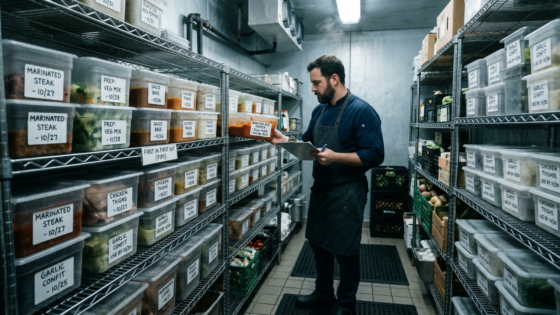
More items mean more ingredients to stock. More ingredients mean more suppliers to manage, more deliveries to receive, and more products that can expire before they’re used. ChowNow points out that eliminating low-performing dishes reduces food waste directly, because you’re no longer buying ingredients for items that rarely get ordered. For independent restaurants operating on thin margins, waste reduction often has a faster return than any marketing spend.
Kitchen Errors and Slowed Service
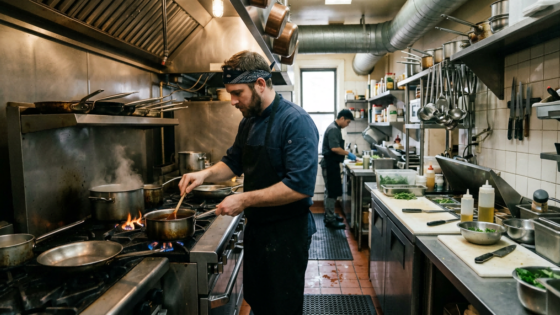
Your kitchen staff can only hold so many recipes at once with consistent accuracy. Every new dish they need to prepare under peak-hour pressure is another potential error, another ticket that comes back, another table that waits longer than they should. A focused menu is a faster menu — and speed matters enormously during the Friday and Saturday rushes when every table turn counts.
Training Time
A new hire at a restaurant with 30 menu items can reach competence in a week. A new hire at a restaurant with 90 menu items takes much longer to learn what’s in each dish, which items pair well together, and which to recommend for dietary restrictions. In an industry with chronic labor shortages and high turnover, training speed is a competitive advantage most operators underestimate.
Real-World Examples of Menu Reduction Working
This isn’t theoretical. Several well-known restaurant brands have cut their menus and seen immediate improvements.
In the early 2000s, TGI Fridays reduced their menu from over 90 items to around 60, concentrating on their highest-performing dishes. Supy reports that this restructuring improved profitability and made the menu easier for guests to navigate. A Canadian restaurant called Westside applied a similar analysis to an unwieldy 181-item menu. By simplifying the format and removing low-margin dishes, they increased average margin per customer by more than 10%.
Closer to home, the restaurants that tend to perform most consistently in New York’s competitive dining market are the ones with a clear, focused identity — not the ones trying to be everything to everyone.
What Chick-fil-A Proves About Focus
Chick-fil-A operates one of the most limited menus in American fast food, and it consistently ranks among the highest in customer satisfaction. The connection isn’t coincidental. A limited menu reduces cognitive load for the customer, allowing them to arrive knowing roughly what they’ll order and leave feeling confident about their choice. Behavioral research confirms that people report higher satisfaction when they make decisions from a smaller, well-curated set of options compared to a large, exhaustive one.
How to Audit and Trim Your Menu
The goal isn’t to strip your menu down to five items. It’s to make every item earn its place. Here’s a practical framework:
| Step | What to Do | Why It Matters |
|---|---|---|
| 1. Pull 60 days of sales data | Rank every item by order volume | Reveals which items are actually driving demand |
| 2. Calculate contribution margin | Selling price minus food cost for each item | Separates revenue generators from revenue drains |
| 3. Flag items below the threshold | Items with both low volume and low margin | These are your “Dogs” — strong removal candidates |
| 4. Count items per section | Aim for 5–7 per category | Reduces decision fatigue at the table |
| 5. Consolidate similar items | Combine or retire duplicates | Simplifies inventory and speeds up prep |
When removing items, pay attention to customer favorites — dishes that have sentimental value or are strongly associated with your restaurant’s identity. Even if a dish scores poorly on margin, it may serve a retention function that’s hard to measure in POS data. Use judgment alongside the numbers.
Managing the Transition
Cutting popular items can generate pushback from regulars. A few ways to manage this smoothly:
- Retire items gradually rather than all at once — cycle them out over two or three menu updates.
- Move borderline items to a seasonal specials rotation instead of eliminating them entirely.
- Brief your front-of-house staff before the new menu launches so they can handle questions confidently.
- Frame the change as an upgrade, not a reduction. “We’ve refined our menu to focus on what we do best” lands better than “we cut half our dishes.”
To learn more about the broader strategy behind menu design decisions, see our guide to menu engineering for restaurants. And if your team is spending significant time on the phone taking orders, Tunvo’s AI voice agent can free them up to focus on the in-house experience while capturing every phone order accurately.
Frequently Asked Questions
How do I know if my menu is too large?
A strong signal is when more than 20–25% of your menu items account for less than 5% of your total orders. If a third of your menu is rarely ordered, it’s carrying deadweight. Another signal: your kitchen is consistently overwhelmed during peak service, and you frequently run out of certain ingredients mid-shift.
Won’t customers complain if I remove their favorite dishes?
Some will, initially. But research consistently shows that customers adapt and that a well-curated menu creates a better overall experience. The trick is removing items methodically — starting with true Dogs (low order volume, low margin) rather than crowd favorites — and communicating the change as a positive step rather than a cutback.
Should my online ordering menu be different from my in-restaurant menu?
It can be, and many successful restaurants operate this way. Online customers are ordering for delivery or pickup and have different priorities than dine-in guests. A streamlined delivery menu focused on items that travel well, photograph well, and have strong margins is a smart strategy — and keeps your kitchen more organized during peak delivery hours.
A focused menu is only half the equation. If your phone is ringing off the hook and staff can’t keep up, you’re losing orders before they even reach the kitchen. Tunvo answers every call, handles the full order conversation, and pushes it directly to your POS. Try it free for 15 days or book a demo.