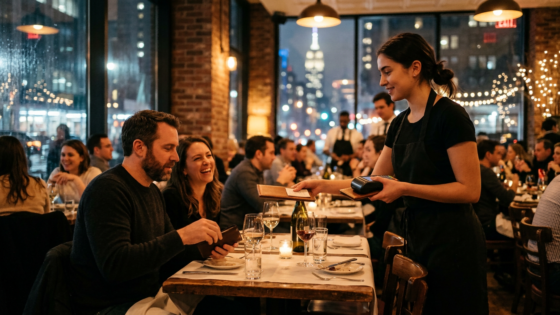
Valentine’s Day is the most concentrated revenue opportunity in the restaurant calendar. In a single evening, you have a room full of couples actively trying to spend money on a memorable experience. The average Valentine’s Day reservation now represents well above $100 in revenue per couple — and the customers dining out on February 14th are explicitly hoping to be delighted.
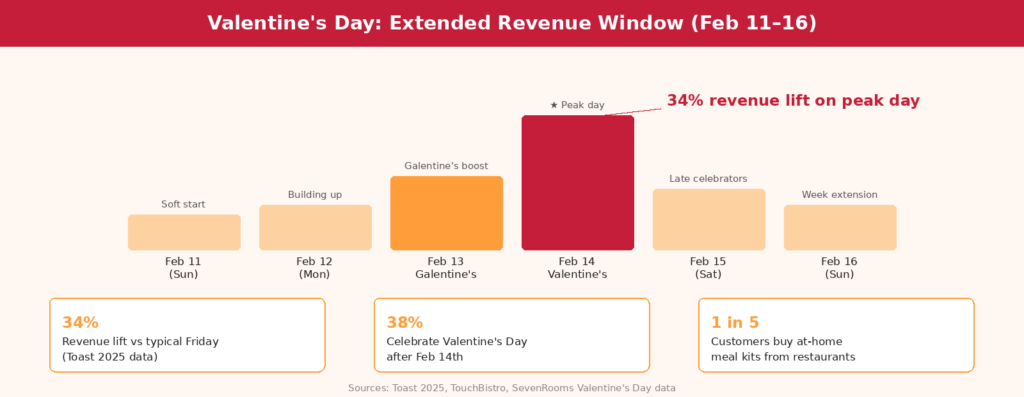
Revenue at full-service restaurants on Valentine’s Day 2025 was 34% higher than an average Friday, driven by a 17% increase in average ticket size and a 15% rise in transactions, according to Toast POS data. The National Restaurant Association estimates that over 20 million Americans dine out on February 14th, generating more than $8 billion in restaurant revenue nationally.
But here’s what most restaurant owners miss: Valentine’s Day is also when your competitors are at their most operationally vulnerable. Phones ring non-stop for weeks before the date. Late-booking callers who can’t get through to one restaurant immediately call the next one. The restaurants that capture Valentine’s Day aren’t always the ones with the best food — they’re the ones that answer the phone.
Key Takeaways
- Valentine’s Day generates a 34% revenue premium over a typical Friday, with steak sales up 99% and wine sales up 38%.
- Classic date-night fare outperforms adventurous menus on February 14th — steak, pasta, seafood, and dessert dominate ordering patterns year after year.
- Popular restaurants fill up weeks in advance, but last-minute callers still represent significant revenue if you answer when they call.
- Takeout and delivery Valentine’s Day revenue is growing, with off-premise orders up 19% compared to a typical Friday.
What Valentine’s Day Diners Actually Want
The Data on Menu Preferences Is Remarkably Consistent
Valentine’s Day ordering patterns are predictable across years and cuisines. Toast’s analysis of Valentine’s Day 2025 found that steak sales increased by 99% compared to the average Friday, while pasta and seafood were up 49% and 46% respectively. Dessert and pastry orders climbed 53%. Wine sales grew 38%.
What declined? Hot dog sales fell 10%. Beer dropped 5%. The signal is consistent: diners on February 14th are in “classic romance” mode. They want premium, indulgent food in an elevated setting. They want to feel like the evening is special, which means your venue and your menu both need to communicate that.
For a Chinese restaurant, this creates a genuine opportunity that many operators don’t pursue. Chinese cuisine offers premium presentation options that align perfectly with Valentine’s Day expectations — Peking duck carved tableside, whole lobster in ginger scallion sauce, handmade dumplings for two, plum wine pairing — that can be framed as an elevated date-night experience without abandoning your identity or your kitchen’s strengths.
Prix-Fixe vs. À La Carte: The Practical Trade-Off
OpenTable survey data suggests most diners prefer à la carte options when given the choice. But operationally, prix-fixe menus are dramatically easier to execute on a packed Valentine’s night, and they tend to produce higher, more predictable average checks. Many successful restaurants resolve this by running a Valentine’s prix-fixe for the first and second seatings — capturing the romantic dinner crowd with a guided experience — while keeping the regular menu available for later seatings or walk-ins. This structure gives you operational predictability where it matters most without entirely eliminating flexibility.
Building Your Valentine’s Day Date Night Special
The Five Elements That Make It Work
| Element | Goal | Example (Chinese Restaurant) |
|---|---|---|
| Welcome gesture | Set the tone; make guests feel special immediately | Complimentary lychee soda or plum wine on arrival |
| Shareable starter | Break the ice; encourage conversation | Pan-fried dumplings for two, crispy spring rolls |
| Premium entrée anchor | Photogenic, memorable, worth talking about | Half Peking duck; whole lobster; scallop and prawn combo |
| Dessert | Sweet finish; social sharing moment if beautiful | Mango pudding for two, matcha tiramisu, red bean mochi |
| Booking upsell | Increase average check; create premium tier | Wine/champagne pairing, flower arrangement add-on |
Pricing Your Valentine’s Menu
Valentine’s Day diners expect and accept a premium — and most are genuinely happy to pay for it. Research shows diners spend 20–30% more per person on Valentine’s Day than on a typical night. Prix-fixe menus typically range from $50–$150 per couple at the mid-market level, with premium venues charging considerably more. For a Chinese restaurant in New York, a well-executed $75–$95 prix-fixe for two — with the option to add wine pairings — sits comfortably in market expectations and above your normal check average.
Communicate your pricing clearly and early: on your website, in your social media promotions, in your reservation confirmation. A Morning Consult survey found that nearly 40% of Americans feel Valentine’s Day restaurant prices are unreasonable — usually not because prices are too high, but because they weren’t disclosed in advance. Transparency eliminates friction and increases booking conversion.
Managing the Valentine’s Day Phone Rush
February Is One Long Booking Sprint
For popular restaurants, Valentine’s Day reservation calls start accumulating in the first week of February and peak in the 7–10 days before the date. On the day itself, you’re fielding late bookers, direction questions, requests for special setups (proposal tables, flower arrangements), and a steady stream of last-minute callers who forgot to plan ahead and are hoping for availability.
HungerRush research found that 91% of customers expect to be on hold for 3 minutes or less. On a day when your phone rings continuously while your team is prepping for dinner service, that expectation is impossible to meet through human staffing alone. An AI voice agent handles every call simultaneously — no hold times, no missed bookings, no busy signals.
What a Missed Call Costs You on Valentine’s Day
A typical Valentine’s Day table for two generates $120–$160 in revenue after drinks and dessert. A missed call from a couple looking to book is that revenue gone — not deferred, gone. Unlike a typical Tuesday, the customer who can’t reach you in early February doesn’t try again next week. They find somewhere else to celebrate. Yelp’s analysis found that 69% of Americans will not return to a restaurant if their call goes unanswered. Valentine’s Day amplifies this stakes considerably.
Tunvo’s AI voice agent answers every call from January through February 14th — reservation requests, menu questions, booking confirmations, takeout orders — simultaneously, in English and Mandarin, with direct integration to your MenuSifu POS. The setup takes 30 minutes and requires no staff attention on the day itself.
The Valentine’s Day Takeout Opportunity
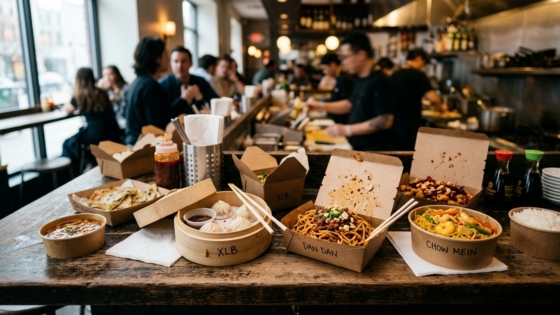
Not all Valentine’s Day revenue comes from couples sitting at your tables. Toast data found that takeout orders increased 19% on Valentine’s Day 2025 compared to the average Friday, while delivery grew 11%. A meaningful segment of couples — those with young children, those who prioritize privacy, those avoiding the crowds — specifically want a restaurant-quality Valentine’s meal at home.
Build a takeout version of your Valentine’s menu with packaging that holds well: cold starters, sauces packed separately, desserts that look beautiful out of the box. Require pre-orders for takeout Valentine’s packages (cutoff Thursday night) to give your kitchen predictable volume. Promote the option on your website, social media, and Google Business Profile as a genuine alternative, not an afterthought.
Frequently Asked Questions
When should I start taking Valentine’s Day reservations?
Open reservations in early January. Some customers plan weeks ahead, especially for milestone celebrations (proposals, anniversaries). The peak booking window is the first two weeks of February. Keep your availability updated in real time so customers see accurate information and don’t call asking about slots you’ve already filled.
Should I require a deposit for Valentine’s Day reservations?
Yes, especially for parties of 2–4 at full prix-fixe. A credit card hold of $20–$25 per person reduces no-shows significantly. Valentine’s Day no-shows are exceptionally costly because demand for those slots was high. Communicate the policy clearly at booking — most guests accept it without objection for a high-demand holiday.
How do I handle proposal table requests?
Take them seriously and respond promptly — they’re among your highest-value tables. Train one senior staff member to coordinate special occasions. Have a simple checklist: preferred table location, flowers or candles, champagne timing. When a proposal goes well at your restaurant, that couple returns for anniversaries for years. The revenue value is substantial; the execution cost is minimal.
Is it worth staying open late on Valentine’s Day?
Yes. Toast data from Valentine’s Day 2025 shows transactions at 10 pm were 24% higher than the average Friday at that hour. Late-night dining is genuinely popular among younger couples who want to avoid the peak-hour rush. A late-night small plates or dessert menu captures this demand without the full operational load of dinner service — and an AI phone agent handles any late-evening calls without requiring staff coverage.
Valentine’s Day is the night every couple is hoping for the perfect experience. Don’t let an unanswered phone be the reason they celebrated somewhere else. Tunvo’s AI voice agent handles every call — reservation requests, menu questions, takeout orders — in English and Mandarin, 24/7, with direct MenuSifu POS integration.
Book a demo or start your free 15-day trial today.