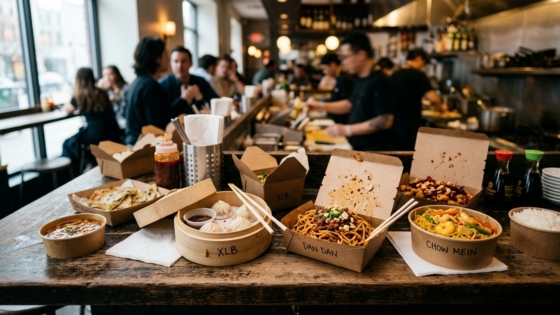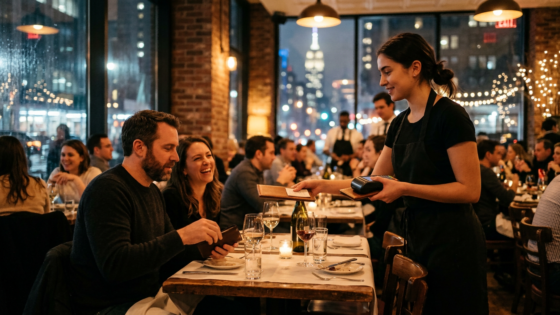
Your phone rings at 6:47 p.m. on a Friday. Your kitchen is at full tilt, every counter covered, every burner on. The host is juggling three tables. Nobody picks up. The caller—probably ordering $60 worth of food—hangs up and calls someone else. This happens 20 to 40 times per peak evening at a busy Chinese takeout spot. In a year, that’s tens of thousands of dollars gone before you even knew they called.
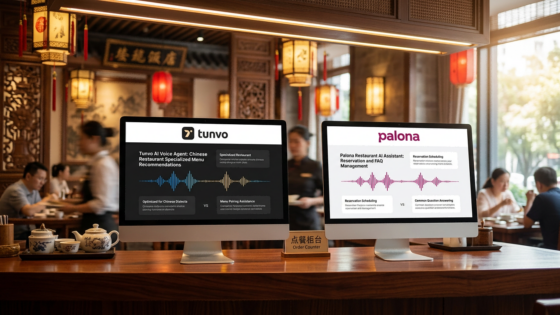
Two AI voice agents are pitching themselves as the solution for restaurants like yours: Tunvo and Palona. Both answer calls, handle orders, and promise to recover missed revenue. But they were built for different restaurants, with different priorities, and different approaches to what “speaking your customer’s language” actually means. If you run a Chinese restaurant in New York, those differences matter more than any feature checklist.
Key Takeaways
- Palona was built for Pizza, Fast Casual, and QSR nationwide — its strengths are voice cloning, brand personality, and broad POS compatibility.
- Tunvo was built specifically for Chinese restaurants — with native Mandarin support, deep MenuSifu POS integration, and a team that has directly studied New York Chinese restaurant operations.
- POS integration is the critical differentiator — if you run on MenuSifu, Tunvo’s native integration eliminates the friction that slows down other setups.
- Both use real AI (not scripts) — but their architectures reflect different tradeoffs between flexibility and restaurant-specific depth.
- For a New York Chinese takeout or delivery restaurant, the right choice comes down to three questions: What POS do you run? What language do most of your callers prefer? How important is Mandarin fluency versus brand voice cloning?
The Problem Both Products Are Solving
New York Restaurant Operators Are Running Shorthanded
The labor pressure facing New York restaurants isn’t a temporary dip. According to the TouchBistro NYC State of Restaurants Report, 87% of New York City restaurant operators said they were short at least one position, and the average NYC restaurant is running with four open roles. For Chinese restaurant owners who need bilingual staff—someone who can handle a Mandarin-speaking caller in one breath and an English speaker the next—the recruiting problem is even harder. Bilingual front-of-house hires in New York City command a premium, turn over fast, and are genuinely difficult to find.
Meanwhile, the Independent Restaurant Coalition reports that 45% of restaurants say they need more staff to meet demand, and 88% would hire if they could find qualified applicants. This isn’t a willingness problem. It’s a supply problem. And it’s why more Chinese restaurant owners in New York are looking seriously at AI phone systems as a structural solution, not a novelty.
What AI Voice Agents Actually Do
An AI voice agent answers your phone like a trained employee would—taking orders, quoting wait times, confirming details, and routing reservation requests. The best systems send the order directly to your POS or kitchen printer without any manual re-entry. This eliminates three separate failure points: the missed call, the mis-heard order, and the slow handoff from phone to kitchen.
Research from Reachify shows that 83% of customers who can’t reach a restaurant by phone won’t call back—they’ll go somewhere else. For a restaurant running on tight margins, that’s a direct revenue leak with a straightforward fix.
Tunvo’s AI voice agent handles every inbound call—orders, reservations, and customer questions—and routes orders straight into your MenuSifu POS, with setup in about 30 minutes. Palona takes a different approach: voice cloning, multilingual support across many languages, and compatibility with all major POS systems. So which is right for a New York Chinese restaurant? Let’s look at each one closely.
Understanding Palona: Strong on Brand Voice, Built for QSR
What Palona Is
Palona launched its restaurant-specific AI product in June 2025, coming off a $10 million seed round and a pilot with West Coast pizza chain Pizza My Heart. Per Palona’s launch announcement, the product targets Pizza, Fast Casual, and QSR restaurants and brings three headline features: voice cloning (so the AI literally sounds like the restaurant owner), multilingual support across English, Spanish, Chinese, and more, and a proprietary memory system they call Muffin, which stores customer preferences like a regular’s usual order.
The architecture is sophisticated. VentureBeat’s coverage of Palona’s expansion describes a patented orchestration layer that lets Palona swap between different AI models—including Gemini for vision tasks and specialized models for Chinese and Spanish fluency—without being locked into a single provider. For a team with roots at Google and Meta, that kind of infrastructure flexibility makes sense.
Where Palona Fits Well
If you run a fast casual restaurant with a strong brand identity—where the owner’s voice and personality are central to what customers love about the experience—Palona’s voice cloning is genuinely compelling. The CaliBBQ case study they’ve cited involves the founder literally training the AI to sound like him, so every caller gets a conversation with “ShawnAI.” For a founder-led restaurant with a loyal following, that kind of brand continuity is real value.
Palona also integrates with all major POS systems, which gives it broad compatibility. If you’re running Toast, Square, or Clover, Palona can connect without requiring a platform switch.
Where Palona Doesn’t Map to Chinese Restaurants in New York
The challenge for a Chinese restaurant owner evaluating Palona is fit: the product was explicitly designed and marketed for the Pizza, Fast Casual, and QSR segment. The case studies—CaliBBQ, MOTO Pizza, Pizza My Heart, Pleasure Pizza Santa Cruz—are almost entirely Western fast casual. The menu structures, order workflows, and customer behaviors at a Chinese takeout restaurant in Flushing or Sunset Park are genuinely different from a pizza chain.
Chinese restaurant menus involve combo numbering systems (C1 through C50+), complex modifier combinations (spice level, protein substitutions, regional style adjustments), and a customer base where a meaningful percentage prefers to order in Mandarin. Palona does list Chinese as a supported language, but their publicly available case studies don’t include Chinese restaurant deployments, and their product messaging is clearly directed at QSR operators, not Chinese cuisine specialists.
The other practical question is MenuSifu. If you’re a New York Chinese restaurant already running on MenuSifu—which was designed specifically for Chinese restaurant operations with full bilingual POS capabilities—Palona’s “all major POS” coverage doesn’t help you as much as a native MenuSifu integration.
Understanding Tunvo: Built Specifically for the Chinese Restaurant Operating Environment
What Tunvo Is
Tunvo is built by Sobot, Asia-Pacific’s leading customer service AI platform, which has accumulated 10 years of AI experience and serves enterprise clients including Meituan, Luckin Coffee, DiDi, Shein, and TikTok. Sobot is backed by SoftBank. Tunvo represents Sobot’s North American entry point—and the decision to build a product specifically for Chinese restaurants wasn’t accidental. The founding team studied the New York Chinese restaurant market directly before building.
In conversations our team has had with restaurant owners across New York, the clearest pattern that emerged was this: the owners who lose the most revenue aren’t losing it to bad food or bad reviews. They’re losing it to unanswered phones. A single missed call during peak hours isn’t a minor inconvenience—it’s a $40 to $80 order walking out the door. At 10 to 20 missed calls per dinner rush, that math becomes urgent very quickly.
Tunvo’s core product answers every call, handles orders in English and Mandarin, and pushes confirmed orders directly into MenuSifu’s POS system—the platform that the majority of Chinese restaurants in New York already run on. For restaurants without a POS, Tunvo supports direct printer integration so orders come out of the kitchen printer automatically without any manual input.
The Mandarin Advantage
This is the dimension that matters most for a Chinese restaurant in Flushing, Sunset Park, or Chinatown. A significant share of callers at a neighborhood Chinese restaurant prefer to communicate in Mandarin—especially older customers, recent arrivals, and regulars who’ve been calling the same restaurant for years. When those customers call and are greeted by an AI that speaks clear, natural Mandarin, the experience is seamless. When the AI stumbles—misunderstands a dish name, can’t parse a dialect, or responds only in English—that caller hangs up.
Tunvo’s Mandarin support isn’t a checkbox—it’s a design priority built into the product from day one because the founding team understood who the customers actually are. The system is trained on Chinese restaurant terminology: dish names, preparation styles, combo number formats, and the kinds of modifications that Chinese cuisine orders actually involve.
The MenuSifu Integration Difference
POS integration isn’t just a technical detail. It determines whether the AI phone system actually saves labor or creates it. A shallow integration that pushes orders to a dashboard that someone still has to manually enter into the POS doesn’t eliminate the work—it just adds a step. Tunvo’s integration with MenuSifu is native and bidirectional: when a call ends, the order is already in the POS, correctly formatted, ready for the kitchen. No re-entry. No correction step. The staff member who would have taken that call is free to focus on the dine-in table that needs attention.
Side-by-Side Comparison
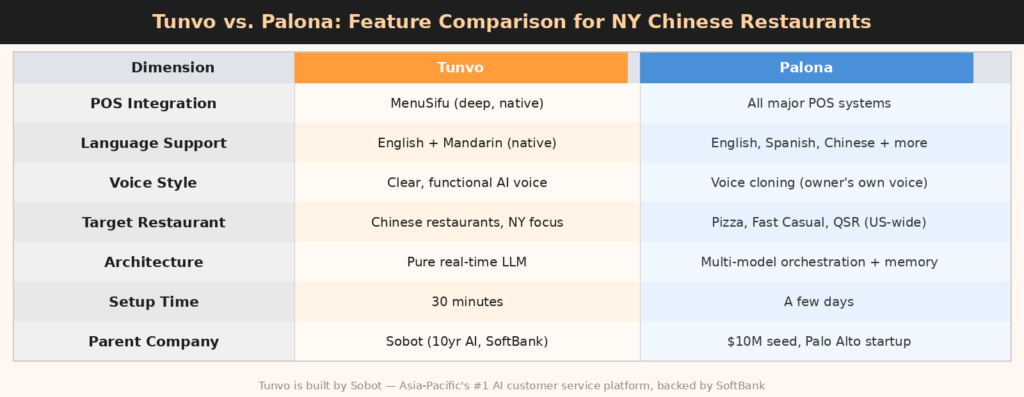
| Your Situation | Tunvo | Palona |
|---|---|---|
| Running MenuSifu POS | ✅ Native integration | ⚠️ Not specifically listed |
| Many callers prefer Mandarin | ✅ Native Mandarin support | ✅ Chinese listed as supported |
| Want AI to sound like you personally | ✅ Voice cloning available | ✅ Voice cloning available |
| Running Toast / Square / Clover | ✅ Broad POS support | ✅ Broad POS support |
| Chinese takeout/delivery focus | ✅ Core use case | ⚠️ Designed for pizza/QSR |
| Need enterprise AI backing | ✅ Sobot (10yr, SoftBank) | ⚠️ Seed stage startup |
| Ready in 30 minutes or less | ✅ 30-minute setup | ⚠️ A few days (per docs) |
The Decision Framework: Three Questions for Chinese Restaurant Owners
Question 1: What POS Are You Running?
This is the most practical starting point. If your restaurant runs on MenuSifu—as the majority of Chinese restaurants in New York do—Tunvo’s native integration is a clear advantage. Orders go from the phone call directly into the POS without a manual step. That’s the difference between an AI phone system that actually reduces labor and one that just shifts where the work happens.
If you’re running a different POS system, the calculus changes. Palona offers broader POS compatibility and may be a better technical fit for your setup. Keep in mind that Tunvo currently integrates specifically with MenuSifu—if you’re on another platform, Tunvo may not be the right fit at this time.
Question 2: Who Calls Your Restaurant?
Think about your actual call volume. If 40% to 60% of your callers prefer to speak Mandarin—which is common for restaurants in Flushing, Sunset Park, Bay Ridge, and Chinatown—then native Mandarin fluency is a non-negotiable requirement, not a nice-to-have. An AI that answers in English, or that stumbles through Mandarin responses, will frustrate exactly the customers who are most loyal to your restaurant.
Tunvo was designed from the ground up with Mandarin as a first-class language, not an add-on. Palona lists Chinese as supported, but their case studies and marketing are directed at English-dominant QSR environments. That’s a meaningful practical difference when your callers are placing combo orders with modifications in Mandarin at 6:30 p.m. on a Saturday.
Question 3: Do You Need Brand Voice Cloning?
Palona’s voice cloning is a genuinely differentiated feature. If you’re a founder-led restaurant with a personality-driven brand—where customers are calling because they have a relationship with you specifically—having the AI sound like you is a real service quality advantage. The CaliBBQ example makes this compelling for the right restaurant.
For most Chinese takeout and delivery restaurants in New York, however, what customers care about is whether their order is heard correctly, whether the AI understood “no MSG, extra sauce, combo 14 with fried rice instead of white,” and whether the food shows up in 30 minutes. Voice cloning adds brand warmth; Mandarin fluency and accurate order capture add revenue. For the Chinese restaurant segment, the functional requirements matter more than the brand performance features.
What the Labor Data Tells Us About the Urgency
The reason this comparison matters is the staffing reality that New York restaurant operators are living right now. Full-service restaurants remain 228,000 jobs below pre-pandemic employment levels as of late 2024. In New York specifically, 72% of NYC restaurants are reporting increased takeout and delivery volume—exactly the context where phone orders spike and staffing shortfalls hurt most.
The average annual restaurant industry turnover rate has averaged 79.6% over the past decade. For a restaurant owner trying to staff a bilingual phone position consistently, that turnover rate isn’t an abstraction—it means retraining someone every year or so, with gaps in coverage every time someone leaves. An AI voice agent that handles phone orders in Mandarin and English doesn’t turn over. It doesn’t call in sick on New Year’s Eve. It answers every call at 11 p.m. when the kitchen is closing and someone wants to know if they can still place an order.
According to Tunvo’s data, restaurants using the system see 20%+ lower labor costs and 13%+ higher order revenue—driven by both the recovered missed calls and the reduced overhead of not needing dedicated phone staff during peak hours.
The Sobot Advantage: What Enterprise Backing Means in Practice
One dimension that doesn’t show up in feature comparisons but matters in practice: who’s behind the product. Palona is a Palo Alto seed-stage startup—well-funded, technically sophisticated, and growing. Tunvo is built on Sobot’s platform, which has been running at enterprise scale in Asia-Pacific for a decade, serving companies like Meituan and DiDi across millions of customer interactions. That operational history means the infrastructure handling your phone calls has been stress-tested at a scale that most restaurant AI startups haven’t approached.
For a restaurant owner considering a system that will handle hundreds of calls per week, the stability and reliability track record of the underlying platform matters. You can learn more about that background on the Tunvo About page.
Frequently Asked Questions
Can Palona handle Chinese restaurant menus with complex modifications?
Palona’s system is designed to handle complex customizations across Pizza, Fast Casual, and QSR menus—and lists Chinese as a supported language. However, their documented restaurant deployments are primarily in English-dominant environments with pizza and BBQ menus. Chinese restaurant menus with combo numbering, regional preparation styles, and high-frequency Mandarin calls represent a different operational context that Palona has not prominently featured in its public case studies.
Does Tunvo work with POS systems other than MenuSifu?
Tunvo currently integrates natively with MenuSifu. For restaurants without a POS system, Tunvo supports direct kitchen printer output. Additional POS integrations are on the product roadmap, but if you’re running Toast, Square, or Clover today, Tunvo is not currently the right fit. Check the Tunvo homepage for the latest integration updates.
How does voice cloning work in Palona, and is it available in Chinese?
Palona allows restaurant owners to record their voice and train the AI to replicate it, down to accent, tone, and regional speech patterns. Chinese is listed as a supported language for the broader multilingual system, though Palona’s voice cloning use cases are primarily documented in English-language contexts. If having the AI sound specifically like you is a priority, Palona’s feature set is worth evaluating directly.
Which is faster to set up?
Tunvo is designed to be operational in 30 minutes for MenuSifu users—connect the system, configure your menu parameters, forward your phone line, and go. Palona’s documentation describes a setup process of “a few days,” which includes POS credential verification, agent customization, and (if applicable) voice cloning setup. For a restaurant owner who wants to start recovering missed calls this week, Tunvo’s setup speed is a practical advantage.
What if my restaurant serves both Chinese and non-Chinese customers?
Both systems handle English-language calls. Tunvo’s advantage is specifically in native Mandarin handling for callers who prefer Chinese. If your customer base is primarily English-speaking with occasional Mandarin callers, either system could work. If Mandarin calls represent a significant share of your volume—as they do in neighborhoods like Flushing, Sunset Park, or Chinatown—Tunvo’s purpose-built Mandarin support is the clearer operational fit.
The best AI voice agent for your restaurant is the one that fits your actual operation—your POS, your callers, your menu complexity. If you run on MenuSifu and serve a Mandarin-speaking customer base in New York, Tunvo was built with you specifically in mind. The 30-minute setup and 15-day free trial mean there’s no long runway before you start seeing whether it works for your phone volume.
Every missed call is a missed order. Tunvo answers every call in English and Mandarin, and sends confirmed orders straight to your MenuSifu POS.
Get up and running in 30 minutes. Book a Demo or Start Your 15-Day Free Trial.