Every week, I talk to Chinese takeout owners across New York who are sitting on a goldmine they haven’t touched yet: their customers’ phone numbers. Between phone orders, loyalty stamp cards, and walk-in conversations, most takeout shops have collected hundreds of real customer contacts over the years. They just haven’t done anything with them yet.
SMS marketing is the fastest and most direct way to turn that list into repeat orders. Texts get a 98% open rate — dwarfing email and social media by a wide margin. And unlike third-party delivery apps that charge 25–30% per order, texting your own customers costs almost nothing. This guide walks you through everything you need to start: what SMS marketing actually is, how to build a compliant subscriber list, and what kinds of messages actually work for a Chinese takeout audience.
Key Takeaways
- SMS open rates exceed 98% — no other marketing channel gets your promotions seen as reliably.
- Compliance is non-negotiable: TCPA rules require explicit opt-in consent before you text any customer for marketing purposes.
- Your phone orders are already a data goldmine — the right collection process turns every call into a subscriber.
- Short, timely, and personal messages outperform generic blasts every time.
- Direct orders via SMS save 25–30% commission compared to third-party delivery platforms.
What SMS Marketing Actually Is (And Why It Works for Takeout)
SMS marketing simply means sending promotional or informational text messages to customers who have agreed to receive them from your restaurant. Unlike a social media post that gets buried by an algorithm, or an email that sits unopened for days, the average text message is read within minutes of delivery. For a takeout restaurant where hunger drives decisions fast, that immediacy is everything.
Why Chinese Takeout Shops Are Especially Well-Positioned
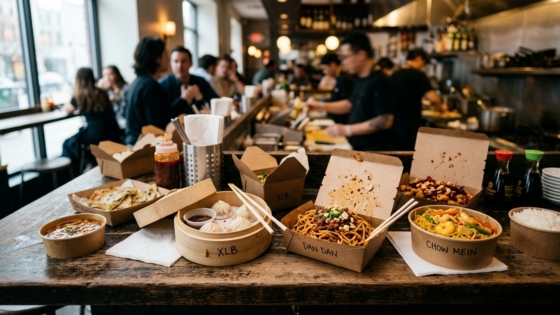
Most Chinese takeout restaurants already operate with a high volume of repeat, loyal customers — the same families ordering General Tso’s every Friday, the office groups that rotate through your lunch specials, the regulars who know your menu better than your staff does. These aren’t random strangers. They’re warm relationships waiting to be deepened. SMS lets you reach them directly, on their terms, without competing with a sea of Instagram content or DoorDash coupons.
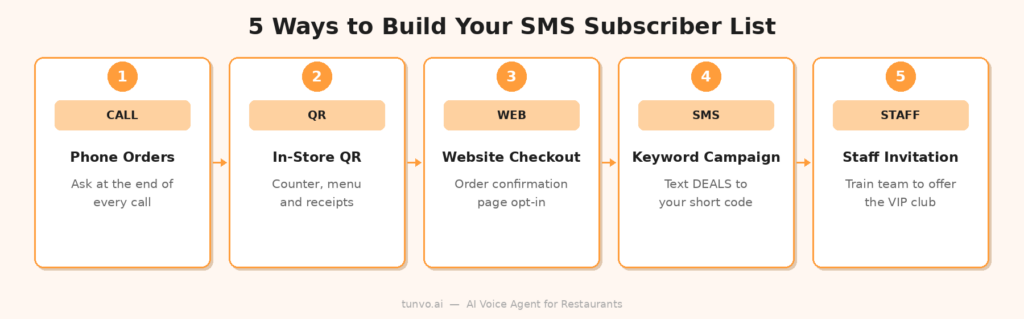
There’s another unique angle: a large portion of Chinese takeout orders still happen by phone. Every time a customer calls to order, that’s an opportunity to capture their number with consent and enroll them in your text list. No app download required. No loyalty card to lose. Just a simple opt-in that turns a one-time caller into a subscriber.
SMS vs. Other Channels: How It Compares
| Channel | Avg. Open Rate | Speed to Read | Algorithm Risk | Cost Per Message |
|---|---|---|---|---|
| SMS | ~98% | Under 3 minutes | None | Very Low ($0.01–0.05) |
| 20–25% | Hours to days | Spam filters | Low | |
| Social Media | 2–5% organic reach | Variable | High | Free to paid |
| 3rd-Party Delivery Apps | High (forced) | Immediate | Competitive placement | 25–30% commission |
The Legal Foundation: TCPA Compliance You Can’t Skip
Before sending a single promotional text, you need to understand the Telephone Consumer Protection Act (TCPA). This is the federal law that governs SMS marketing, and it carries real teeth: violations can result in fines of $500–$1,500 per text message, with no cap on total damages in class-action lawsuits.
The Core Rules Every Restaurant Owner Must Follow
The TCPA requires that you obtain prior express written consent before sending marketing texts. That means a customer must actively agree — not just give you their number during an order, and not just have purchased from you before. Consent must be explicit, and pre-checked boxes or implied consent from a past purchase are not valid.
Here’s what a compliant opt-in process looks like in a Chinese takeout context:
- A sign at the counter: “Text JOIN to [number] to get exclusive deals and order updates. Msg & data rates may apply. Reply STOP to unsubscribe.”
- A note on your paper bag or receipt with the same opt-in instruction.
- Your staff verbally asking callers: “Would you like to receive special deals by text? We’ll add you to our VIP list.”
Once someone opts in, your first message must include the business name, message frequency, opt-out instructions (“Reply STOP”), and a note that message and data rates may apply. You also cannot text before 8 AM or after 9 PM local time.
Honoring Opt-Outs
When a customer texts STOP, CANCEL, or any reasonable variation, you are legally required to stop sending them marketing messages immediately. Under updated FCC rules effective April 2025, businesses must honor revocations within 10 business days. Build this into whichever SMS platform you use — any reputable tool will handle it automatically.
Note: This guide covers general compliance principles. Consult with a legal professional for advice specific to your business situation.
Building Your Subscriber List from Phone Orders
This is where Chinese takeout shops have a real structural advantage. If your restaurant still handles a significant volume of phone orders — and most do — every inbound call is a natural list-building opportunity. The key is having a clear, low-friction opt-in process that doesn’t slow down the order flow.
The Post-Order Script
After confirming the order total and estimated time, your staff can simply say: “We occasionally text VIP customers with special discounts and free item offers. Want me to add you to the list?” Most customers who are already regulars will say yes. Those who decline are telling you they prefer other channels — and that’s fine too.
Capture the consent in writing (or in your POS system if it supports notes) so you have a record. Platforms like SlickText and similar tools make it straightforward to manage subscriber lists and automate compliance messaging.
Other Collection Points
Beyond phone orders, you can build your list through in-store QR codes on tables and menus that link to a web opt-in form, through your website’s order confirmation page, and by running a keyword campaign where customers text a word like “DEALS” to your short code to subscribe. The goal is to make the opt-in visible at every customer touchpoint, so the list builds continuously without requiring daily effort from your team.
What to Send: Message Types That Drive Takeout Orders
The most common mistake restaurants make with SMS is treating it like an email newsletter — sending long, information-heavy messages on a fixed schedule. Effective restaurant SMS is short, timely, and action-oriented. Each message should have one purpose and one clear next step.
Flash Promotions
These work best for slow periods — a Tuesday afternoon with a half-empty kitchen, or a rainy evening when foot traffic has dropped. Something like: “🍜 Tonight only: Free egg rolls with any order over $25. Call us or order direct. Expires 8 PM.” The urgency is built-in, the value is clear, and it drives an immediate action.
New Menu Item Announcements
Your regulars care about what’s new. A message introducing a seasonal special or a permanent addition to your menu gives subscribers something exclusive — they hear about it before anyone else. This is one of the simplest ways to make people feel like VIPs without a formal loyalty program.
Order Confirmations and Updates
Transactional texts — confirming an order was received, or letting a customer know their food is ready — don’t require prior marketing consent in the same way, since they’re informational. But they contribute enormously to the customer experience. Customers who get order updates trust you more and are less likely to call back during your busiest moment to ask “where’s my food?”
Win-Back Messages
If a regular customer hasn’t ordered in 45–60 days, a simple check-in with a small incentive can recover them before they’re gone for good. “Hi [Name], we haven’t seen you in a while! Come back this week and get 10% off your next order — just mention this text.” This is one of the highest-ROI uses of SMS for any restaurant.
Practical Tips Before Your First Send
A few things to get right before you launch:
Keep messages under 160 characters where possible to avoid carrier splitting into multi-part messages. Always include your restaurant name — customers may not recognize an unknown number. Send during active meal-planning hours, typically 11 AM–1 PM (lunch) and 4–7 PM (dinner). Frequency matters: aim for 2–4 messages per month — enough to stay top of mind, not enough to feel like spam. And always include a simple way to order, whether that’s your phone number or a direct link.
One more thing: connecting SMS to your inbound call handling matters more than most owners realize. When a customer calls after seeing your text promotion, that call needs to be answered. Missed calls during a promotional push are doubly frustrating — the customer was ready to order, you invited them to, and then no one picked up. Tunvo’s AI voice agent ensures every call gets answered instantly, even during the peak rush that follows a promo text. Learn more about how Tunvo handles inbound calls for restaurants like yours.
Frequently Asked Questions
Do I need a special number to send SMS marketing messages?
Yes — for business SMS marketing, you should use a dedicated business number rather than a personal cell phone. Options include a short code (5–6 digits, easier to remember), a 10-digit long code, or a toll-free number. Most SMS marketing platforms will provision one for you. Using a personal number creates compliance and record-keeping problems, especially if you need to prove consent later.
Can I text customers who gave me their number when they placed a phone order?
Not automatically. Under TCPA, simply having a customer’s phone number — even from a legitimate transaction — does not give you permission to send marketing texts. You need explicit consent for marketing communications. The good news is that asking for it is easy: a simple verbal ask at the end of a call, combined with a follow-up keyword opt-in, keeps you compliant.
How much does SMS marketing cost for a small takeout restaurant?
Most SMS platforms charge between $0.01 and $0.05 per message, plus a monthly platform fee that typically ranges from $20 to $100 depending on list size and features. For a list of 500 subscribers receiving 4 messages a month, you might spend $30–$50/month total — less than the commission on a single DoorDash order. The ROI potential is significant when even one extra order per day from SMS pays for the entire platform.
What’s the best time to send promotional texts to takeout customers?
Lunch-focused promotions do best between 10:30 AM and noon. Dinner promotions work well between 4 PM and 6 PM — when customers are starting to think about what to eat but haven’t committed yet. Avoid sending after 8 PM (which is also a TCPA requirement) or early in the morning, when messages feel intrusive rather than helpful.
Every missed call is a missed order. Tunvo’s AI voice agent answers every call and connects directly to your MenuSifu POS — so your SMS promotions always land with a restaurant ready to take the order.
Book a Demo or Start Your 15-Day Free Trial — set up in 30 minutes.