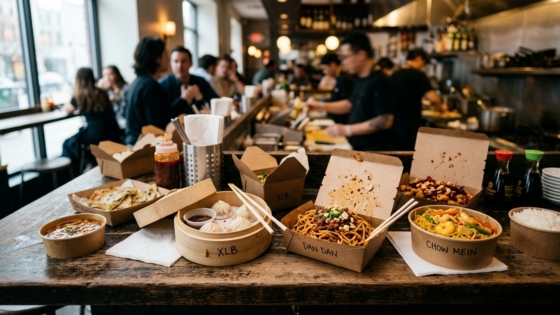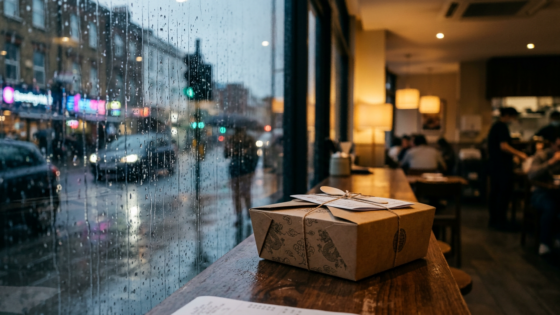
Rain is a Chinese takeout restaurant’s best friend — if you’re ready for it. The moment the forecast shows a rainy evening in New York, thousands of people switch from “maybe I’ll walk somewhere” to “I’m staying in and ordering food.” The only question is whether they order from you or from whoever shows up first in their text notifications.
Weather-triggered SMS promotions are one of the most underused tactics in independent restaurant marketing. They’re low-cost, highly targeted, and timed to reach customers exactly when their buying intent is highest. This guide explains how to set them up, what to say, and how to make rainy days consistently good for your bottom line.
Key Takeaways
- 90% of restaurant operators report that weather directly impacts their sales, according to the National Restaurant Association.
- Rainy days shift demand from dine-in to delivery and takeout — a direct opportunity for phone-order-heavy restaurants.
- Comfort food messaging performs especially well in bad weather — lean into soups, hot noodles, and warming dishes.
- A morning text sent before the rain hits can lock in orders hours in advance, smoothing your prep and staffing.
- Weather-triggered promotions cost almost nothing and can turn what would have been a slow night into a normal or above-average one.
Why Weather Has Such a Direct Effect on Takeout Sales
The connection between weather and restaurant revenue is well-documented and surprisingly strong. The National Restaurant Association has reported that over 90% of restaurant operators acknowledge that shifts in local weather conditions directly influence their sales and customer traffic. For a Chinese takeout restaurant, the dynamic is specific: bad weather reduces dine-in and walk-in traffic, but it increases demand for delivery and phone orders — if customers know you’re an option.
The mechanism is psychological as much as practical. According to research from Ohio State University, customers are three times as likely to complain on rainy days — which means their mood is different, and they’re seeking comfort. Comfort food from a familiar restaurant they trust hits differently than trying somewhere new. Your regulars, the ones on your VIP SMS list, are exactly the right audience for a well-timed rainy day message.
The Opportunity Window
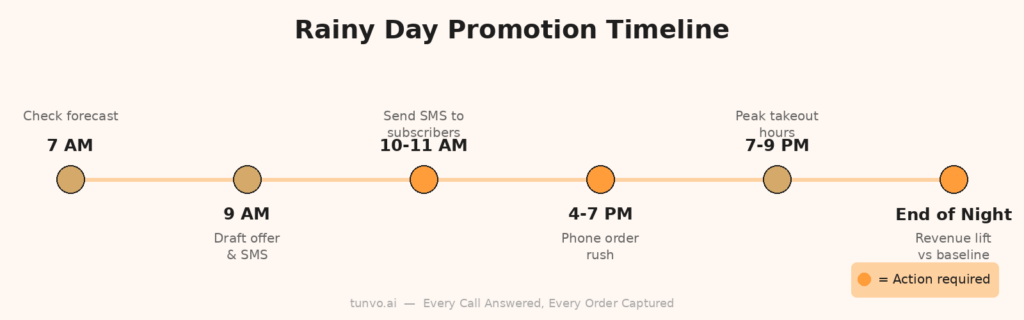
The ideal window for a weather-triggered promotion is the gap between when the forecast becomes clear and when the rain actually hits. In a city like New York, that’s often a same-day gap of 4–8 hours. A text sent at 10 AM about a rainy evening promotion gives your regulars time to plan — and gives you time to prepare for a potentially busier-than-expected evening. AccuWeather’s research on restaurant weather marketing found that the key is offering food with emotional appeal — comfort foods like soups and noodles — that aligns with what customers already want in cold, wet conditions.
Setting Up Weather-Triggered SMS Campaigns
You don’t need a sophisticated platform to start. At its simplest, weather-triggered SMS marketing just means checking the forecast each morning and sending a targeted message on days when conditions favor indoor dining. This can be done manually with a basic SMS marketing tool and a habit of checking weather.gov or a similar free forecast service.
The Manual Approach
Step one: designate someone (or yourself) to check the 5-day forecast every morning. Flag any day with significant rain, snow, or extreme temperatures. Step two: draft your promotional text the night before so it’s ready to send by 10–11 AM. Step three: schedule or send the message and monitor order volume during the evening to see the lift. This takes about 10 minutes of prep and requires no special technology beyond your existing SMS platform.
Automated Weather Triggers
More advanced SMS platforms can connect to weather data APIs and send messages automatically when the forecast in your ZIP code crosses a threshold — say, 70% chance of rain or temperature below 40°F. This is the more scalable approach and removes the need for daily manual monitoring. If your platform supports automations and integrations, it’s worth setting up once and letting it run.
| Weather Condition | Best Promo Type | Menu Focus | Send Timing |
|---|---|---|---|
| Heavy rain | Free delivery or discount on orders $30+ | Soups, hot noodles, hot pots | 10–11 AM same day |
| Light rain / drizzle | Free appetizer with order | Comfort combos, family meals | 11 AM–noon |
| Extreme cold (<25°F) | Bundle deal (entrée + soup + rice) | Hot soups, braised dishes, dumplings | 10 AM day before or morning of |
| Snowstorm | Priority call handling + 10% off | Everything — just make sure you answer every call | Early AM, before the storm |
Writing Rainy Day Messages That Actually Convert
Weather-triggered SMS works because it’s contextually relevant — the customer is already thinking about comfort food, and your message arrives at exactly the right moment. But the message itself still needs to do some work. Here’s what makes the difference between a message that drives orders and one that gets ignored.
Lead with the Weather, Then the Offer
Reference the weather in your opening so the customer immediately understands why they’re getting this message. It signals relevance and makes the offer feel timely rather than random. Studies have found that contextually relevant messages significantly outperform generic promotions in both open rate and conversion.
A good rainy day text looks like this:
“🌧️ Stay dry tonight, [Name]! Rainy day special: FREE hot and sour soup with any order over $30. Call us or reply ORDER. Valid tonight only. Reply STOP to opt out.”
Or for a colder variant:
“❄️ Too cold to go out? Smart. Our Warm Up Bundle (hot soup + main + rice) is $28 tonight — saving you $6. Call [number] or reply ORDER. Ends at 9 PM.”
Both messages are under 160 characters (including the emoji), have a clear expiration to create urgency, and include a simple action step. That’s the formula.
The Comfort Food Angle
Don’t just offer a discount — anchor it to comfort. Rainy day psychology is real: people want warmth, familiarity, and ease. Your hot and sour soup, your wonton noodles, your scallion pancakes — these are the things people crave when it’s miserable outside. Name them specifically in your message rather than making a generic discount offer. “Free hot and sour soup tonight” will outperform “10% off your order” on a cold rainy night, even though the discount might be worth more.
Making Sure Your Kitchen — and Your Phones — Can Handle the Rush
A weather-triggered promotion only works if your operation can deliver on it. There’s nothing worse than sending a great rainy day text, driving 15 extra calls in the space of two hours, and having most of them ring through to voicemail because your staff is buried in orders.
Before you run a weather promotion, make sure your kitchen team knows it’s coming. Staff prep accordingly — more soup in the pot, more dumplings ready to fold. And make sure your phone line can handle the volume. Tunvo’s AI voice agent is built specifically for this kind of peak surge: it answers every call simultaneously, takes the order directly, and pushes it to your POS without requiring an extra person on the phone. When a storm rolls in and the calls start coming faster than usual, the AI handles all of them — and none of your customers get a busy signal.
Measuring Whether Your Rainy Day Campaigns Are Working
The simplest measurement is comparing sales on promoted rainy days to historical non-promoted rainy days. If you’ve been running your restaurant for a year, you likely have some sense of what a slow rainy Tuesday looks like in terms of order count and revenue. After running weather promotions consistently for 4–6 weeks, compare those numbers to your baseline.
Track: number of orders on promotion days vs. comparable non-promotion days, average order value (comfort food bundles often increase this), and any direct responses to your SMS messages (if your platform allows two-way messaging). Weather is the second biggest factor influencing consumer purchase decisions after the state of the economy — which means the ROI on well-executed weather promotions is typically strong and measurable relatively quickly.
Frequently Asked Questions
How far in advance should I send a rainy day promotion?
For dinner promotions, sending between 10 AM and noon on the day of the weather event hits the sweet spot. Customers are thinking about dinner plans, the rain hasn’t started yet (so they’re still weighing options), and you give yourself the afternoon to staff up if needed. For lunch promotions, send by 9:30–10 AM. Avoid sending the night before for same-day weather — it loses the contextual urgency that makes weather promotions work.
What if I offer free delivery but I don’t have a delivery driver?
Free delivery doesn’t have to mean you run a delivery service yourself. You could partner with a local delivery contractor for busy nights, or reframe the offer as “waived delivery fee if you order through [your platform]” — which is only valid if you have online ordering. If delivery isn’t an option, “free appetizer” or a bundle deal at a discounted price are equally effective alternatives that don’t require logistics.
How many rainy day promotions are too many?
In New York, you’ll have 40–50 meaningful rain or snow events per year. Running a promotion on every single one will dilute the specialness and potentially fatigue your list. A good target is 20–30 weather promotions annually — focused on the heavier events, the cold snaps, and the snowstorms rather than a light afternoon drizzle. Treat it as a selective tool, not a default setting.
Can I run weather promotions without an SMS subscriber list?
You can run them through social media, but the reach and timing control are far inferior. An Instagram post about your rainy day special will reach maybe 2–5% of your followers organically, and there’s no guarantee it shows up before they’ve already made a dinner decision. An SMS to your subscriber list reaches 98% of recipients within minutes. Building even a small, engaged SMS list dramatically outperforms social media for time-sensitive promotions.
When your rainy day promo drives a rush of calls, you need every call answered. Tunvo’s AI voice agent handles every inbound call simultaneously, takes orders in English and Mandarin, and pushes them straight to your MenuSifu POS.
Book a Demo or Start Your 15-Day Free Trial — set up in 30 minutes.