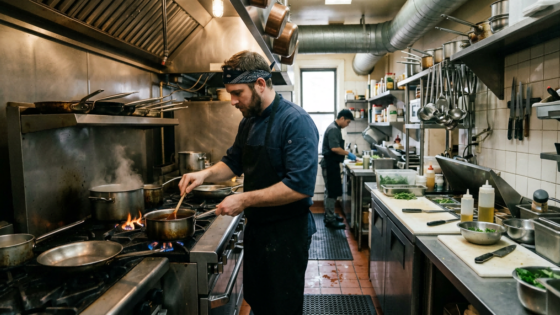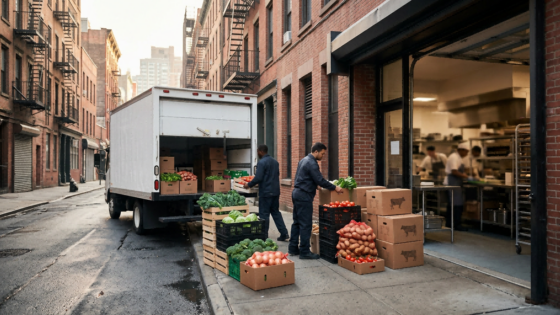
Every week, somewhere between 4% and 10% of the food a restaurant purchases never reaches a customer. It gets prepped wrong, portioned incorrectly, stored at the wrong temperature, or simply expires before it gets used. According to EHL Hospitality Insights, a global 2024 report confirmed this range — a figure that may sound small until you realize what it means for a restaurant doing $1.5 million in annual revenue: up to $150,000 in purchased food that produced zero revenue.
In conversations with NYC Chinese restaurant owners, food waste is one of the most common cost concerns I hear — alongside labor and rent. The good news is that unlike rent, food waste is directly controllable. This guide covers the systems, practices, and tools that actually work, without requiring a major technology investment or a new hire to manage.
Key Takeaways
- 4–10% of purchased food is wasted before it reaches a customer — primarily due to overordering, poor storage rotation, and menu complexity.
- Every $1 invested in food waste reduction returns approximately $14 in cost savings, per National Restaurant Association data.
- FIFO (First In, First Out) is the single highest-ROI inventory practice for small restaurants — it requires no software, costs nothing to implement, and directly reduces spoilage.
- Nearly half of restaurants (42%) now use inventory management software — but the operators who see the best results pair software with consistent physical counts and staff training.
- Accurate demand forecasting — enabled by POS data — is the root solution to overordering, which is the leading cause of food waste in most restaurant operations.
Why Food Waste Hits Small Restaurants Harder Than Large Chains
Large chains have standardized menus, centralized ordering algorithms, and dedicated purchasing teams. They can afford to absorb waste as a known percentage of cost of goods sold. Small independent restaurants — the typical NYC Chinese family operation — operate on food cost margins of 28–35%, according to the National Restaurant Association, with no buffer. When a case of produce spoils before service or a prep cook over-portions an expensive protein, there’s no corporate averaging that absorbs the loss. It comes directly out of the owner’s margin.
The other factor is menu complexity. Many Chinese restaurants offer 60, 80, even 100+ menu items — each requiring its own ingredient set. Restaurant operations experts at KNOW identify menu complexity as a primary driver of waste: more items means more ingredients, shorter shelf lives for specialty items, and more opportunities for prep staff to over-portion or mis-prep. A restaurant running a focused 25-item menu will almost always have lower food waste as a percentage of revenue than one running 100 items, all else being equal.
The Four Root Causes of Restaurant Food Waste
Most food waste in restaurant kitchens traces back to one of four root causes. Understanding which one is your primary driver determines which solution will actually move the needle.
1. Overordering
The most common cause, and the one most fixable with data. Overordering happens when purchasing decisions are based on intuition or habit rather than actual sales history. A cook who ran out of a dish on a busy Saturday two months ago will often over-order that ingredient indefinitely to avoid it happening again. The solution is POS-linked demand forecasting: your sales data tells you exactly how much of each ingredient was used, by day of week and by season, so you order what you’ll actually need rather than what feels safe.
2. Poor Storage Rotation (FIFO Failures)
First In, First Out — the practice of always using older stock before newer stock — is simple in theory and consistently violated in practice. New deliveries get stacked in front of existing inventory because it’s faster. By the time the older stock gets used, it’s at or past its expiration date. Fourth’s food waste research identifies poor stock rotation as a leading operational cause of spoilage — and it’s entirely a training and system problem, not a budget problem.
3. Over-Preparation and Overproduction
Kitchens that batch-prepare large quantities at the start of service to avoid running out create a structural waste problem. If the night goes slower than expected, prepared food that can’t be safely held overnight becomes waste. The fix is tighter par levels — establishing maximum amounts of each prepared item to hold at any point in service — and a culture of preparing to par rather than preparing to maximum capacity.
4. Menu Complexity and Ingredient Overlap
Menu complexity affects waste in two ways: specialized ingredients that appear in only one or two dishes are high-risk items because any slowdown in those dish’s sales leaves you with expiring inventory. The solution isn’t necessarily a smaller menu — it’s engineering the menu so that every ingredient appears in multiple dishes, creating overlap that protects you against any single item selling slowly.
The Practical Inventory System: What Actually Works in a Small Kitchen
Before evaluating software, it’s worth establishing the physical practices that form the foundation of any good inventory system. Technology amplifies good physical processes — it doesn’t replace them.
Step 1: Conduct a Baseline Waste Audit
You can’t manage what you don’t measure. A waste audit means tracking every item thrown away for two weeks: what it was, how much, and why (spoilage, over-prep, plate return, trim waste). This is unglamorous work, but it generates the data that tells you where your waste is actually coming from. The National Restaurant Association estimates that consistent waste tracking can cut food costs between 2% and 6% — just from the awareness it creates among kitchen staff. When cooks know that every pound of waste is being logged, they prep more carefully.
Step 2: Implement FIFO With Physical Labels
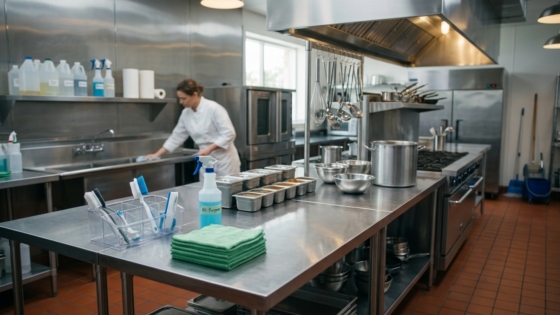
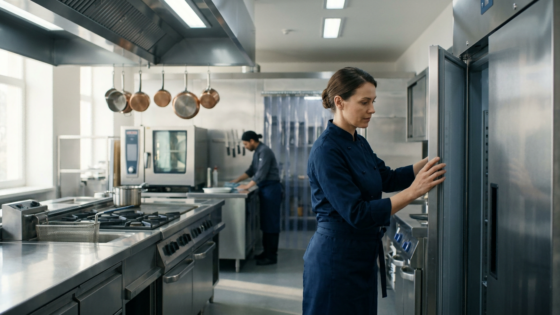
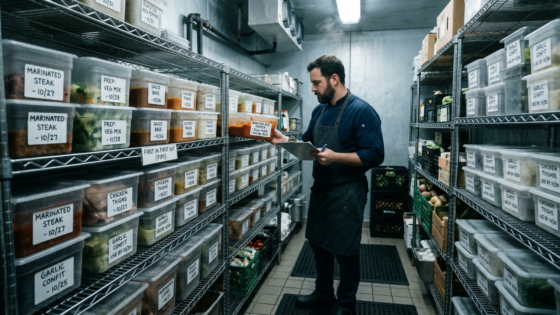
Every container in your walk-in and dry storage should be dated the day it arrives or the day it’s prepped. New deliveries go to the back; existing stock stays in front. This requires no software, no investment beyond a marker and masking tape, and it directly addresses the most common cause of spoilage in small restaurant kitchens. The key is making it a non-negotiable physical procedure, not a suggestion — every person who enters the walk-in is responsible for maintaining it.
Step 3: Set Par Levels for Every Key Ingredient
A par level is the minimum quantity of an ingredient you need on hand before you reorder. Setting pars forces you to order based on data rather than feel. Your par should be calculated from your average daily usage (from POS sales history), multiplied by the number of days between deliveries, plus a safety buffer. Once pars are set, ordering becomes a straightforward comparison: current inventory vs. par, not a judgment call made at 7am before service.
Step 4: Count Inventory Physically, Consistently
A physical count — ideally weekly for high-value proteins and produce, monthly for dry goods — is the check on everything else. Software inventory systems are only as accurate as the physical reality they reflect. Regular counts catch discrepancies early: shrinkage, over-portioning, supplier delivery errors, and theft. Most small restaurants that implement consistent weekly counts report catching problems within the first month that they didn’t know they had.
Inventory Management Software: What It Does and When It’s Worth It
According to Restaurant HQ research, nearly half of restaurants (42%) now use inventory management software to reduce waste — a significant shift from the manual spreadsheet era. The main benefits of software over spreadsheets are automatic reconciliation with POS sales data, low-stock alerts before you run out, and historical trend data that improves purchasing decisions over time.
| Method | Cost | Best For | Limitation |
|---|---|---|---|
| Physical log + spreadsheet | ~$0 | Restaurants under $500K revenue | Manual, time-consuming, no auto alerts |
| POS-linked inventory module | $50–$200/mo | Single-location restaurants with POS already installed | Still requires physical counts to verify |
| Dedicated inventory software | $150–$500/mo | Multi-location or high-volume operations | Implementation time; staff training required |
| AI-driven demand forecasting | Varies | High-volume or multi-location operations | Requires 3–6 months of historical data to be accurate |
For most small NYC Chinese restaurant operations, a POS-linked inventory module is the sweet spot — it automates the reconciliation step that consumes the most time in manual systems, and it provides the sales history data needed for accurate par-level calculations. The critical caveat is that the software is only as good as the physical processes behind it: if your FIFO labeling is inconsistent or your physical counts are infrequent, the software will report clean numbers that don’t reflect reality.
The ROI Case for Fixing Food Waste
The numbers are hard to ignore. The National Restaurant Association calculates that for every dollar invested in food waste reduction, restaurants could realize approximately $8 in cost savings. Restaurant HQ puts it even higher — each $1 in saved food creates $14 in additional effective revenue when you account for the full supply chain cost of the wasted item.
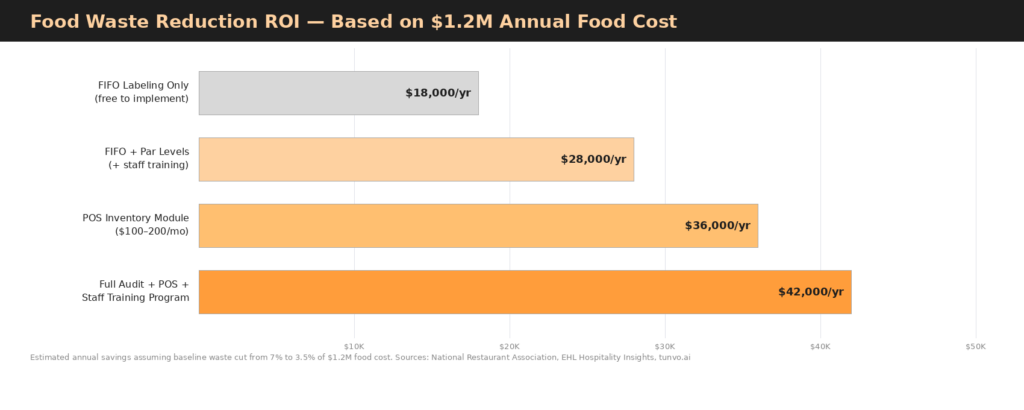
For a restaurant wasting 7% of its food purchases on $1.2 million in annual food costs, that’s $84,000 in waste per year. Cutting that by half — from 7% to 3.5% — saves $42,000 annually. The typical cost of implementing proper FIFO systems, par levels, and a POS-linked inventory module is well under $5,000 in the first year.
How POS Integration Changes the Inventory Game
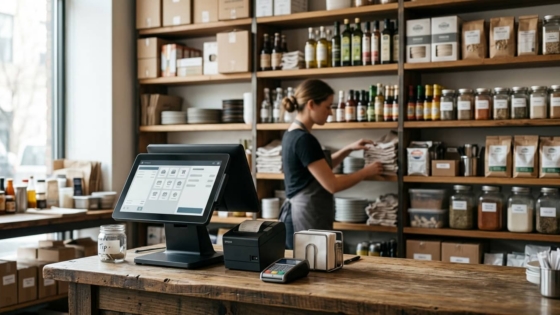
The most powerful lever in inventory management isn’t a waste-tracking app — it’s connecting your ordering decisions to your actual sales data. When your POS system records every item sold, it creates a precise demand history: you know that Tuesday nights average 40 orders of General Tso’s chicken, while Saturdays average 90. You know that in January, soup orders run 30% higher than in August. You know which appetizers are seasonal and which are consistent year-round.
Without that data, you’re guessing. With it, you’re ordering. The difference between those two states is the bulk of the food waste problem in most independent restaurants. A well-configured POS with sales history connected to your ordering process — even a simple spreadsheet that imports weekly sales data — gives you the information you need to stop overordering the items that spoil and start ordering confidently based on what you actually sell.
If your POS system is MenuSifu, Tunvo’s AI voice agent integrates directly with it — which means that phone orders, often the most error-prone part of the demand picture, are captured accurately in your sales history. Better data means better forecasting, which means less overordering. Learn how Tunvo connects with MenuSifu →
Practical Staff Training for Waste Reduction
No system works without the people running it. The National Restaurant Association recommends framing waste reduction as a management efficiency initiative rather than an environmental one — which is exactly the right language for restaurant kitchens, where practical outcomes matter more than abstractions. Specific practices that make a difference in staff behavior include making the cost of waste visible (posting weekly waste data on a kitchen board), setting prep quantity guidelines that cooks follow rather than eyeballing, and rewarding accurate par-level execution rather than the instinct to over-prepare to avoid running out.
The over-preparation instinct is a real cultural challenge. Cooks who grew up in kitchens where running out of an item during service was a cardinal sin will default to over-prepping as a survival behavior. Changing that behavior requires explicit, consistent management of par levels and a culture that treats waste as a failure mode equal to running out.
Frequently Asked Questions
What percentage of food do restaurants typically waste?
Industry data from a 2024 global report shows that 4–10% of food purchased by restaurants never reaches a customer, while an additional 31–40% of food served to customers goes uneaten. Combined, this means that a typical restaurant wastes a significant portion of the food it purchases and prepares. The most controllable portion — the 4–10% that never reaches a customer — is primarily driven by overordering, spoilage from poor storage rotation, and over-preparation.
What is FIFO and why does it matter?
FIFO stands for First In, First Out — the practice of always using older inventory before newer inventory. It matters because restaurant ingredients have limited shelf lives, and when new deliveries are placed in front of existing stock, older items get pushed to the back and expire before use. Implementing FIFO consistently, through physical labeling and dated containers, is one of the highest-ROI waste reduction practices available to any restaurant because it requires no technology investment and directly addresses one of the most common spoilage causes.
Is inventory management software worth the cost for a small restaurant?
For restaurants doing over $500K in annual revenue, a POS-linked inventory module typically pays for itself within the first few months through reduced overordering and spoilage. For smaller operations, a well-maintained spreadsheet with weekly physical counts and FIFO labeling often provides most of the benefit at a fraction of the cost. The software becomes significantly more valuable when it connects to your POS sales data — eliminating the manual step of reconciling what you sold against what you had.
How does menu complexity affect food waste?
More menu items means more unique ingredients, shorter shelf-life windows for specialty items, and more ways for prep staff to over-portion or mis-prep. Restaurants with 80–100 items will almost always have higher food waste as a percentage of revenue than those running 20–30 items. The most effective mitigation is menu engineering that creates ingredient overlap — designing dishes so that the same ingredients appear in multiple menu items, which creates natural inventory consumption across your sales mix regardless of which specific dishes are popular on a given night.
Accurate sales data starts with capturing every order — including phone orders. Tunvo’s AI voice agent takes phone orders and sends them directly to MenuSifu, so your POS sales history reflects your real demand. Better data means better inventory decisions and less food waste.