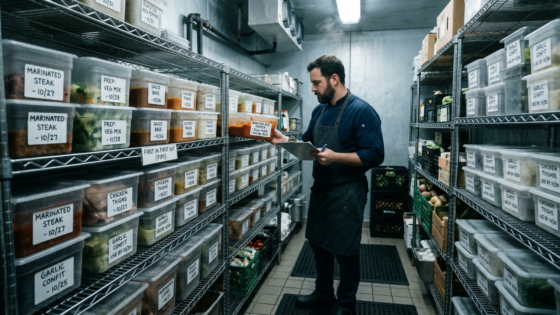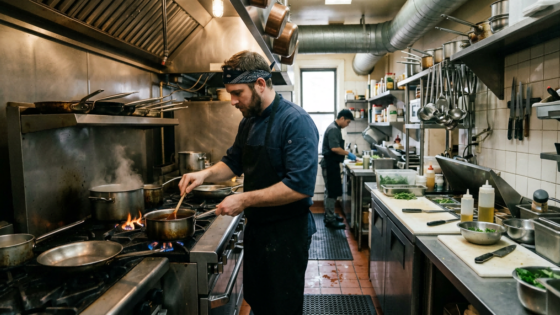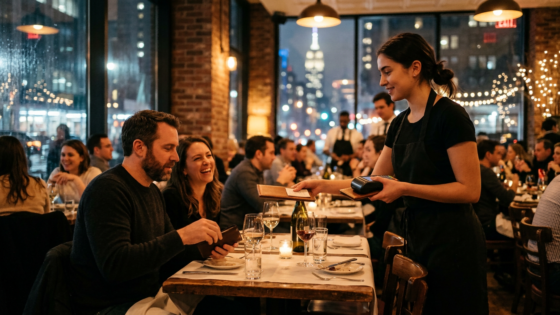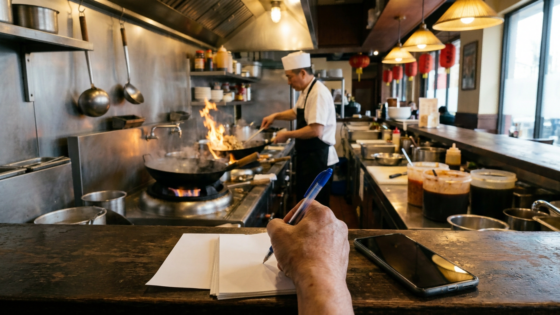
In our conversations with restaurant owners across New York, the number one concern we hear when technology comes up isn’t cost — it’s disruption. “My family has run this restaurant for 15 years. We write the orders by hand. Everyone knows the system. I don’t want to break what works.” That concern is legitimate. Technology transitions in small restaurants fail most often not because the technology is bad, but because the rollout ignores the realities of how the restaurant actually runs.
This guide is for traditional Chinese restaurant owners who are considering — or have already decided — to start using AI for phone ordering. It’s not a pitch for wholesale transformation. It’s a practical framework for making the transition in a way that preserves the parts of your operation that work, while solving the specific problem that AI is actually built to solve: missed calls and manual phone order handling during peak hours.
Key Takeaways
- The goal of adding AI phone ordering is not to replace your team — it’s to free them from the phone so they can focus on in-restaurant service.
- Successful transitions start with a single change (phone ordering) rather than attempting to overhaul operations all at once.
- The greatest resistance to technology adoption in traditional Chinese restaurants often comes from a misunderstanding of what the technology actually does — clear explanation resolves most of it.
Why Traditional Chinese Restaurants Often Resist Technology
The resistance isn’t irrational. Most technology sold to restaurants over the past decade promised significant upside and delivered significant disruption instead. Tablet POS systems required staff retraining. Online ordering platforms took 25–30% commissions. Chinese restaurants were among the earliest adopters of phone and delivery ordering, and that history makes them appropriately skeptical of solutions that solve a technology company’s growth problem rather than the restaurant’s operating problem.
AI adoption research consistently identifies three primary barriers for traditional restaurant operators: high perceived cost, concern about technological complexity, and uncertainty about whether the technology will actually work with their specific menu and customer base. The third barrier is particularly relevant for Chinese restaurants, whose menus involve more customization and language complexity than the typical Western quick-service model that most voice AI was originally designed around.
What’s Different Now
The shift is that AI voice technology has become genuinely multilingual and genuinely capable of handling complex Chinese menu orders. The older generation of phone AI — the kind that asked you to “press 1 for hours” — couldn’t handle “I want the beef with broccoli, extra sauce, brown rice instead of white, and can you tell me if the spring rolls are still available.” Modern LLM-based systems can. That’s a qualitative difference, not an incremental one.
Tunvo is built on this newer architecture. When a customer calls a Tunvo-equipped restaurant and orders in English, Mandarin, or a mix of both, the AI responds naturally and processes the order correctly — including modifiers, substitutions, and availability questions. According to Tunvo, the system achieves 95%+ order accuracy across its current restaurant deployments, which compares favorably to the error rates that come from taking complex phone orders manually during a noisy dinner service.
The Right Mental Model: AI as a New Staff Member, Not a System Replacement
The most useful frame for thinking about AI phone ordering is not “system change” — it’s “new hire.” When you add a new staff member who handles all incoming phone calls, nothing about your kitchen changes. Nothing about how you prepare food changes. The person who used to answer the phone — whoever that was — gets freed up to do something else. That’s the actual operational effect of AI phone ordering.
This framing matters for staff communication. If you tell your team “we’re installing an AI,” expect anxiety. If you tell them “we’re getting a dedicated phone person who works 24/7 and never gets tired during the rush,” expect curiosity. The second framing is more accurate to what’s actually happening.
A Practical Three-Phase Transition Approach
Phase 1: Observe and Document Your Current Phone Order Reality (Week 1)
Before changing anything, spend one week honestly observing how phone orders actually work in your restaurant. Track these numbers:
- How many phone calls come in on an average weekday vs. weekend?
- How many calls go unanswered or get put on hold during peak hours?
- Who typically answers the phone — a dedicated person, or whoever is available?
- How often does a phone order get written incorrectly and have to be remade?
This documentation serves two purposes. First, it shows you where the actual revenue leakage is happening — industry data suggests restaurants miss an average of $27,000+ per year from unanswered calls, but your specific situation may be better or worse than average. Second, it gives you a baseline to measure against after going live.
Phase 2: Start with Off-Peak Activation (Weeks 2–3)
The common mistake in technology rollouts is activating everything at once during the busiest period. Do the opposite. Activate Tunvo initially for off-peak hours — say, 3pm to 5pm on weekdays, when call volume is lower and staff have bandwidth to observe and learn the system. During this phase:
- Let calls come in naturally and observe how the AI handles them
- Have a staff member available to pick up the call if a customer is confused or if the AI routes a call for escalation
- Review the Tunvo order log daily — check that orders are printing correctly with the right modifiers
- Note any items or modifier combinations where the AI stumbled and fix the menu labeling in your Tunvo or MenuSifu dashboard
This phase is about building confidence, not proving efficiency. You’re not trying to capture revenue yet — you’re making sure the system works the way you need it to before activating it for your busiest periods.
Phase 3: Full Activation, Including Peak Hours (Week 4 and Beyond)
After two weeks of off-peak operation, you’ll have a clear picture of how the AI handles your specific menu and customer base. At this point, extend activation to peak hours. Your staff will have seen the system in action and will understand what it does — they’ll be better prepared to answer the occasional customer who calls back confused, and better able to explain the AI to a hesitant regular.
The metrics to watch in the first month of full activation: call answer rate, average order value (AI upselling consistently, even subtly, tends to nudge this up), and kitchen error rate on phone orders. Many operators find the error rate drops noticeably because the AI produces a clean, formatted ticket rather than a handwritten note that might be misread in a busy kitchen.
Addressing the Three Most Common Staff Concerns
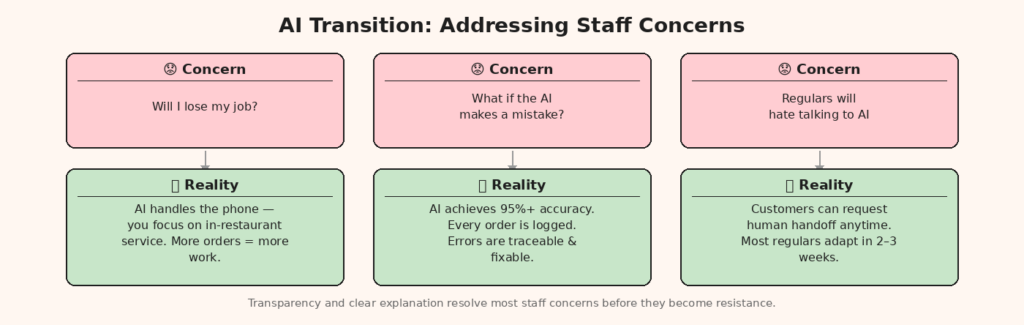
“Will I lose my job?”
This is the first concern and the most important one to address directly. The honest answer for a small Chinese restaurant is no — and here’s why. Answering the phone has never been a dedicated full-time role in most of these operations. It’s an interruption to whatever else the staff member was doing. Moving phone answering to AI frees that person to do their actual job better. If anything, having more orders captured and fulfilled efficiently creates more kitchen work, not less. Be direct with your team about this reality.
“What if the AI makes a mistake?”
Mistakes happen with AI, just as they happen with human phone order takers. The relevant question is relative accuracy: does the AI make more or fewer errors than the current manual process under real conditions — during a loud Friday rush with multiple calls coming in simultaneously? Based on Tunvo’s order accuracy data, the AI performs at 95%+ under normal conditions, which for most restaurants will be better than or equal to the manual alternative during peak hours. And when errors do occur, the Tunvo order log makes it possible to trace exactly what was said and what was processed, which helps identify and fix systematic issues quickly.
“Our regulars will hate it — they call to talk to us”
Some regulars do value the personal connection of speaking with a familiar voice. This is real and worth acknowledging. A few practical mitigations: Tunvo can be configured to route calls to a staff member if the caller asks to speak with someone, so regular customers who want human contact aren’t blocked from it. For a meaningful subset of your regulars — those who call primarily to place an efficient order — the AI is actually faster and less error-prone than being put on hold while the kitchen is slammed. Most operators find that within two or three weeks of live operation, the regulars who initially expressed discomfort adapt, particularly once they notice the order is always correct and they never wait on hold.
What About the Language Question?
This is where Chinese restaurant owners often have the most specific concern: will the AI understand my Mandarin-speaking customers? Will it handle the mix of English and Chinese that many of my regulars use?
Tunvo’s AI handles phone orders in both English and Mandarin, and is designed for the real-world bilingual code-switching that happens in Chinese restaurant phone calls. A customer who starts a call in English and switches to Mandarin to specify a modifier isn’t an edge case for Tunvo — it’s an expected scenario. The AI is trained on this kind of conversation. This is one of the key reasons Tunvo was built specifically for Chinese restaurants rather than as a general-purpose restaurant AI: the language and menu complexity of this category requires purpose-built capability, not a generic system with multilingual tags added.
The First Technology Step: Why Phone Ordering Is the Right Starting Point
For a restaurant that’s never adopted technology, the instinct might be to start with something less disruptive — a simple change that doesn’t touch customer interactions. Phone ordering is actually the best first step, for a counterintuitive reason: it’s the part of the operation that’s most visibly broken. Missed calls during peak hours are the single most direct and measurable revenue leak in a traditional Chinese restaurant. Fixing a clearly broken thing generates visible, credible proof that the technology works — and that proof builds the internal confidence that makes every subsequent technology decision easier.
A restaurant that adds AI phone ordering and recovers 20 previously missed orders per week — at an average ticket of $40 — recovers $800 per week, or roughly $41,000 per year. At that return, the question of whether to eventually add a POS, or to upgrade to MenuSifu, or to add online ordering becomes much easier to answer: you now have technology that demonstrably pays for itself, and you have direct experience of what “good” AI implementation actually looks like in your restaurant.
| Technology Step | What Changes | What Stays the Same | When to Consider It |
|---|---|---|---|
| Step 1: Tunvo AI (printer mode) | Phone calls answered by AI, orders print in kitchen | Everything else — payment, workflow, team structure | Now — if you’re missing calls during peak hours |
| Step 2: Add MenuSifu POS | Orders sync to POS, payment processing, reporting | Tunvo AI continues handling calls, same number | When volume grows and you need order history and POS analytics |
| Step 3: Online ordering / delivery integration | Online orders flow into same POS system | Phone AI still handles all inbound calls | When you want to reduce third-party platform dependency |
Frequently Asked Questions
Do I need to tell my customers I’m using AI?
New York State requires notification when a call is recorded. Tunvo complies with this by playing an automatic disclosure at the start of each call, informing callers that the call may be recorded and that they’re interacting with an automated assistant. You don’t need to add separate signage or notifications beyond what Tunvo handles automatically. For full details, see our privacy policy.
What happens if a customer insists on speaking to a human?
Tunvo can be configured to route calls to a staff member when a customer requests it explicitly. During setup, you’ll specify how calls should be routed when AI escalation is needed — typically to your restaurant’s existing phone line. No customer is ever blocked from reaching a person if they want to.
How do I explain the change to a regular customer who’s been calling for years?
The simplest explanation: “We set up a phone assistant that takes orders while we’re busy in the kitchen. It’s always available, even when we can’t pick up.” Most regular customers’ primary concern is getting their order right and not waiting. An AI that always picks up and always gets the order right typically earns acceptance quickly.
How do I get started?
The fastest path is to start a 15-day free trial — setup takes about 30 minutes. If you’d prefer to see a demonstration first with someone walking you through the setup for a Chinese restaurant specifically, book a demo. Our team includes people who have spent significant time visiting Chinese restaurants in New York and understand the operational realities of this transition firsthand.
Every missed call is a missed opportunity. Tunvo answers every call — in English and Mandarin — and connects orders directly to your kitchen. Book a Demo or Start Your 15-Day Free Trial — setup in 30 minutes, no POS required to begin.