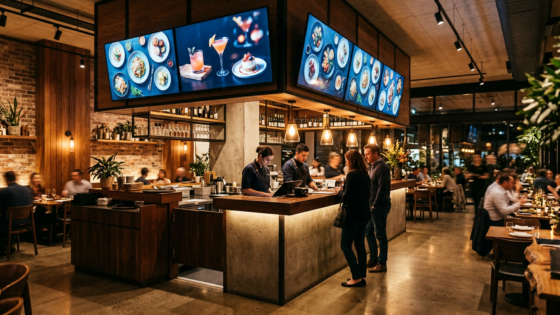
Walk into any quick-service restaurant and there’s a good chance the menu overhead is no longer paper. Across the country, digital screens are quietly replacing laminated boards — and the shift raises a practical question for independent restaurant owners: is it actually worth it, or is this a trend that works better for chains with deeper pockets?
The honest answer is that it depends on your restaurant type, how often your menu changes, and what you’re optimizing for. This article breaks down the real numbers, the operational trade-offs, and the situations where each format wins — so you can make the call based on your own business, not the hype.
Key Takeaways
- Digital menu boards can boost restaurant revenue by 3–5% on average, with featured items seeing an even larger lift — but they require upfront investment and ongoing maintenance.
- Printed menus cost less to start but become expensive when reprinted frequently; restaurants that update pricing or specials more than twice a year often reach the break-even point within 12–18 months of switching.
- The right format depends on your update frequency, service style, and customer base — a fine-dining room and a family takeout counter have very different needs.
- A hybrid approach — digital boards for the order counter, printed menus for tableside — is increasingly common and often the most practical path for independent restaurants.
What the Research Actually Says About Digital vs. Printed
The revenue case for going digital
The most frequently cited benefit of digital boards is the sales lift. Industry research shows digital menu boards increase restaurant revenue by 3–5% on average, with most restaurants seeing a full return on investment within 6–18 months. Those numbers hold up across QSR and fast-casual environments — but they’re averages, not guarantees.
The mechanism behind the lift is fairly well understood. Digital boards can display automated promotional pairings — suggesting add-ons like fries and a drink with a burger — rotating or highlighting those prompts at peak order times without requiring any staff effort. The upsell happens passively, through screen design.
There’s also the attention factor. One study by Nielsen found that digital signage captures significantly more views than static displays, which means higher-margin items displayed digitally get more eyeball time than the same items buried on a laminated page.
Where printed menus hold their ground
Printed menus are not obsolete — they just serve a different purpose. Printed menus offer consistent clarity regardless of lighting conditions, and digital menus can be affected by glare, low brightness settings, or reflections that make text difficult to read in daylight or brightly lit interiors. In a fine-dining environment where ambiance matters, a beautifully designed menu that guests can hold and browse at their own pace contributes to the experience in ways a screen cannot replicate.
There’s also the reliability angle. Power outages, software glitches, and hardware failures all become menu problems the moment you go digital. A printed menu doesn’t crash. For smaller operators who don’t have IT support, this is a legitimate operational consideration.
The True Cost Comparison: Breaking Down the Numbers
What digital boards actually cost
A complete digital menu board setup typically runs between $1,500 and $5,000 per screen, including hardware and software. That’s the one-time hardware cost — there are usually also monthly software subscription fees ranging from roughly $30 to $150 per month per location for content management platforms.
The math for a restaurant doing $500,000 in annual sales that achieves even a 3% revenue increase is compelling: that’s $15,000 in additional revenue per year against an initial investment that often pays back in under 12 months. According to WAND Digital’s ROI analysis, digital menu break-even points can commonly be achieved in as little as 9 months.
What printed menus actually cost (the number most owners undercount)
Printed menus look cheap until you add up the full lifecycle cost. A typical full-color menu reprint costs $100–$300 per batch depending on size and quantity. But that’s just the print cost — factor in design fees for updates, rush charges when a price needs to change quickly, and the staff time to swap out boards manually.
For a standard four-board menu system with four changes per year, printing costs alone run to at least $1,600 annually — before rush fees or design work. Scale that across two or three locations and the cumulative cost starts to rival digital.
| Cost Factor | Digital Menu Boards | Printed Menus |
|---|---|---|
| Initial setup | $1,500–$5,000 per screen | $100–$500 for design + print |
| Annual update cost | $360–$1,800 (software subscription) | $800–$3,000+ (reprints × changes) |
| Price change speed | Minutes, remotely | Days to weeks (print lead time) |
| Multi-location management | One update pushes to all locations | Manual replacement at each site |
| Failure risk | Hardware/software failure possible | Virtually none |
| Upsell capability | Automated, visual, dynamic | Depends on server training |
| Typical ROI timeline | 9–18 months | Ongoing print/design costs accumulate |
Which Restaurant Types Benefit Most From Going Digital
Strong cases for digital boards
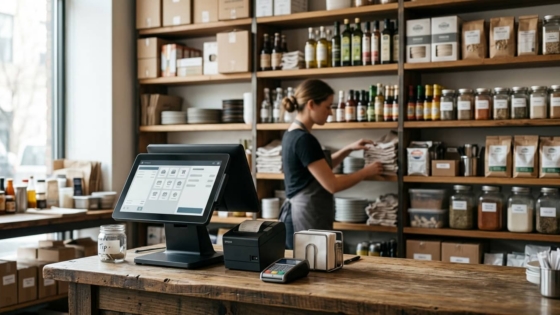
The clearest wins for digital menu boards are in high-volume, counter-service environments where speed matters and the menu changes regularly. The business case becomes especially compelling for restaurants with two or more locations, menus that change quarterly or more often, or distinct breakfast, lunch, and dinner offerings that need to rotate automatically.
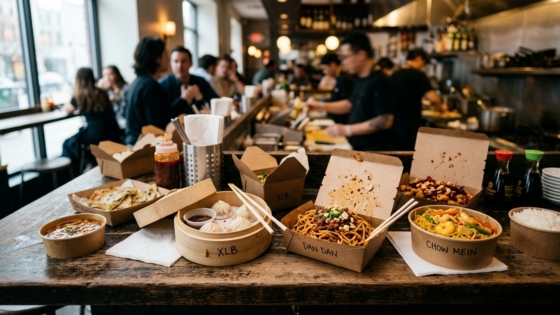
Chinese takeout restaurants and family-style spots are a strong match because of the bilingual display capability. In areas with multilingual populations, digital menu boards can instantly switch to another language, which breaks down communication barriers and makes non-native speakers feel welcome and understood. For a restaurant serving both Chinese-speaking regulars and English-speaking walk-ins, that’s operationally valuable.
When printed menus still make sense
If your menu has been the same for three years, you’re a single location, and your average ticket is under $10, the ROI math for digital boards is less compelling. Restaurants with menus that change less than once per year, very low traffic, or plans to sell within 12–24 months are often better served by well-executed print.
Fine dining is a different case entirely. Many high-end restaurants have deliberately moved away from both digital and standard printed formats toward handwritten or custom-printed menus that change nightly — reinforcing scarcity and freshness as part of the dining experience. The goal there isn’t operational efficiency; it’s theater.
The Hybrid Approach: Getting the Best of Both
Most independent restaurants don’t have to pick one or the other. The most practical middle path is a hybrid setup: digital boards at the order counter for high-turnover, high-upsell purposes, combined with printed menus at the table for a more personal browsing experience. This is especially effective for full-service Chinese restaurants that handle both dine-in and takeout traffic through the same space.
There’s also a practical middle ground in QR code menus, which blend digital convenience with the practicality of printed signage — reducing printing frequency while maintaining accessibility. A QR code at each table combined with a simple printed board at the counter is low-cost, low-maintenance, and gives customers options regardless of their comfort with technology.
What to Consider Before Making the Switch
Before committing to digital boards, run through these practical questions:
How often do you actually change your menu? If the answer is once a year or less, the ROI for digital is harder to justify. If you’re updating prices or specials every month — especially if ingredient costs are pushing you to adjust frequently — digital pays for itself faster.
Is your kitchen noise or staff capacity limiting upsells? This is something restaurant owners in New York hear constantly. When staff are stretched during peak hours, an AI-assisted phone system or digital board handles the upsell that no one on the floor has time for. AI voice agents like Tunvo address the phone-side of this problem, ensuring every call that comes in during peak hours is answered — and that phone orders include the same upsell prompts a well-trained staffer would offer.
What are your customers’ expectations? A neighborhood lunch spot with a loyal older clientele might not gain much from digital boards. A delivery-first restaurant optimizing for speed and order accuracy has more to gain.
Making the Decision: A Quick Decision Framework
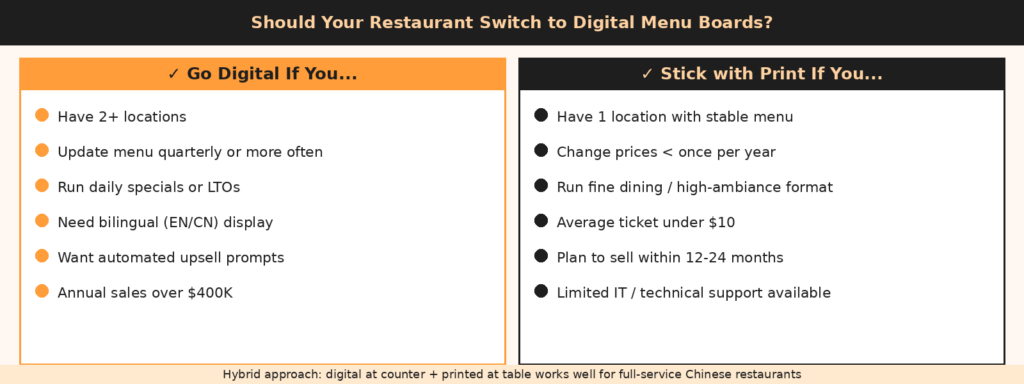
Decision framework for choosing between digital and printed menus based on restaurant type, update frequency, and volume.
Frequently Asked Questions
How long does it take to see ROI on digital menu boards?
Most restaurants see positive ROI within 9–18 months, depending on how much revenue the boards drive through upsells and whether they replace significant ongoing print costs. High-volume QSRs with frequent menu changes often see payback closer to the 9-month end of that range.
Do digital menu boards work for small single-location restaurants?
They can, but the math is tighter. The key variable is how often you update your menu. If you’re reprinting four or more times a year and losing upsell revenue during busy periods because staff can’t keep up, the investment starts to make sense even for a single location. If your menu is stable and your service style doesn’t rely on high-volume counter ordering, printed boards remain perfectly viable.
What’s the biggest risk of switching to digital menu boards?
The two main risks are hardware failure (screens going down during service) and underutilization — paying for a system you never fully configure. Choose a content management software that’s easy enough for your team to use without IT support, and always have a backup plan for outages, even if it’s just a printed emergency menu laminated and stored in the back.
Can digital menu boards integrate with a POS system?
Modern digital menu board platforms can integrate with most major POS systems to sync pricing and availability in real time. If you’re using MenuSifu, Tunvo’s MenuSifu integration is designed specifically for this environment and handles phone-order synchronization alongside your in-person ordering flow.
Are there environmental benefits to going digital?
Paper menus that change frequently represent real waste — both in materials and the energy to print and ship them. Digital boards eliminate that cycle. For restaurants that update their menu seasonally or more often, switching to digital is also the more environmentally responsible choice, which increasingly matters to younger customers.
Every phone call during peak dinner service is an opportunity — but if your staff are tied up with walk-ins, those calls go unanswered. Tunvo’s AI voice agent answers every call, takes orders in English and Mandarin, and sends them straight to your MenuSifu POS. Start your 15-day free trial or book a demo to see it in action.