Chinese New Year is the most important holiday on the calendar for Chinese restaurant owners — and it’s been growing for years. What started as a celebration centered within immigrant communities is now a two-week opportunity to attract new customers and delight regulars, with celebrations stretching from the New Year’s Day feast all the way to the Lantern Festival fifteen days later. But many Chinese restaurant owners in New York leave a significant portion of that opportunity on the table by marketing almost exclusively to their existing Chinese customer base.
This guide is about the other side of the equation: how to authentically attract non-Chinese customers during Chinese New Year in a way that grows your revenue, expands your loyal customer base, and respects the cultural significance of the holiday.
Key Takeaways
- Chinese New Year is a multi-week opportunity — 15 days of promotions, not just one dinner service.
- Non-Chinese customers want the experience, not just the food — storytelling, atmosphere, and cultural education are your most powerful marketing tools.
- A family-size LTO menu is your strongest conversion lever — it speaks to both existing customers and first-time visitors in the same offer.
- Your phone lines will surge during the holiday window — reservations management and order intake need to run smoothly to capture every opportunity.
Why Non-Chinese Customers Are a Real Opportunity
The Holiday’s Cultural Reach Has Expanded Dramatically
Chinese New Year is no longer a niche celebration. It’s recognized and observed in some form by communities across New York’s five boroughs and well beyond. Social media has accelerated this — a beautifully decorated dining room, a lion dance performance, a vibrant lucky set menu plated with intention, all drive organic sharing among people who’ve never been to Chinatown. When done thoughtfully, a Lunar New Year campaign can boost visibility, create meaningful connections with new customers, and offer a unique experience that stands out during the post-holiday winter lull.
The key phrase here is “done thoughtfully.” Non-Chinese customers are often genuinely curious about the holiday — its meaning, its food symbolism, its traditions. They’re not looking for a watered-down version; they want to understand what they’re participating in. That curiosity is your marketing asset.
The 15-Day Window Is Significantly Longer Than Most Holidays
Lunar New Year celebrations run from New Year’s Day through the Lantern Festival — giving restaurants roughly two weeks of promotional opportunity. Compare that to Valentine’s Day (a single evening) or Christmas (one dinner). The extended window means you can run different promotions across different audiences over the course of the festival: perhaps a Family Set Menu for the first weekend, a couples’ tasting menu for mid-week, and a community celebration dinner for the final Lantern Festival evening.
More time also means more flexibility to recover from a slow start and build momentum through word-of-mouth — something that’s harder to do in a 24-hour event window.
What Non-Chinese Customers Actually Want
They Want to Learn, Not Just Eat
In our visits to Chinese restaurants across New York, we’ve seen the same dynamic play out repeatedly: a non-Chinese couple walks in, sits down, and immediately asks the server “what should we order?” or “what does this dish mean?” The restaurants that answer those questions — through staff training, thoughtful menu copy, or simple table cards explaining the symbolism behind lucky New Year dishes — consistently report that these customers linger longer, order more, and come back.
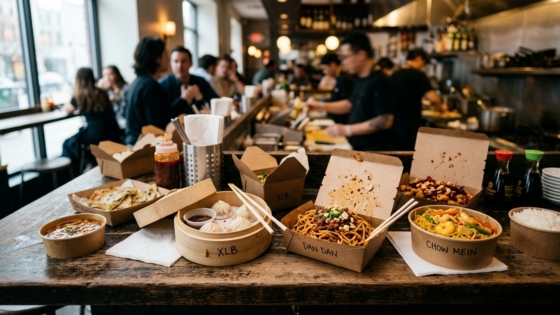
Chinese cuisine is deeply intertwined with centuries of tradition, and sharing the stories behind holiday dishes — whole steamed fish for prosperity, dumplings for wealth, long noodles for longevity — educates customers and invites them to experience the celebration. A brief note next to each dish on your Chinese New Year menu explaining its symbolism costs nothing to print and changes the experience fundamentally.
They Want Visual Atmosphere
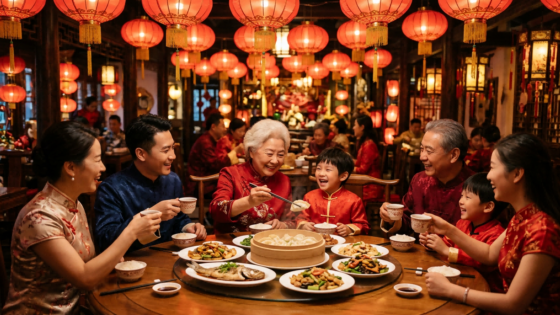
The most immediate signal to a non-Chinese customer that your restaurant is celebrating Chinese New Year is the physical environment. Reds and golds are essential in terms of color, and decorations like red lanterns, door couplets, kumquat plants, and paper cuttings help your restaurant look the part. These aren’t just decorations — they’re social media content for your guests. A well-lit red lantern above a beautifully plated duck dish gets photographed, posted, and seen by everyone in your customer’s network who wasn’t at dinner that night.
Menu Strategy: Bridging Cultural Authenticity and Accessibility
Create a Dedicated Lunar New Year Set Menu
A fixed set menu is the single most effective tool for attracting new customers during Chinese New Year. It removes the intimidation of a full à la carte menu for first-time visitors, gives your kitchen a predictable production plan, and allows you to control the narrative — you choose which dishes represent your restaurant’s identity and cultural pride.
A well-structured example is a Lucky Family Set for four people: appetizers like spring rolls, a whole fish for the table, a meat main, a vegetable dish, and dessert — with a red envelope included for a special touch. The format works for Chinese families who want the full traditional experience and for non-Chinese groups who want guidance through a memorable meal.
Price the set menu to reflect the occasion — this is not a discount event. New Year’s dining is associated with abundance and celebration, and customers expect to spend accordingly. A premium set menu at $45–65 per person signals that this is a special experience, not just Tuesday with decorations.
Add a Signature Zodiac Cocktail
A special cocktail menu inspired by the colors and flavors of the holiday — using ingredients like ginger, lychee, or jasmine tea, with names that tie into the zodiac or holiday themes — is a strong draw for non-Chinese customers. A lychee martini called “Golden Snake” (for the Year of the Snake) or a ginger sour named “Lucky Eight” gives your bar program a story to tell and a shareable item to push on social media. Non-Chinese customers in particular respond well to cocktails as an entry point to the full dining experience.
Bilingual Menus with Cultural Notes
For restaurants that currently run Chinese-only menus or menus with minimal English descriptions, Chinese New Year is the right moment to invest in bilingual presentation. This doesn’t mean translating everything — it means ensuring your set menu and featured dishes have clear English names and brief cultural explanations. In diverse neighborhoods, menus that combine authentic dishes with accessible descriptions attract a broader audience without sacrificing authenticity.
| Dish | Cultural Significance | Menu Note (English) |
|---|---|---|
| Whole steamed fish (清蒸鱼) | Prosperity and abundance — fish sounds like “surplus” in Chinese | “Served whole for good fortune in the new year” |
| Dumplings (饺子) | Shaped like ancient gold ingots — symbolize wealth | “Hand-folded to bring prosperity” |
| Long noodles (长寿面) | Longevity — do not cut the noodles | “Never cut — long noodles for a long life” |
| Whole chicken | Family unity and completeness | “Served whole as a symbol of family togetherness” |
| Tang yuan (汤圆) | Reunion — round shape represents completeness | “Sweet rice balls for reunion and happiness” |
Event and Experience Marketing
Bring in Live Entertainment
A lion dance at your restaurant — where performers don traditional lion costumes and move through the dining room — is among the most effective ways to create a memorable, shareable, and culturally authentic experience for guests who’ve never witnessed it before. Non-Chinese customers are consistently captivated by lion dances, and many will video the performance and share it organically on Instagram or TikTok. That’s free marketing to an audience you haven’t reached yet.
If a full lion dance troupe isn’t within budget, even recorded traditional music playing during service, red-and-gold decor, and a staff-presented hongbao (red envelope) with a small gift creates a step above the standard dining experience.
Social Media Giveaways That Build Reach
A well-structured social media giveaway — posting a photo of a New Year dish, asking followers to share their favorite Lunar New Year tradition, tagging friends for additional entries, and awarding a gift card — can generate substantial reach among non-Chinese audiences who follow food accounts. The key is a prize worth sharing for: a gift card covering the full set menu for two is aspirational enough to motivate engagement. Offer every entrant a smaller discount — say, 15% off during the Lunar New Year period — to convert participants into actual diners.
Operational Considerations During the Holiday Window
Reservations Management for a 15-Day Push
Chinese New Year isn’t one evening — it’s two weeks. That means your reservations management needs to function consistently across the entire period, not just on New Year’s Eve and New Year’s Day. For busy weekends within the festival window, set up a clear reservation structure: designated time slots, a maximum group size for the set menu, and a process for managing waitlists when tables fill. Communicate clearly on your social profiles and website about which dates are available and which are likely to book up fast.
The operational risk is that many Chinese New Year calls are mixed: some are reservation requests, some are menu questions, some are takeout orders, and some are just “are you open on Sunday?” For a restaurant running a busy holiday promotion with limited staff, that call volume can overwhelm your front-of-house team.
Your Phone Is Your Reservation System
Many customers — especially Chinese-speaking customers who prefer phone to online booking — will call to make their New Year’s reservation. If your staff is occupied with the dining room or kitchen, those calls ring out. A reservation that goes to voicemail during Lunar New Year usually goes to a competitor’s table instead.
Tunvo’s AI voice agent handles inbound calls in both English and Mandarin, takes reservation requests, answers questions about your set menu, and syncs directly to your MenuSifu POS. It doesn’t require your staff to leave the floor to pick up the phone during service. See how the pricing compares to the revenue risk of missed calls during your busiest two weeks of Q1. Setup takes about 30 minutes, and a 15-day free trial lets you test it before your next holiday event.
The Red Envelope Strategy: Small Cost, Big Loyalty
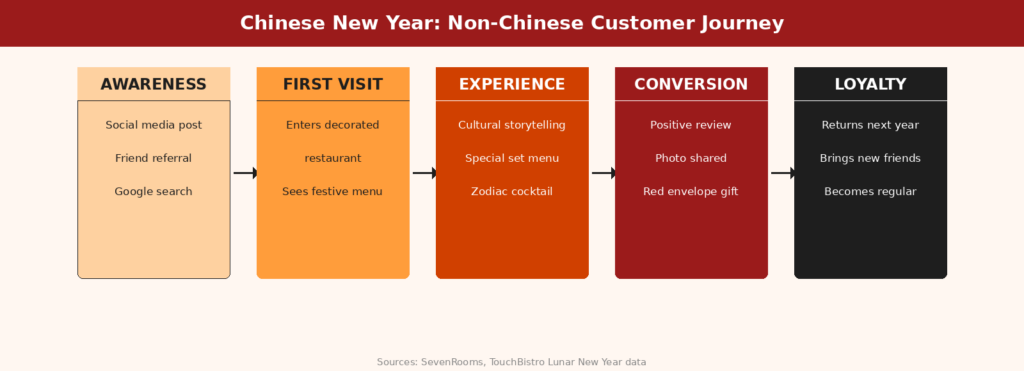
A simple gesture that works well across both Chinese and non-Chinese customers: give a small red envelope with each table’s check — containing not money, but a voucher or discount for a future visit. For Chinese customers, the hongbao is a deeply resonant cultural symbol. For non-Chinese customers, it’s a delightful surprise — something they’ll likely show their friends and talk about. The return visit incentive embedded in the envelope turns a one-time holiday visitor into a repeat customer, which is worth far more than the cost of the envelope itself.
Frequently Asked Questions
How should a Chinese restaurant approach Lunar New Year marketing to non-Chinese audiences without it feeling performative?
Authenticity comes from education, not performance. If your marketing explains what the holiday means, why specific dishes are served, and what the cultural traditions behind them represent, non-Chinese customers sense that this is genuine celebration rather than a marketing gimmick. Involve your staff — especially those from Chinese backgrounds — in sharing stories about how their own families celebrate. That kind of personal connection is something no themed decoration can replicate.
What’s the right price point for a Chinese New Year set menu in New York?
The right price depends on your neighborhood and your existing price positioning. As a general range, Chinese New Year set menus in New York typically run $38–75 per person depending on whether they include beverages and the complexity of the dishes. The key principle is not to underprice — Lunar New Year dining is associated with abundance, and a set menu priced lower than a comparable special-occasion meal at Italian or French restaurants nearby signals a lesser experience, even if the food is exceptional.
How early should a restaurant start promoting Chinese New Year?
Begin marketing three to four weeks before the first day of the lunar calendar. This gives time for social media reach to build, for reservations to fill in orderly waves rather than all at once, and for the media or influencer coverage you might pursue to actually publish before the holiday. Starting marketing early means you’re already prepared by the time Chinese New Year rolls around, positioned to capitalize on the momentum you’ve built.
Should a Chinese restaurant offer takeout bundles during Lunar New Year, or focus on dine-in?
Both — but manage them as separate offerings. Dine-in captures the full experience: decor, atmosphere, service, and the cultural immersion that converts new customers into regulars. Takeout captures customers who are celebrating at home with family and want restaurant-quality food for a home gathering. Offering family-sized takeout portions in branded containers with clear heating instructions extends your revenue beyond your dining room capacity and serves customers who simply can’t get a reservation during peak nights.
—
Chinese New Year is your highest-visibility window of Q1. Every call that rings out during the reservation rush is a table that fills at a competitor’s restaurant. Tunvo’s AI voice agent answers every call in English and Mandarin — takes reservations, answers menu questions, and syncs directly to your MenuSifu POS.
Book a Demo or Start Your 15-Day Free Trial.